
MOBILITY - CHEST & ANTERIOR SHOULDER
Welcome! This program focuses on opening up the front of your shoulders and chest. Spending time hunched over computers, phones, or steering wheels often causes these tissues to become tight, leading to rounded shoulders, pain, and restricted movement. Let's work on countering those effects!
Common Issues This Helps:
Pain in the front of the shoulder
Difficulty reaching overhead comfortably (can contribute to impingement)
Trouble reaching behind your back (limited internal rotation/extension)
Rounded shoulder posture ("douche bag shoulders")
Pain or restriction during pushing exercises (push-ups, bench press)
Quick Check (Assessment):
Posture Check: Do your shoulders naturally sit rounded forward? Check from the side.
Internal Rotation: Lying on your back with your upper arm out to the side (90 degrees) and elbow bent 90 degrees, can your forearm rotate down towards the floor without your shoulder lifting?
Extension: Can you reach your arms straight back behind you easily without arching your back excessively?
Movement: Do your shoulders roll forward during push-ups or when lowering a weight (bench press, dip)?
Your Mobility Practices:
(Aim for approx. 2 minutes per technique/area unless otherwise noted. Breathe deeply!
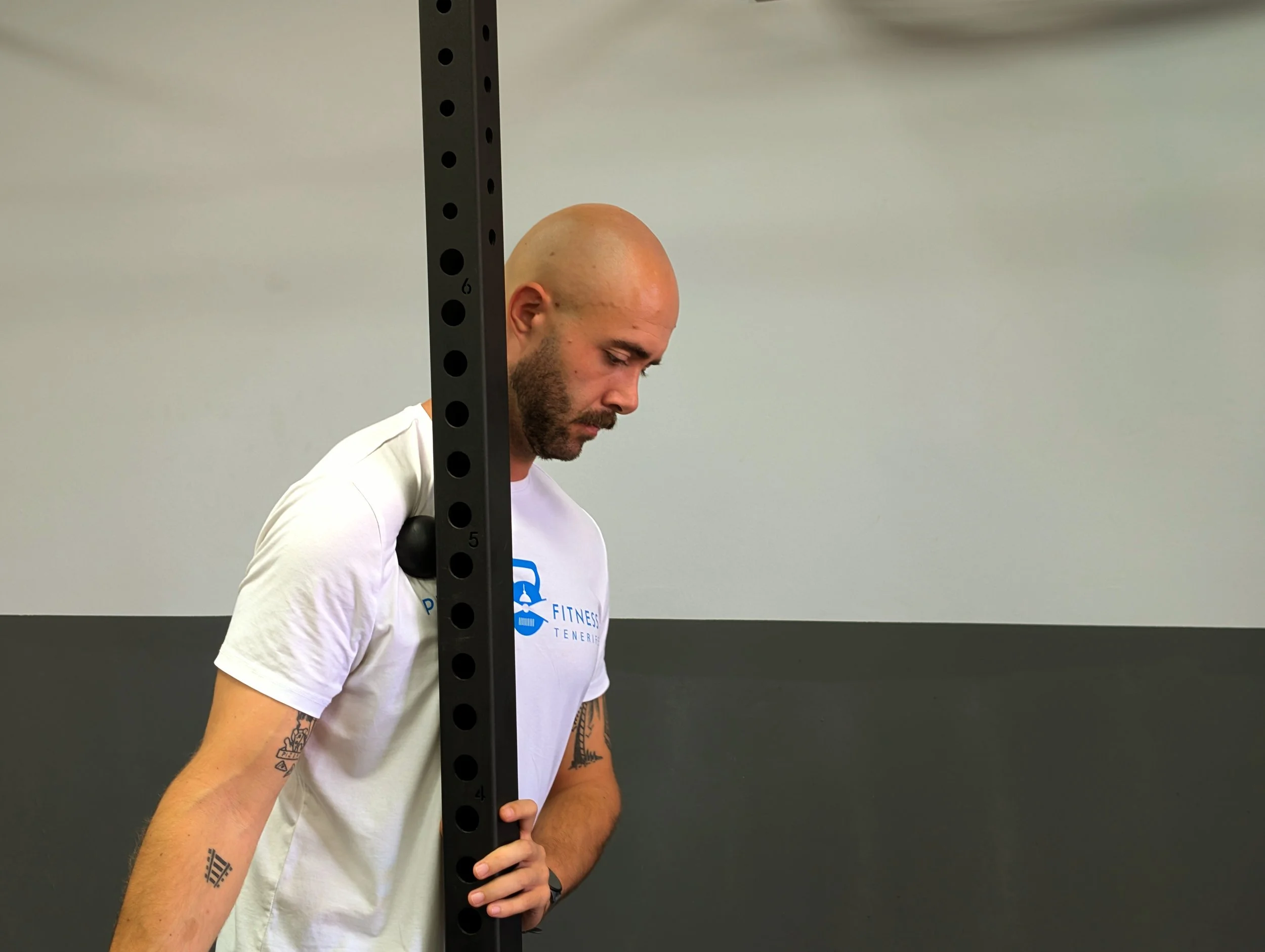
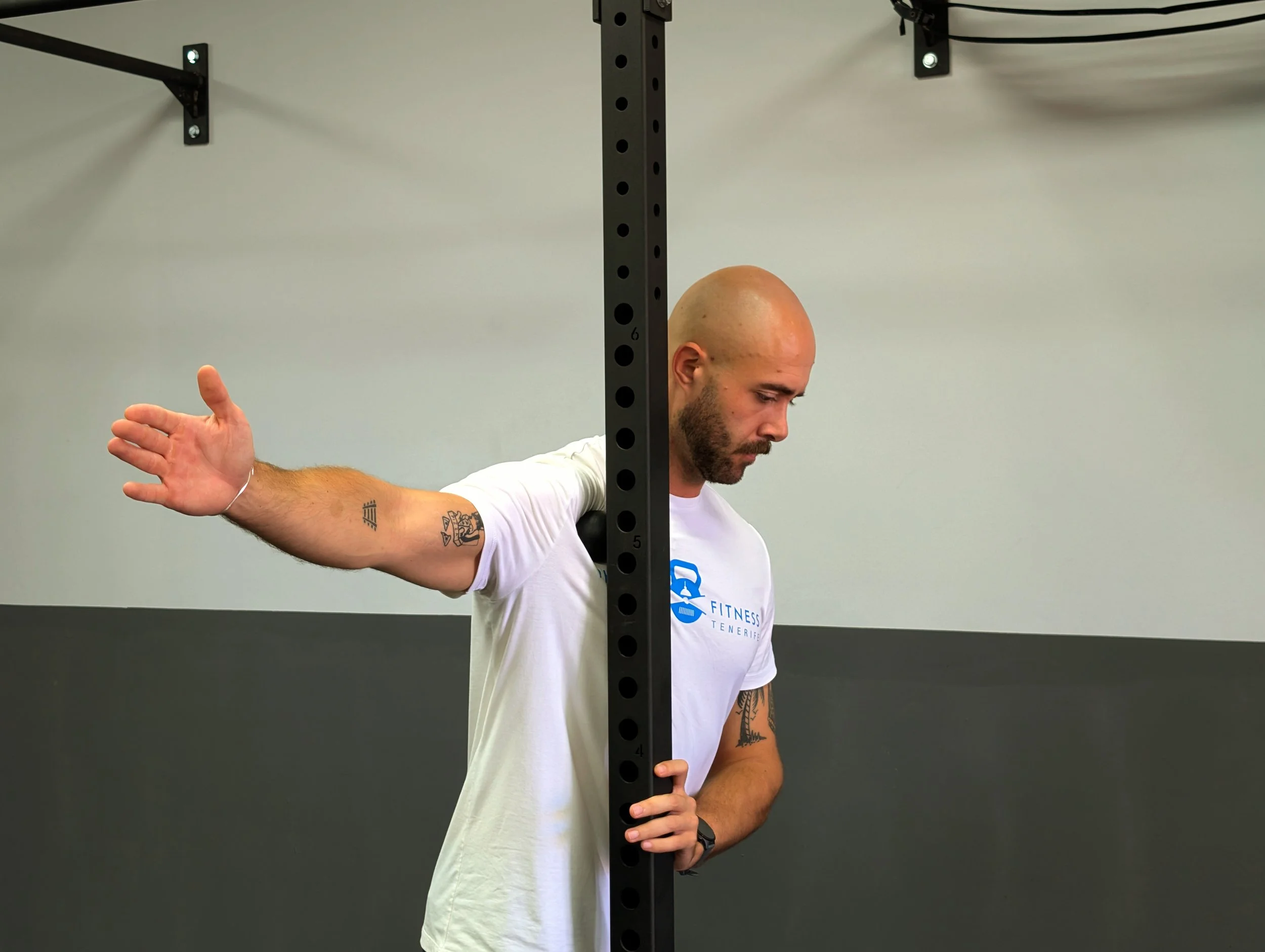
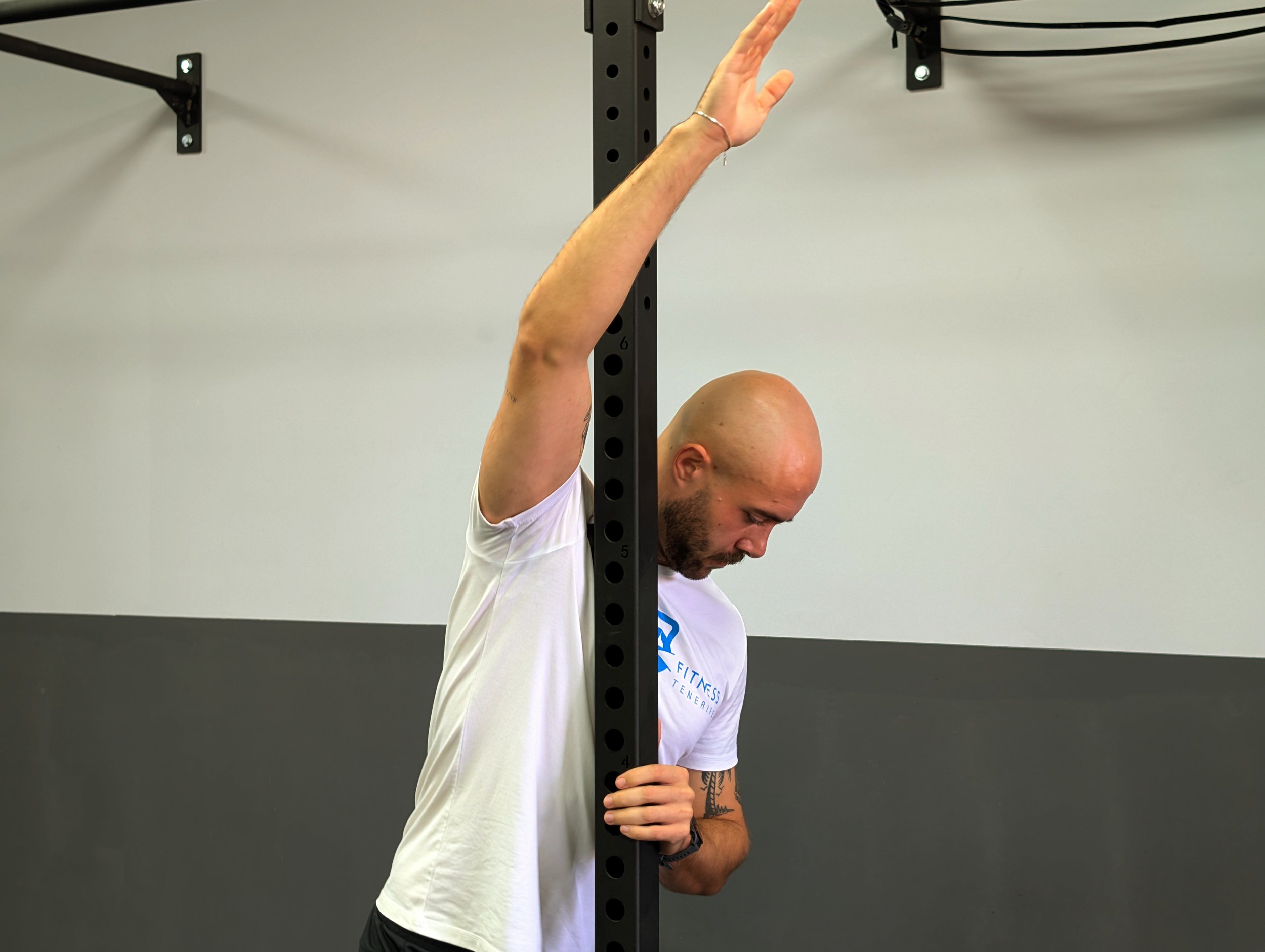
1. Anterior Compartment Smash (Chest/Front Shoulder)
Why: Restores sliding surfaces and suppleness to chest muscles (pecs) and front shoulder muscles that get tight from rounded posture.
How: Use a small or large ball.
On Floor ("Blue Angel"): Lie face down. Place the ball under the collarbone, between the chest & shoulder tip. Apply weight. Floss by slowly sliding your arm overhead, out to the side, down towards your hip, and placing your hand behind your back (like making a snow angel). Contract/Relax: Press arm into the floor briefly, then relax deeper onto the ball. Pressure Wave: Roll slightly side-to-side.
Against Wall/Doorway: Pin the ball between the wall/doorframe and chest/front shoulder. Perform similar arm movements (flossing).
Superfriend Option: A partner can use their hand/forearm for deeper pressure while you lie on your back.
Tools: Small Ball, Large Ball, Superfriend assist (optional).
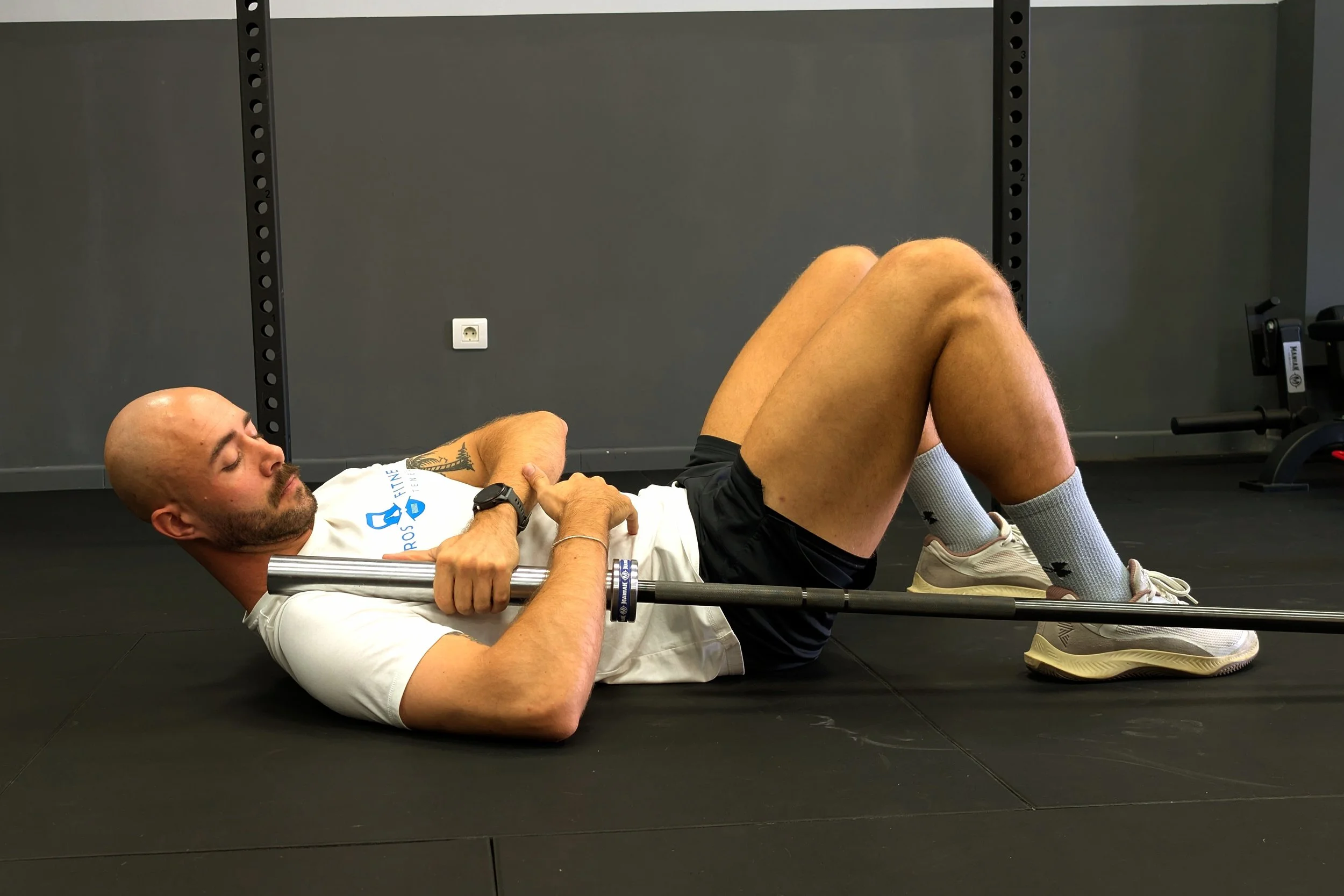
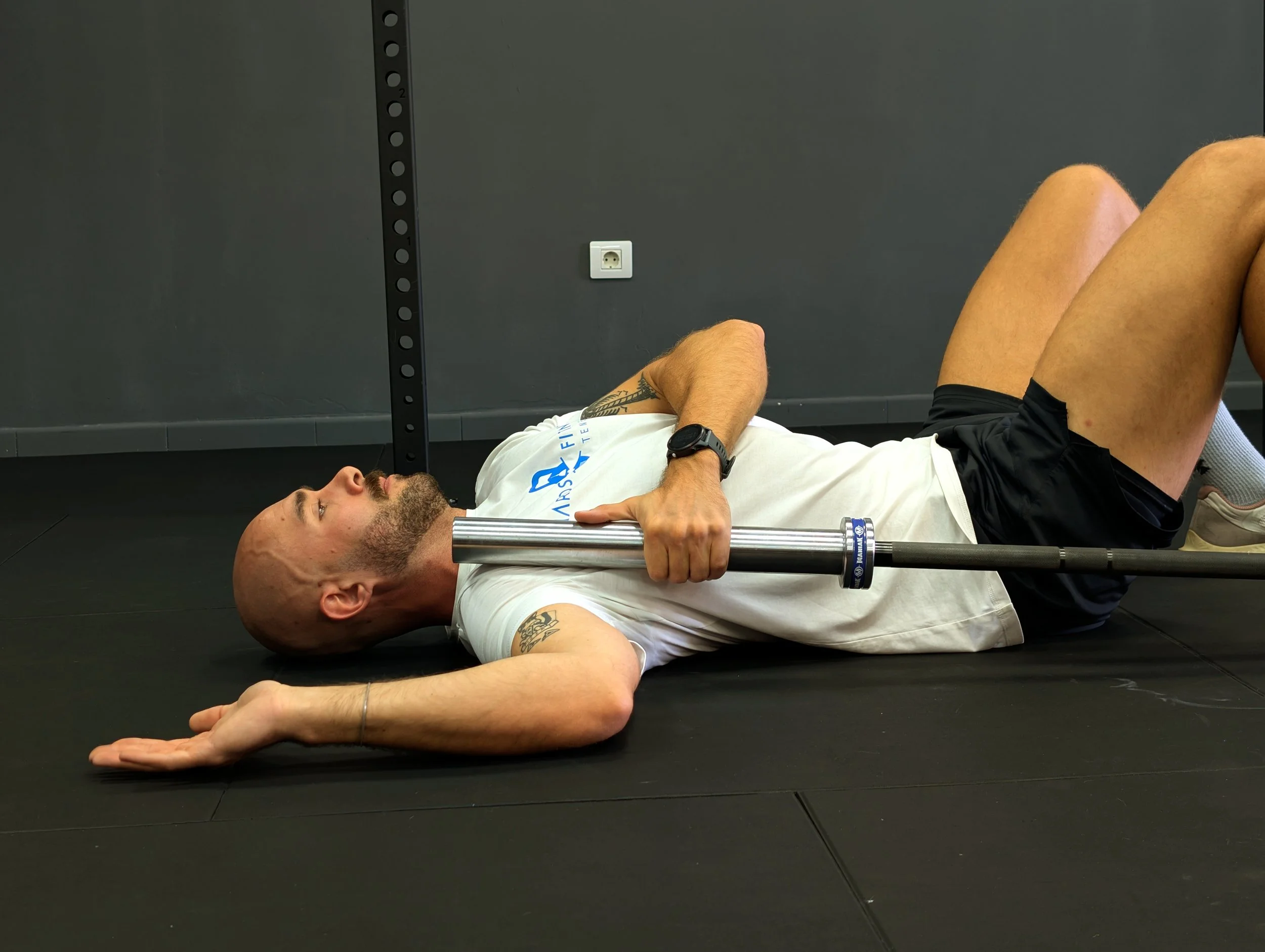
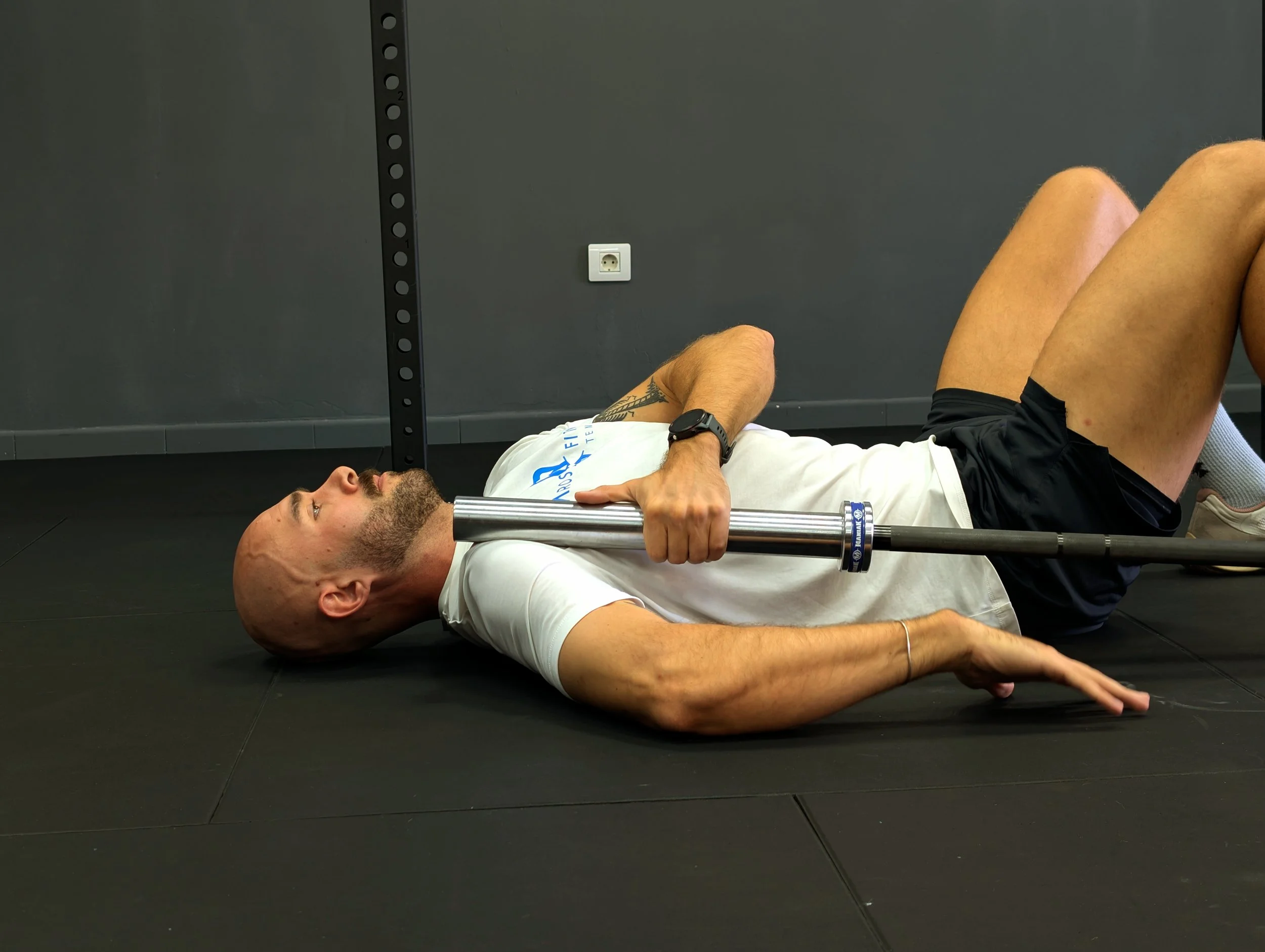
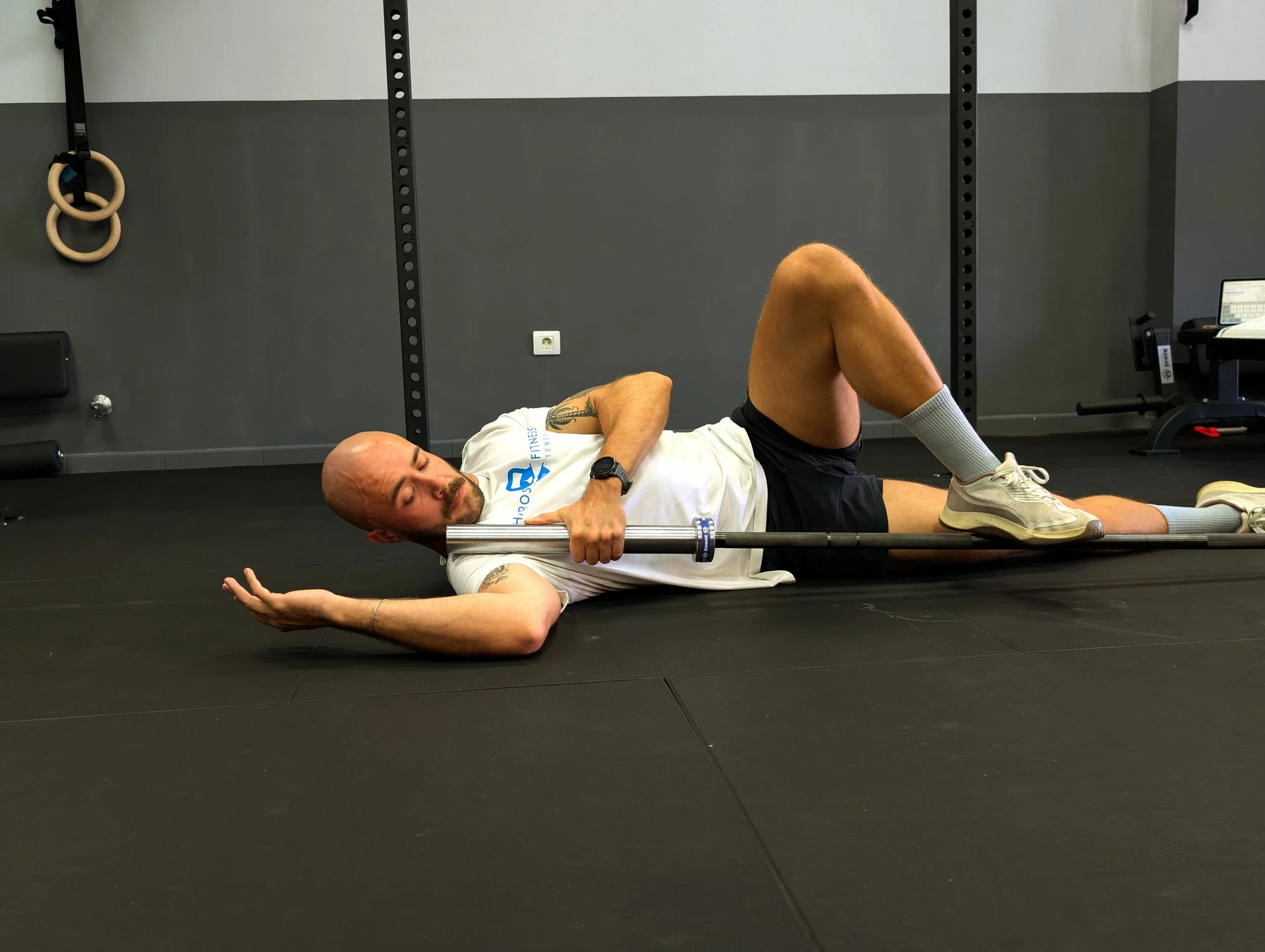
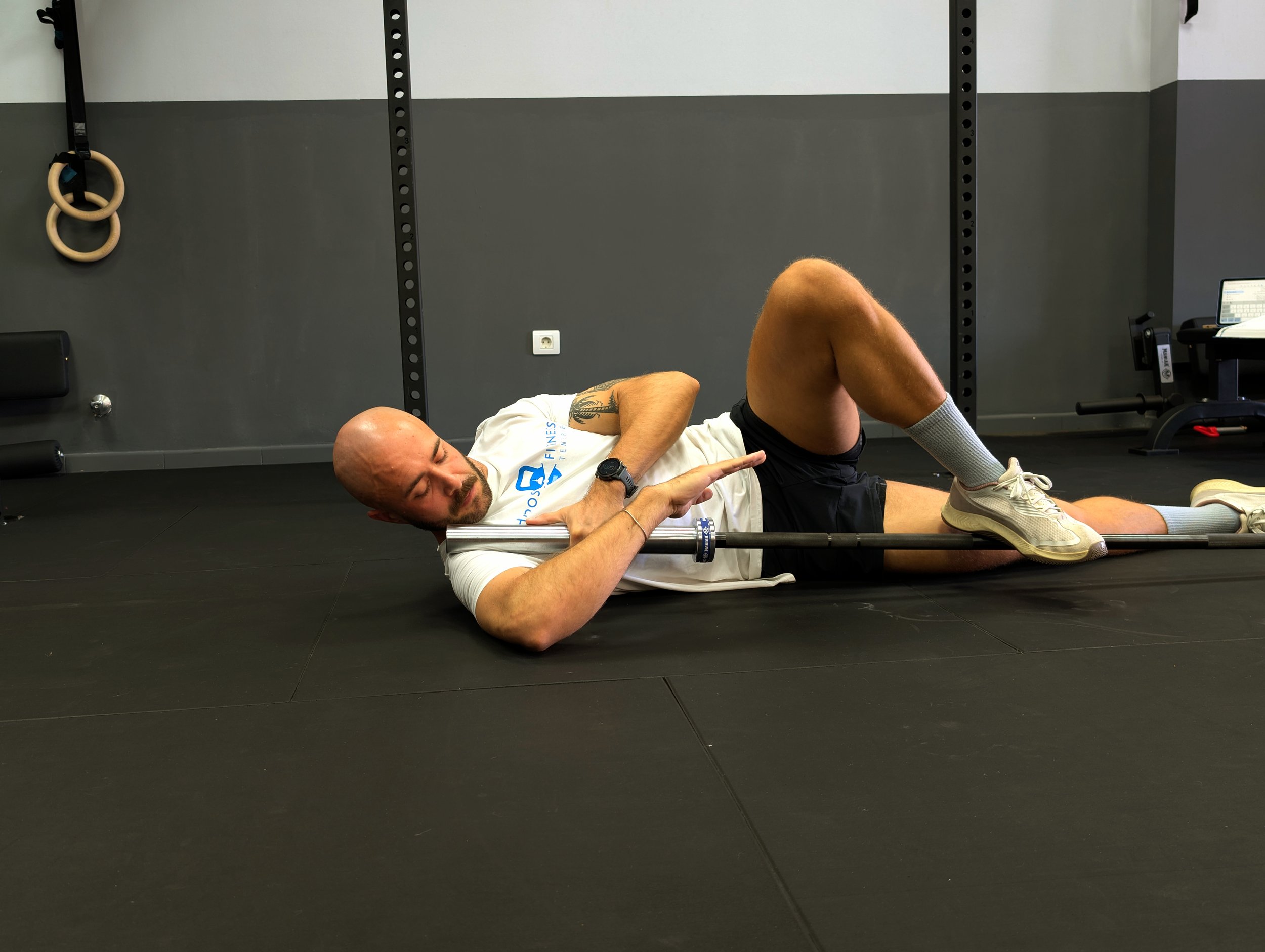
2. Barbell Shoulder Smash (Front Shoulder Focus)
Why: More aggressive technique targeting the front of the shoulder, useful for improving internal rotation.
How: Lie on your back. Place the end of a barbell sleeve (or handle of a kettlebell) onto the front/top part of your shoulder (anterior deltoid area). You can add pressure by gently placing your opposite leg over the bar/KB handle. Keep elbow bent at 90 degrees.
Floss: Slowly rotate your arm internally and externally (forearm moves towards floor/ceiling).
Tack & Twist: Apply pressure and gently twist the tool into the tissue.
Tool: Barbell end, Kettlebell handle, Small Ball (less aggressive).
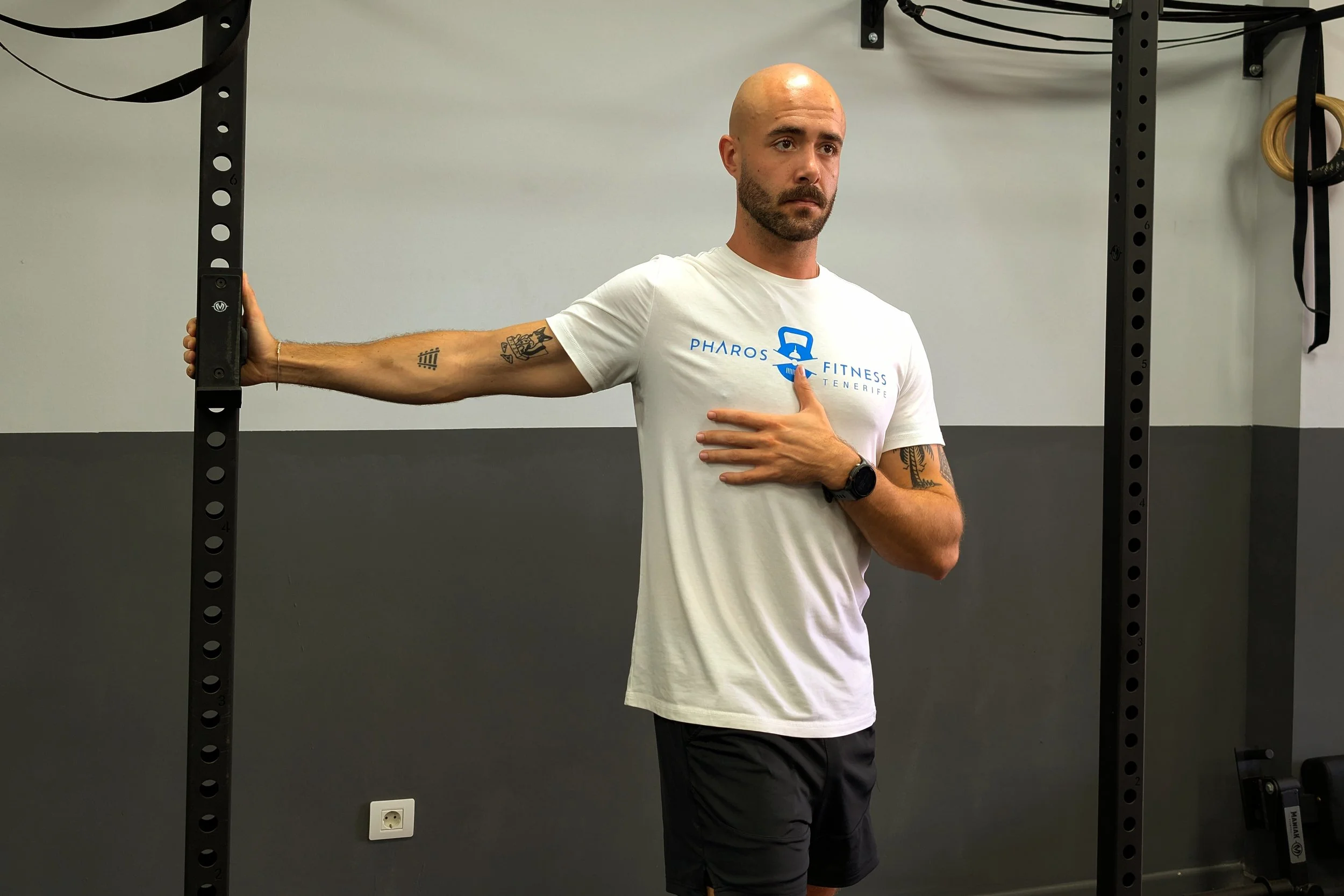
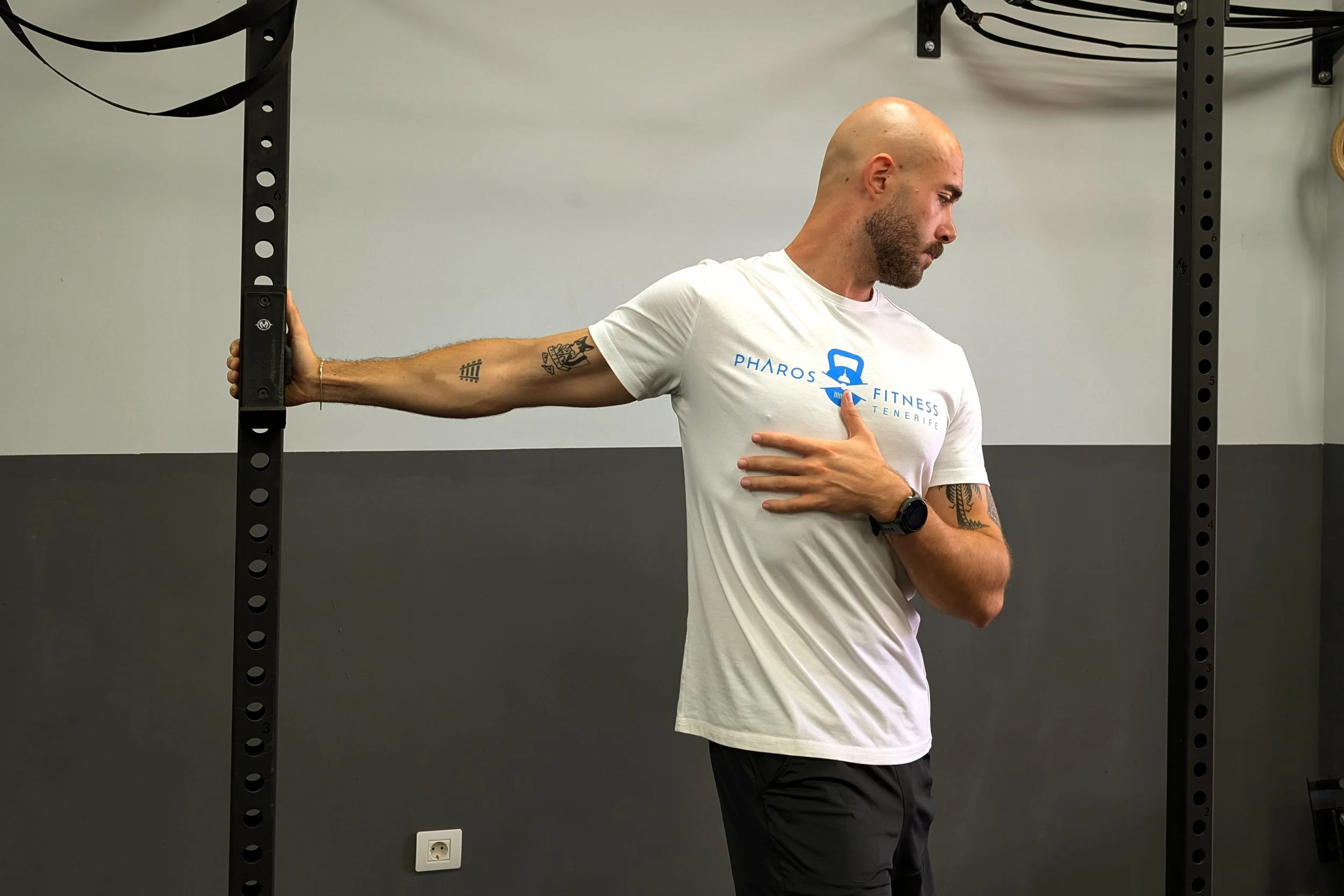
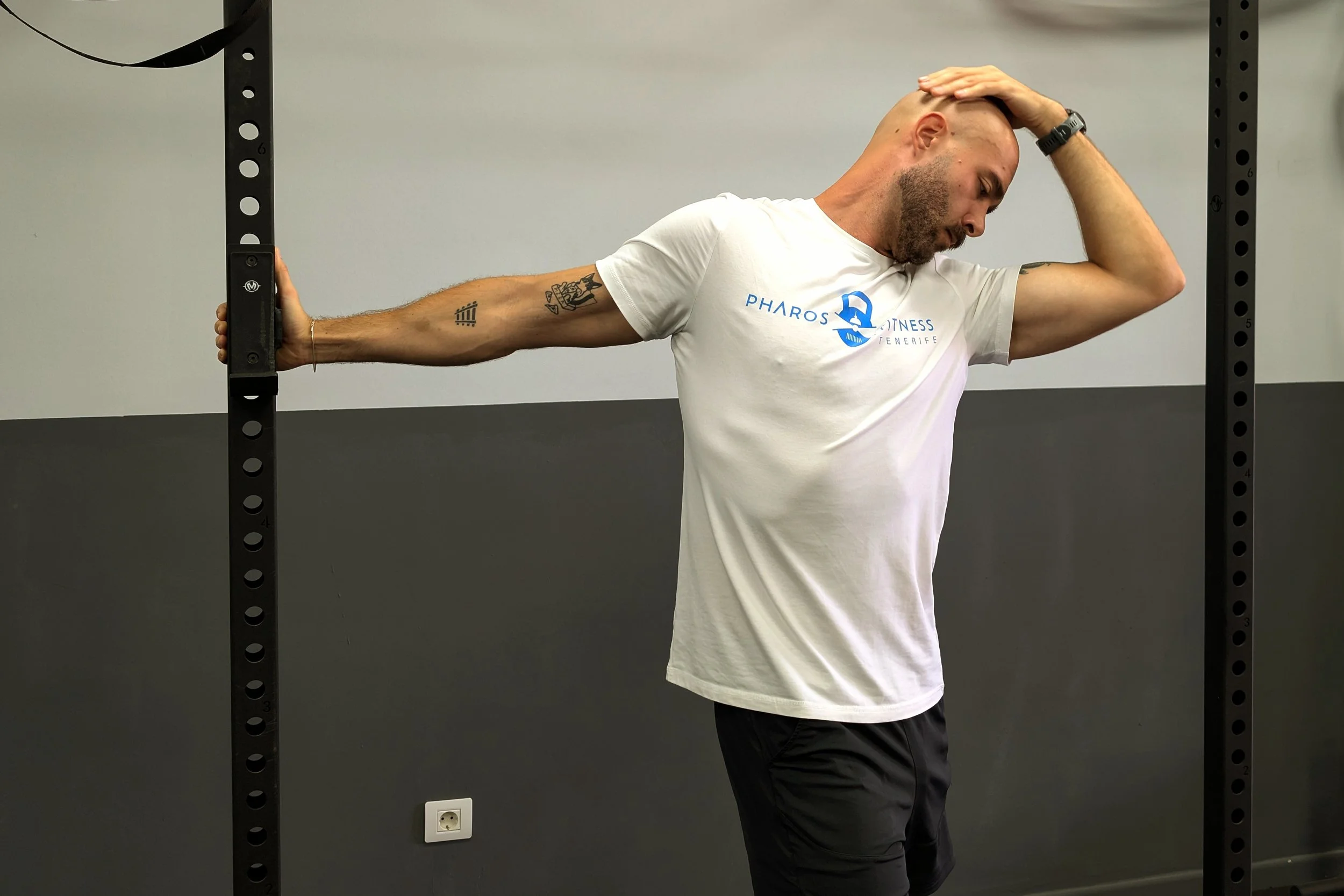
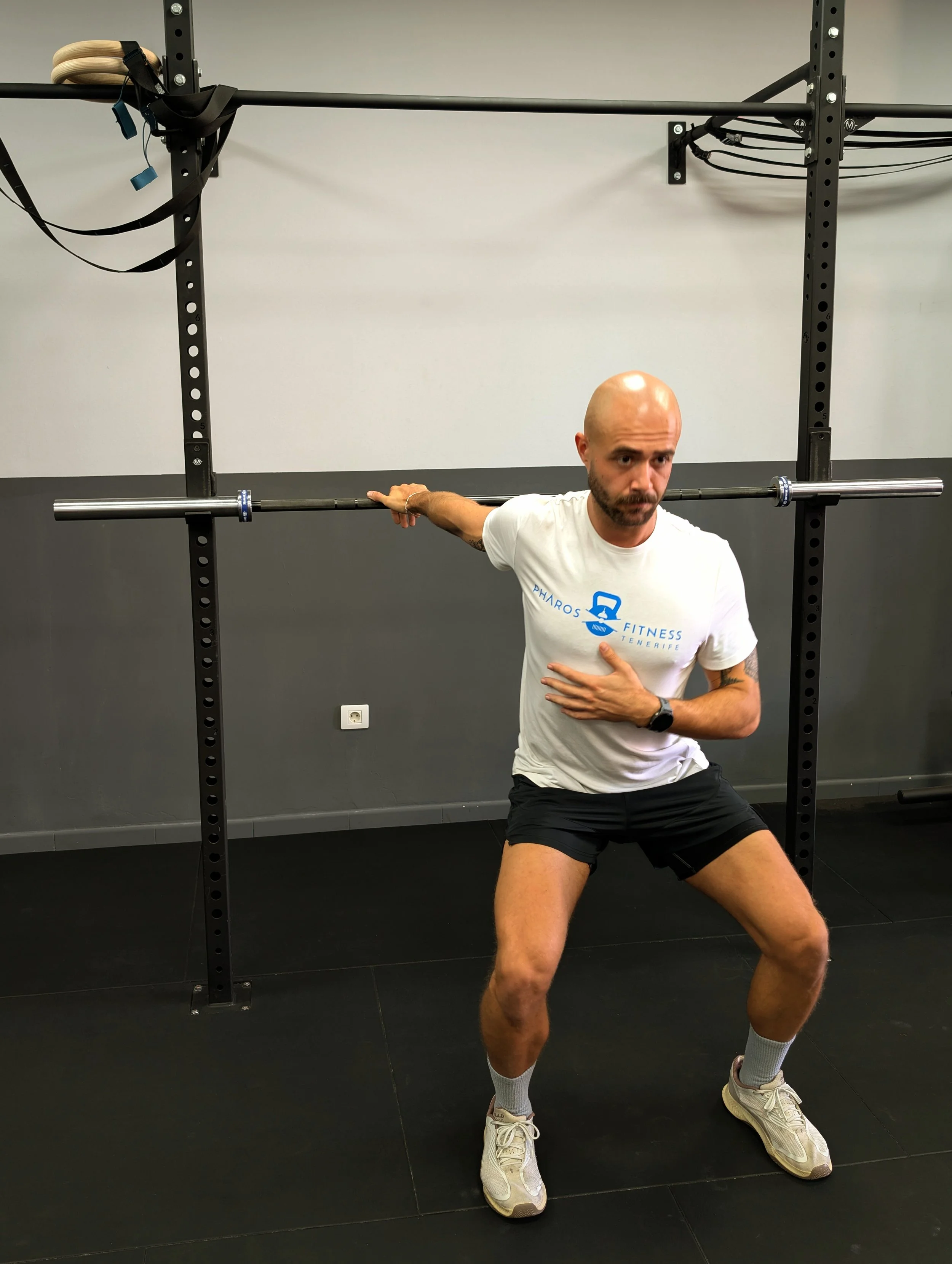
3. Lateral Opener (Chest Stretch)
Why: Lengthens chest and anterior shoulder muscles dynamically. Great before or after workouts involving pushing.
How: Grab a stable object (rack post, doorway edge, desk edge) at chest height with one hand (thumb can point up). Keep your spine neutral (belly tight). Slowly rotate your body away from your anchored arm until you feel a stretch across your chest/front shoulder.
Oscillate: Gently move in and out of the end-range stretch.
Contract/Relax: Gently press hand into anchor for 3-5 sec, then relax and rotate slightly deeper.
Add Neck: Gently tilt head away from the stretching arm.
Tool: Rack post, doorway, desk edge, wall.
4. Shoulder Extension Mobilisation
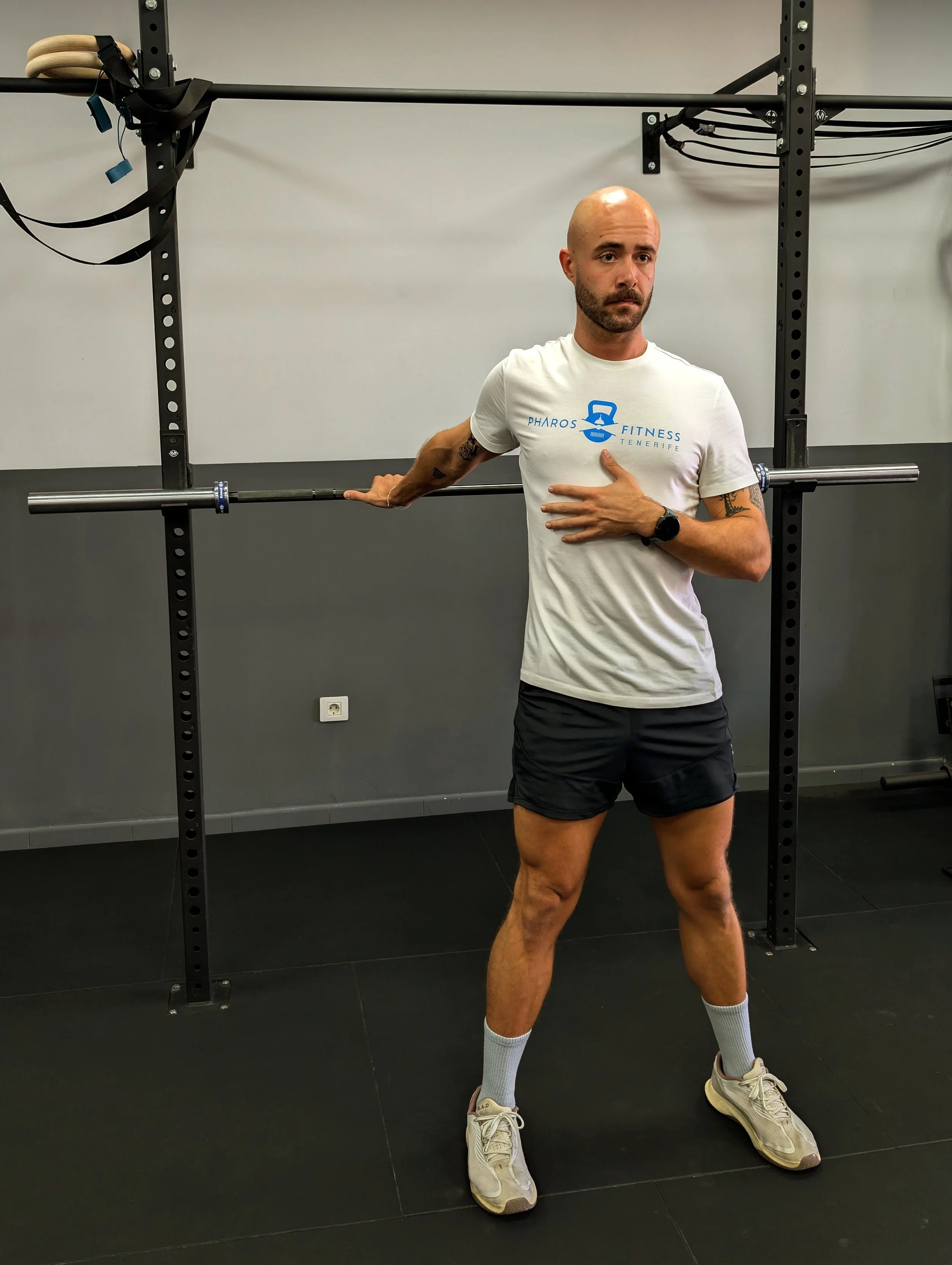
Why: Improves ability to reach arm behind the body, countering rounded shoulder posture. Important for movements like dips.
How: Place hand behind back onto a stable surface (desk, box, rack post) - palm down often works well. Keep your shoulder in a good position (don't let it slump forward). Slowly turn your body away from your anchored arm. Lower your body slightly (bend knees) to increase stretch intensity.
Oscillate: Move gently in and out of the end-range position.
Contract/Relax: Gently press hand into the surface for 3-5 sec, then relax and turn/lower slightly deeper.
Sink Option (Both Arms): Anchor both hands behind your back on a stable surface (like a sink edge or low bar), then lower your hips.
Tool: Desk, box, rack post, sink edge.
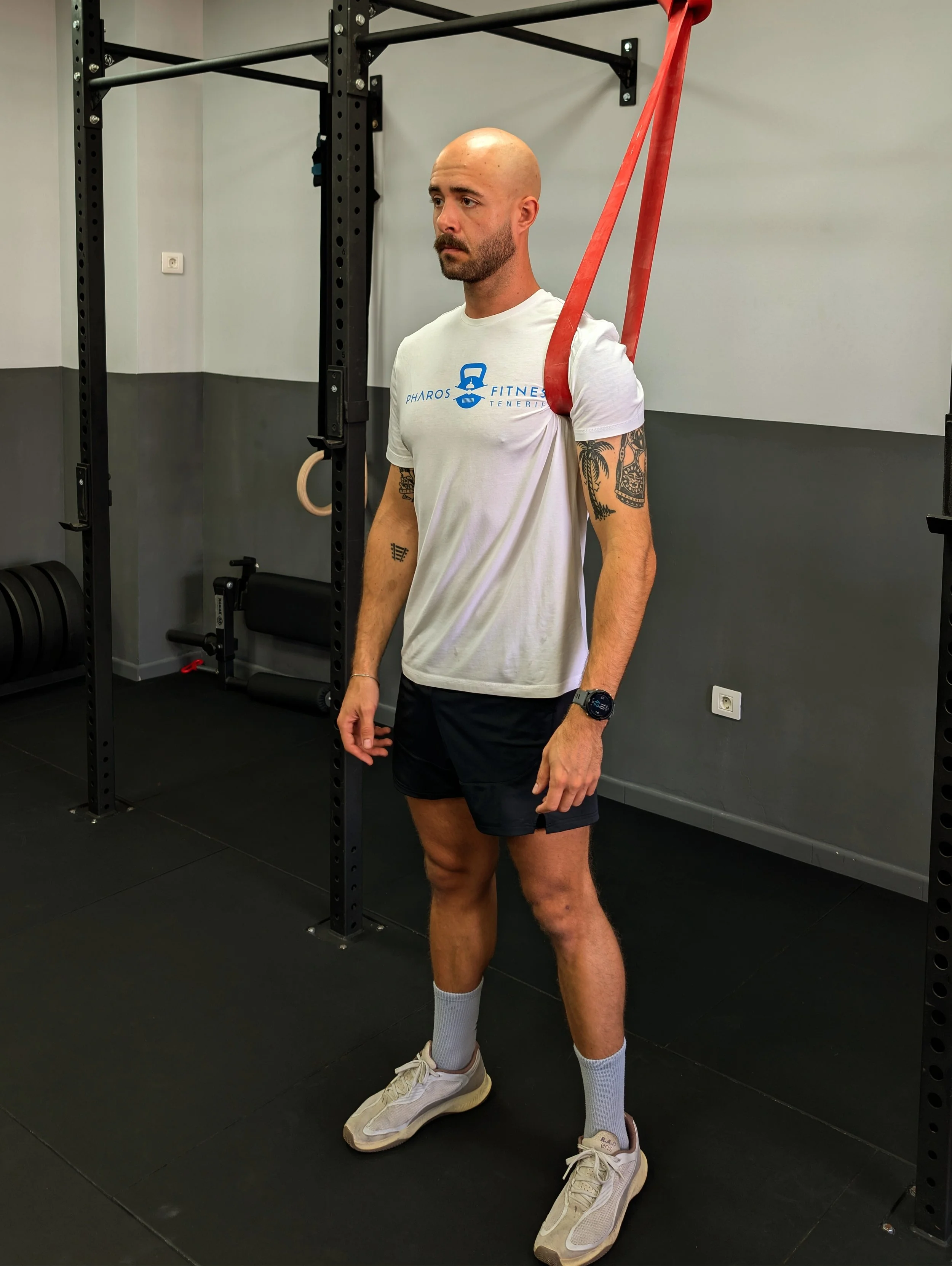
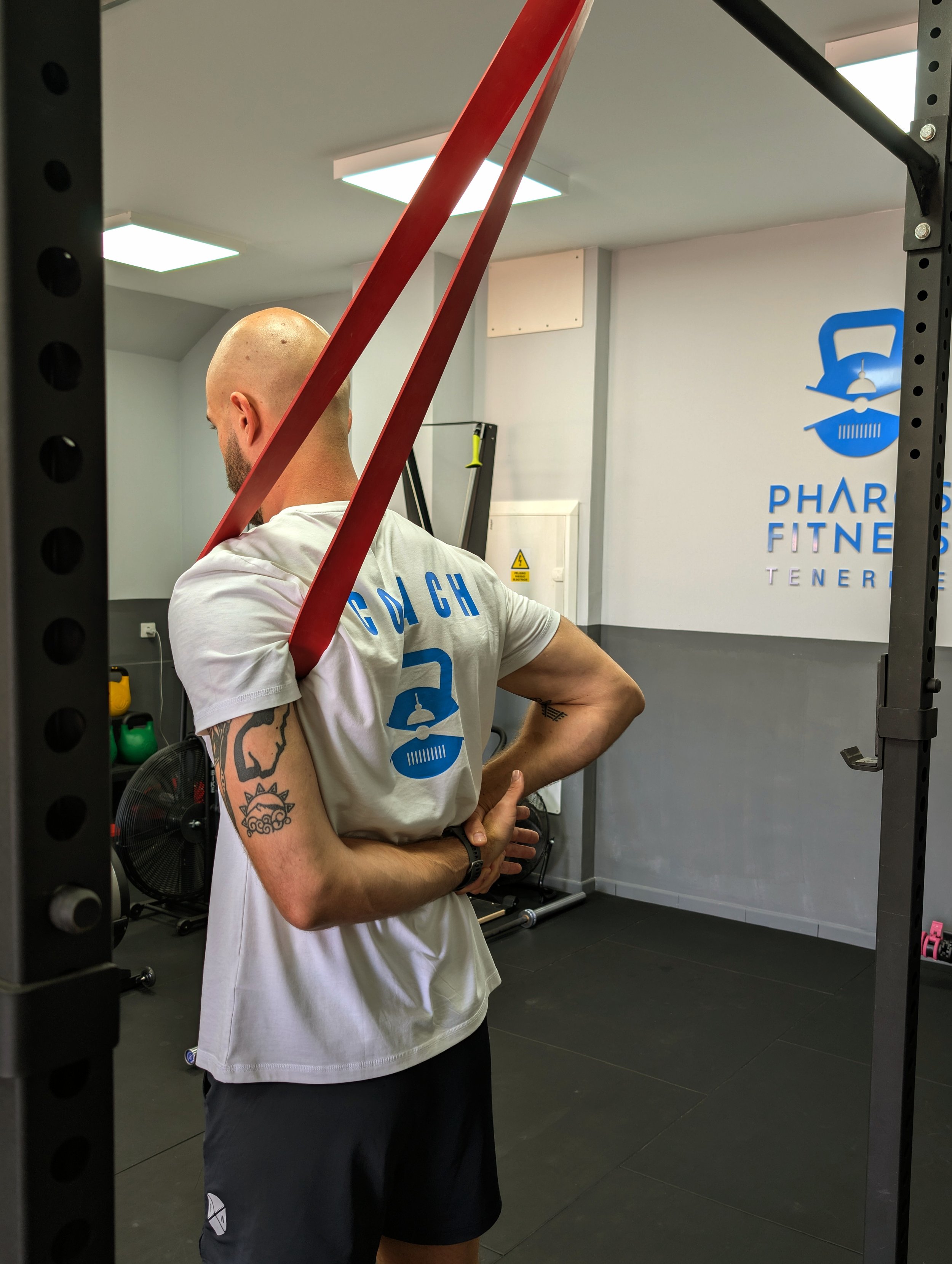
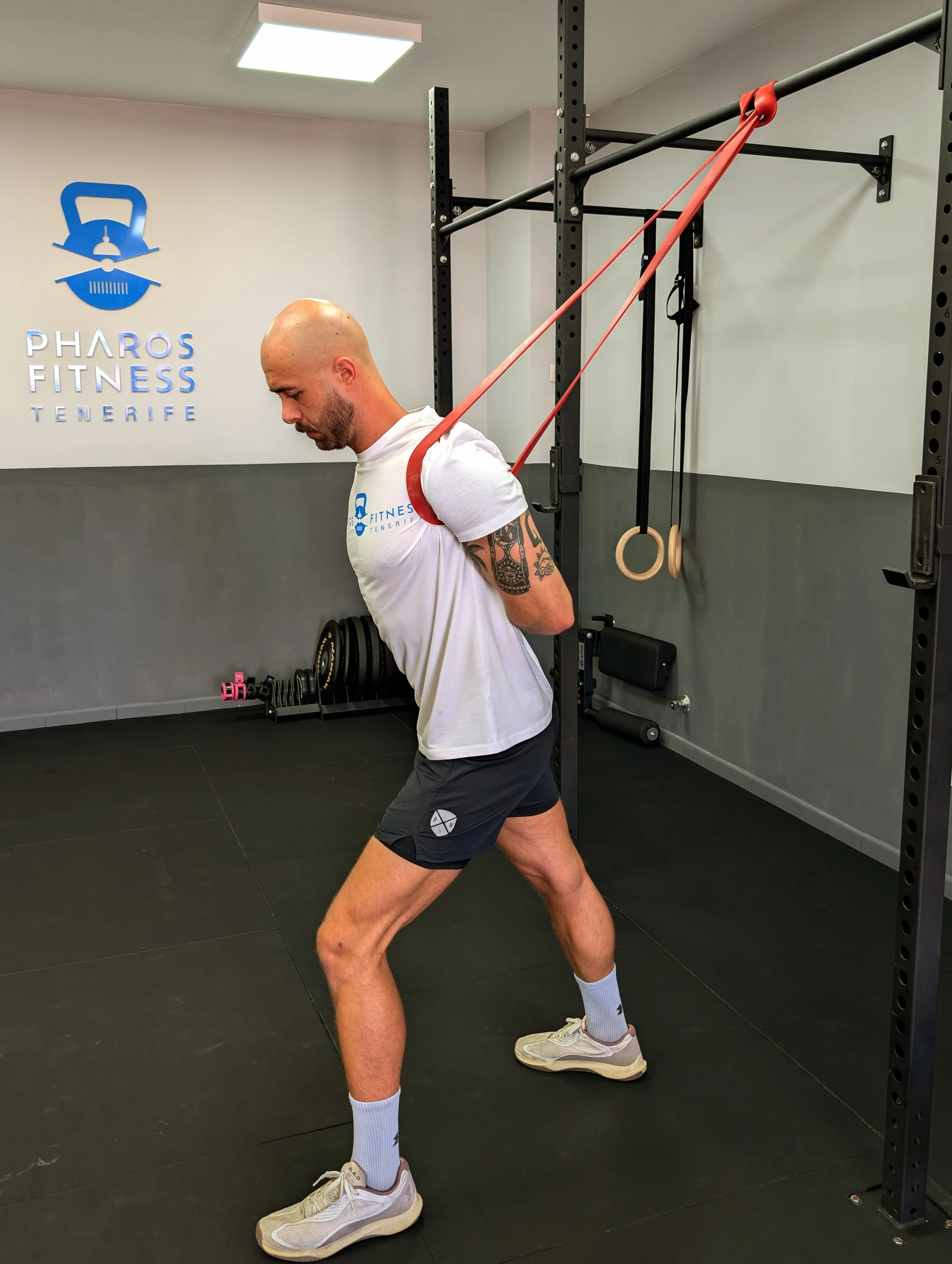
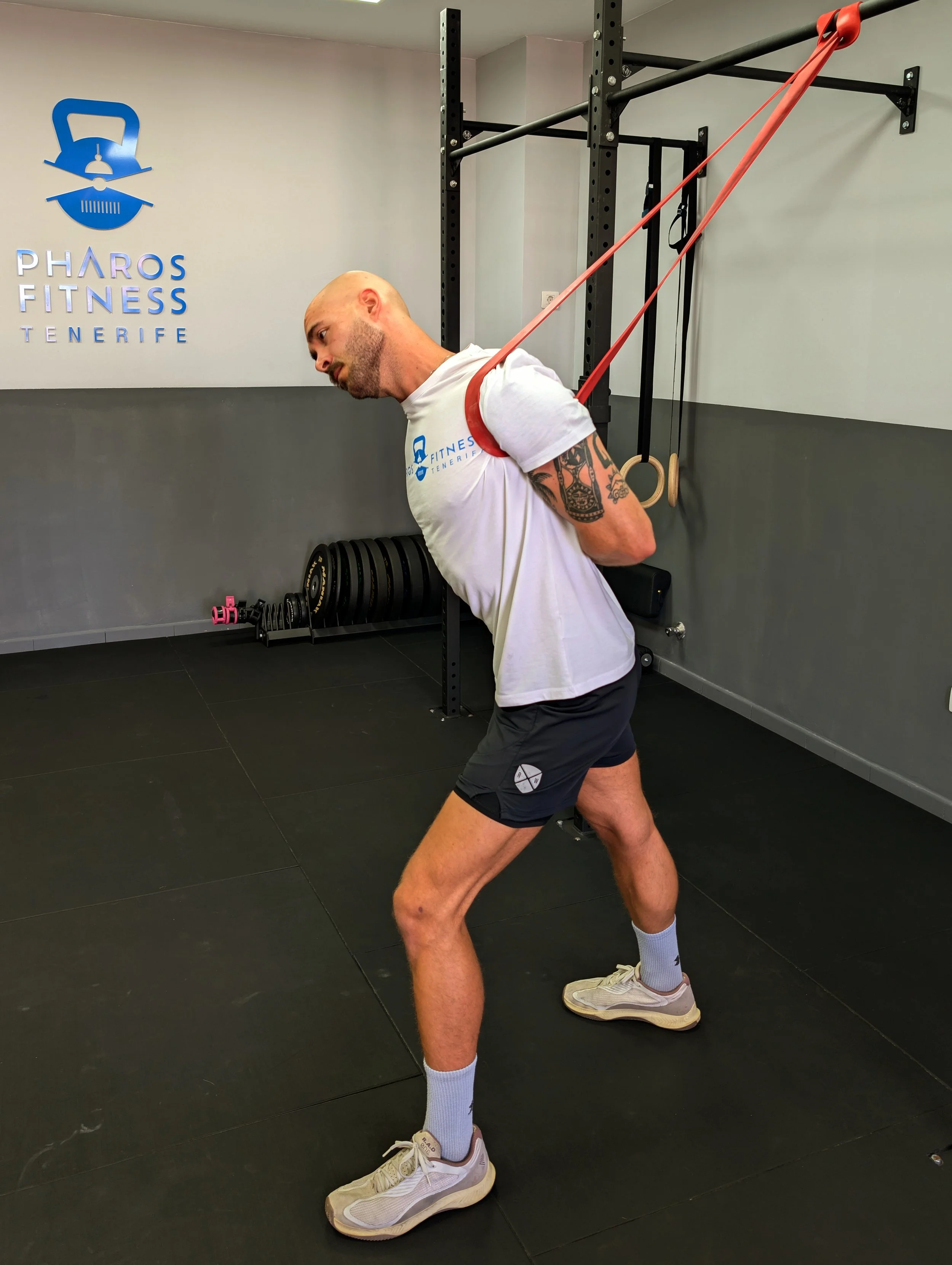
5. Banded Bully (Anterior Focus)
Why: Uses band resistance to help pull the shoulder back into a better position while mobilising tight anterior tissues, improving internal rotation and extension.
How: Anchor a band behind you at shoulder height. Loop hand/wrist through band. Step forward to create tension pulling arm back. Place arm behind back (internal rotation + extension). Use opposite hand to assist pulling banded arm further across/up back. Lean forward slightly to intensify. Explore different angles. Contract/relax against band tension.
Tool: Resistance Band.
Key Reminders for Success:
Stop Sitting So Much! This is the main cause. Stand up, walk, and take breaks frequently.
Fight the Rounding: Be mindful of shoulder position all day. Practice pulling shoulders back gently (think "proud chest" but keep ribs down) using the bracing sequence .
Elbows In: When typing or using a mouse, keep elbows close to your body to prevent shoulders from rolling forward.
Look Upstream/Downstream: Tightness here affects overhead position (Prescription 4) and upper back posture (Prescription 2). Work on those areas too!
Breathe Wide: Practice breathing into your sides and back (360 breathing) to help mobilise the rib cage connected to your chest muscles.
Important Notes:
Nerve Awareness: Be cautious around the armpit and front of the shoulder to avoid irritating nerves (sharp, shooting, or numbing sensations mean back off or adjust) .
Pressure: Start with less pressure and increase as tissues adapt.
Neutral Spine: Maintain a braced trunk during rotational stretches like the Lateral Opener to avoid compensating by arching your back.