
MOBILITY - POSTERIOR SHOULDER AND LAT
Welcome! This program addresses tightness in the back of your shoulder and down the side of your back (your lats). These areas often get stiff from postures like reaching forward or rounding your shoulders, which can limit your ability to reach overhead comfortably and position your shoulders correctly. Let's work on opening them up!
Common Issues This Helps:
Pain in the back of the shoulder
Rotator cuff related discomfort
Clicking or pinching when reaching overhead
Difficulty reaching straight overhead (limited shoulder flexion)
Difficulty getting into a good "front rack" position (for cleans/front squats) due to tight lats
Poor shoulder stability during pushing or pulling movements
Quick Check (Assessment):
Overhead Reach: Can you raise arms straight overhead without arching your low back, bending elbows, or letting ribs flare up? Compare how it feels to Prescription 3 (anterior shoulder).
Internal Rotation: Can you reach your hand up your back comfortably? Compare sides.
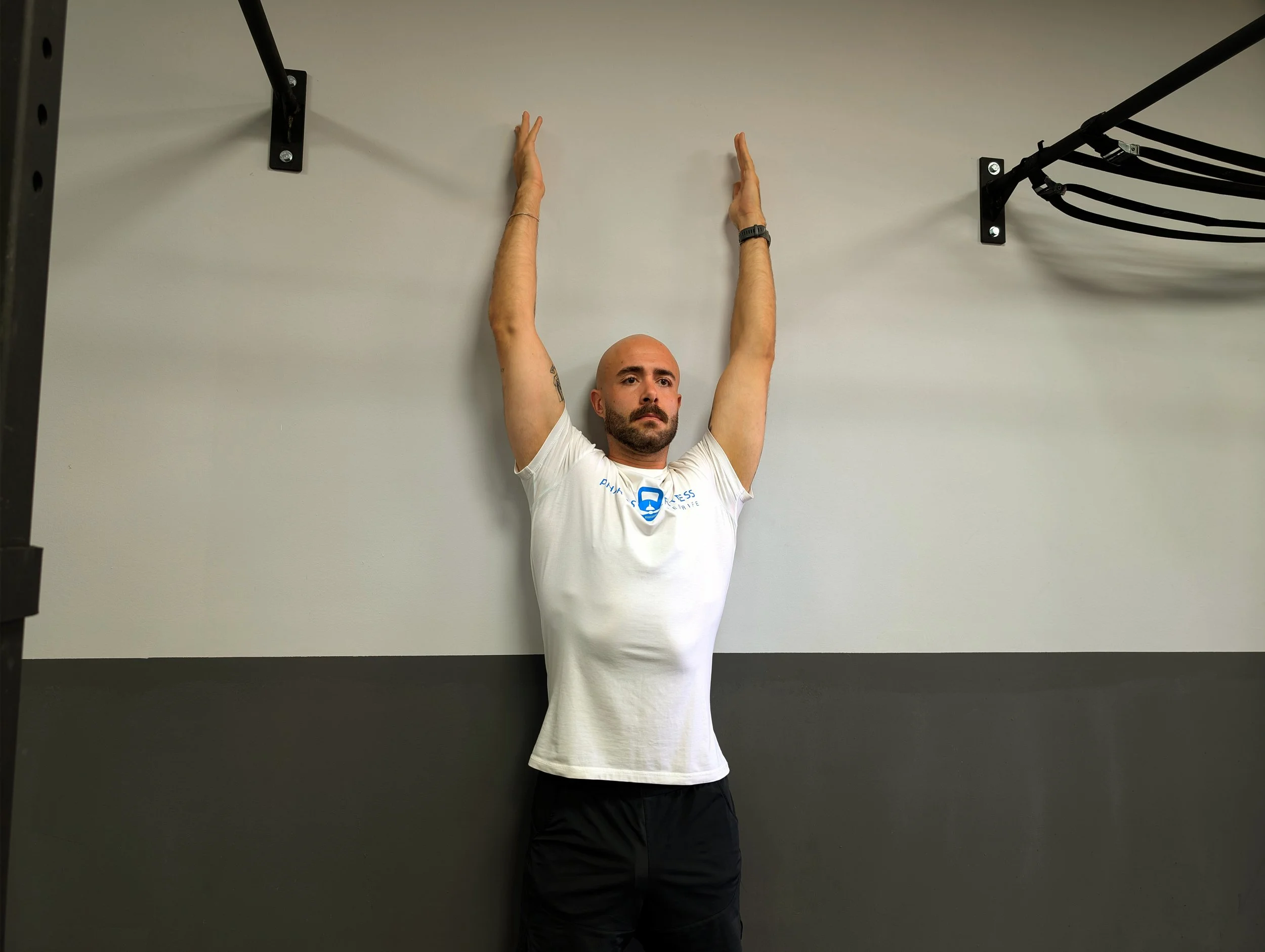
Wall Test: Facing away from a wall (heels, butt, upper back, head touching), can you slide straight arms overhead keeping contact?
Movement: Observe overhead squats, presses, and pull-ups. Do shoulders stay stable ("armpits forward" overhead)? Or do elbows bend/flare, back arch excessively?
Your Mobility Practices:
(Aim for approx. 2 minutes per technique/area unless otherwise noted. Breathe deeply!
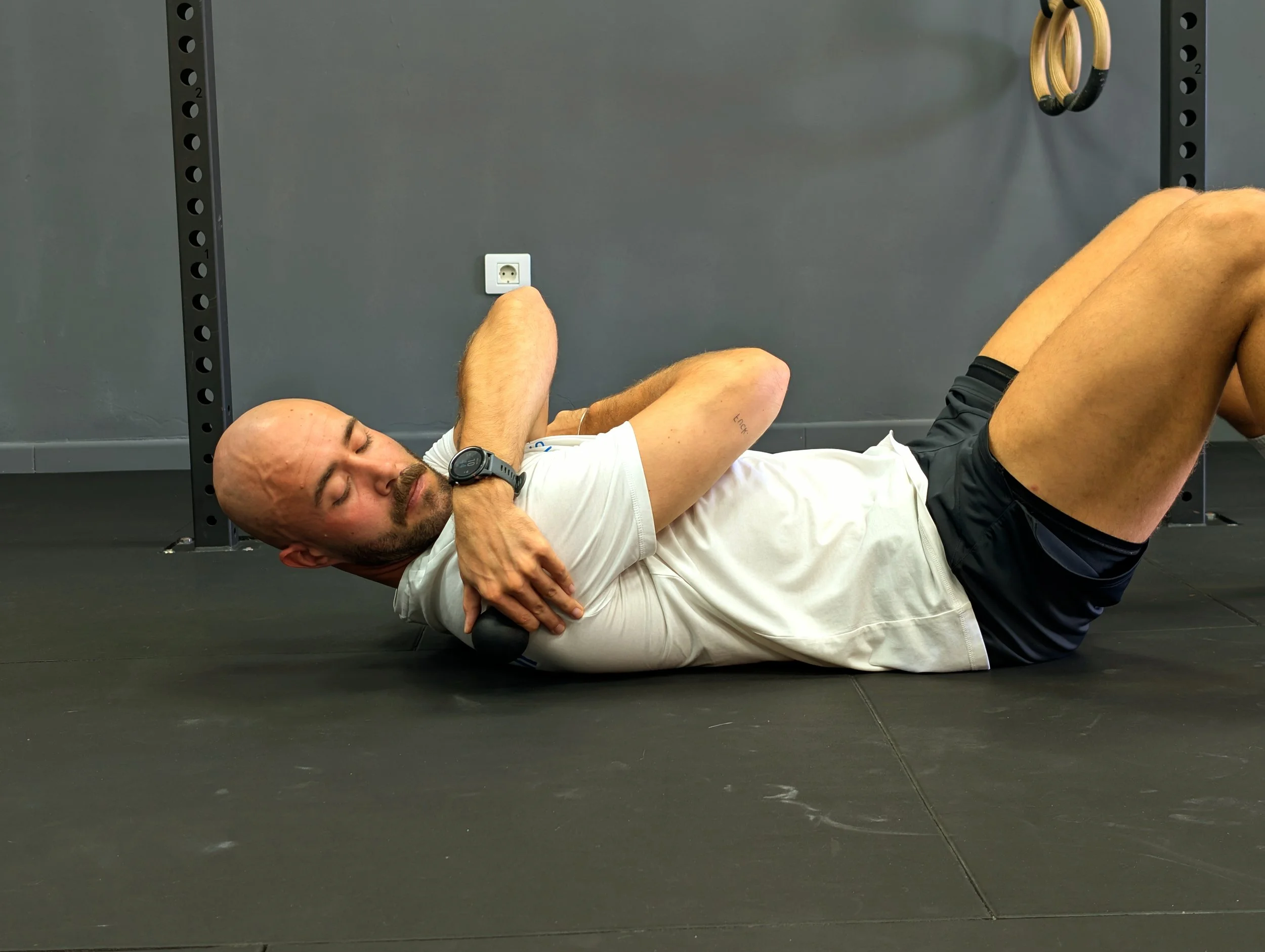
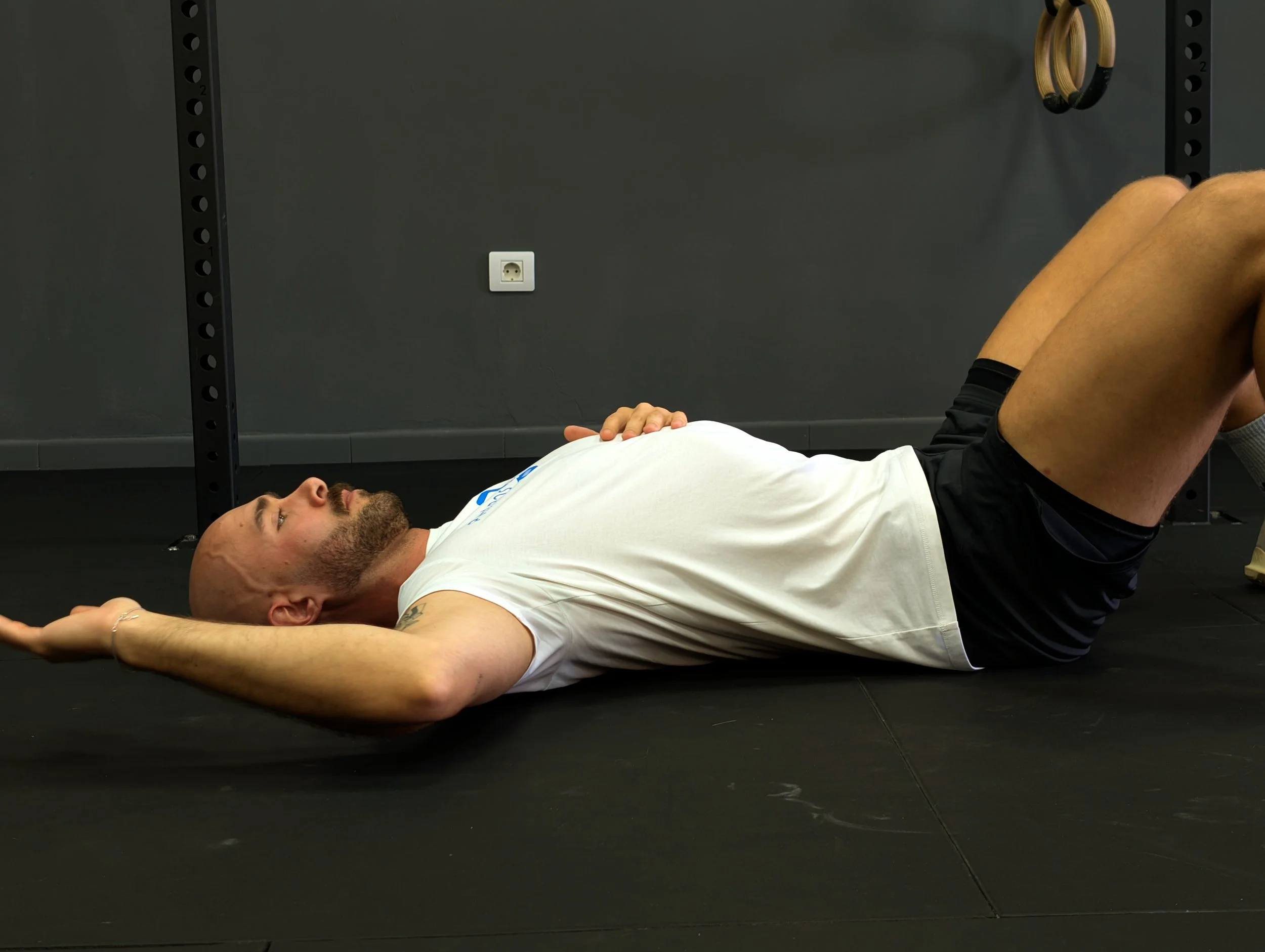
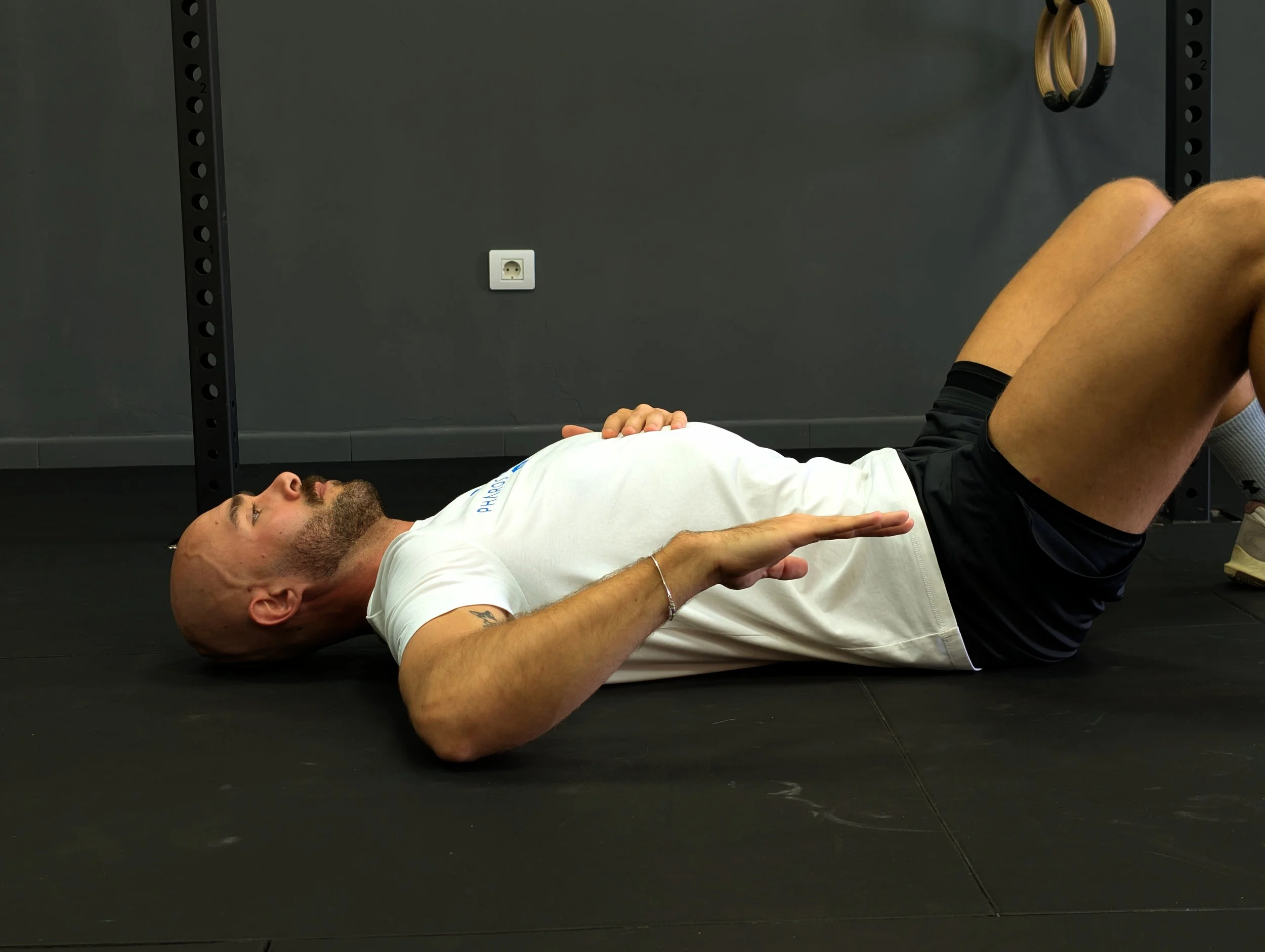
1. Shoulder Rotator Smash & Floss (Posterior Shoulder)
Why: Addresses stiffness in the small muscles on the back of the shoulder blade (external rotators), often tight and painful from poor posture.
How: Lie on your back or side. Place a small or large ball on the fleshy part behind your shoulder/upper armpit area. Apply pressure.
Floss: Keeping your elbow bent at 90 degrees, slowly rotate your forearm down towards the floor (internal rotation) and then up towards the ceiling/past your head (external rotation) .
Contract/Relax: Tense the muscles against the ball, hold 3-5 sec, then relax deeper.
Tools: Small Ball (lacrosse recommended), Large Ball.
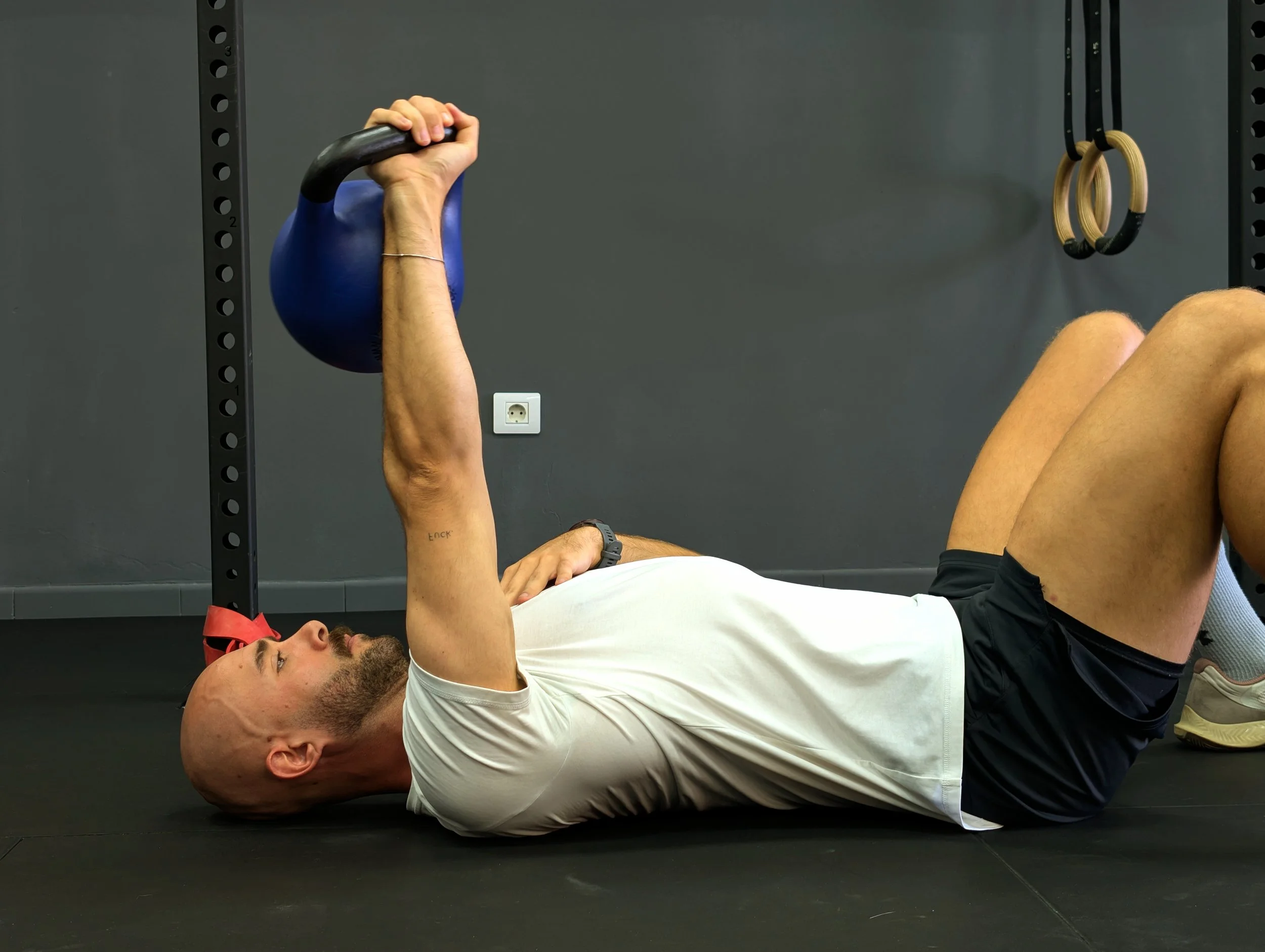
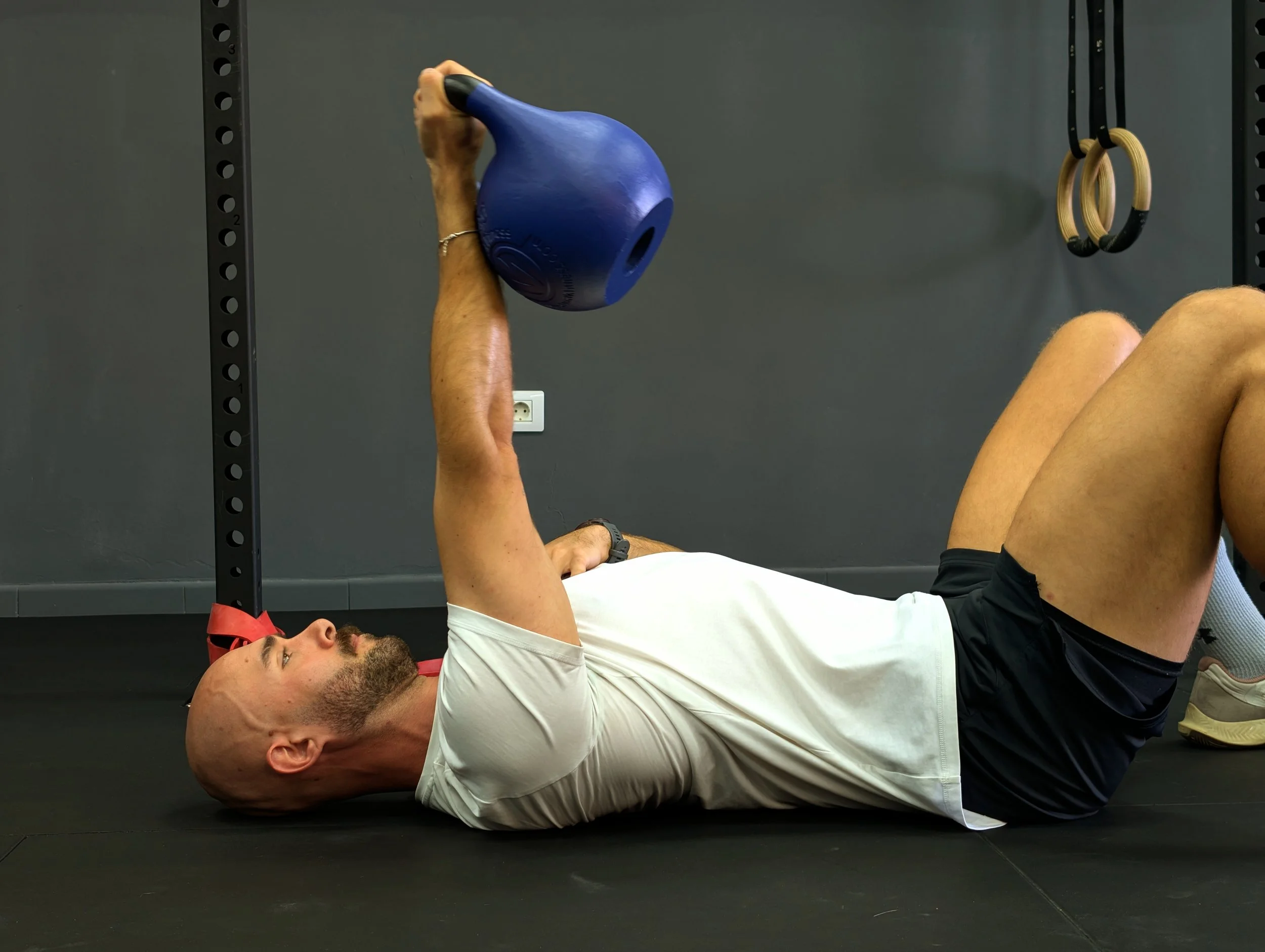
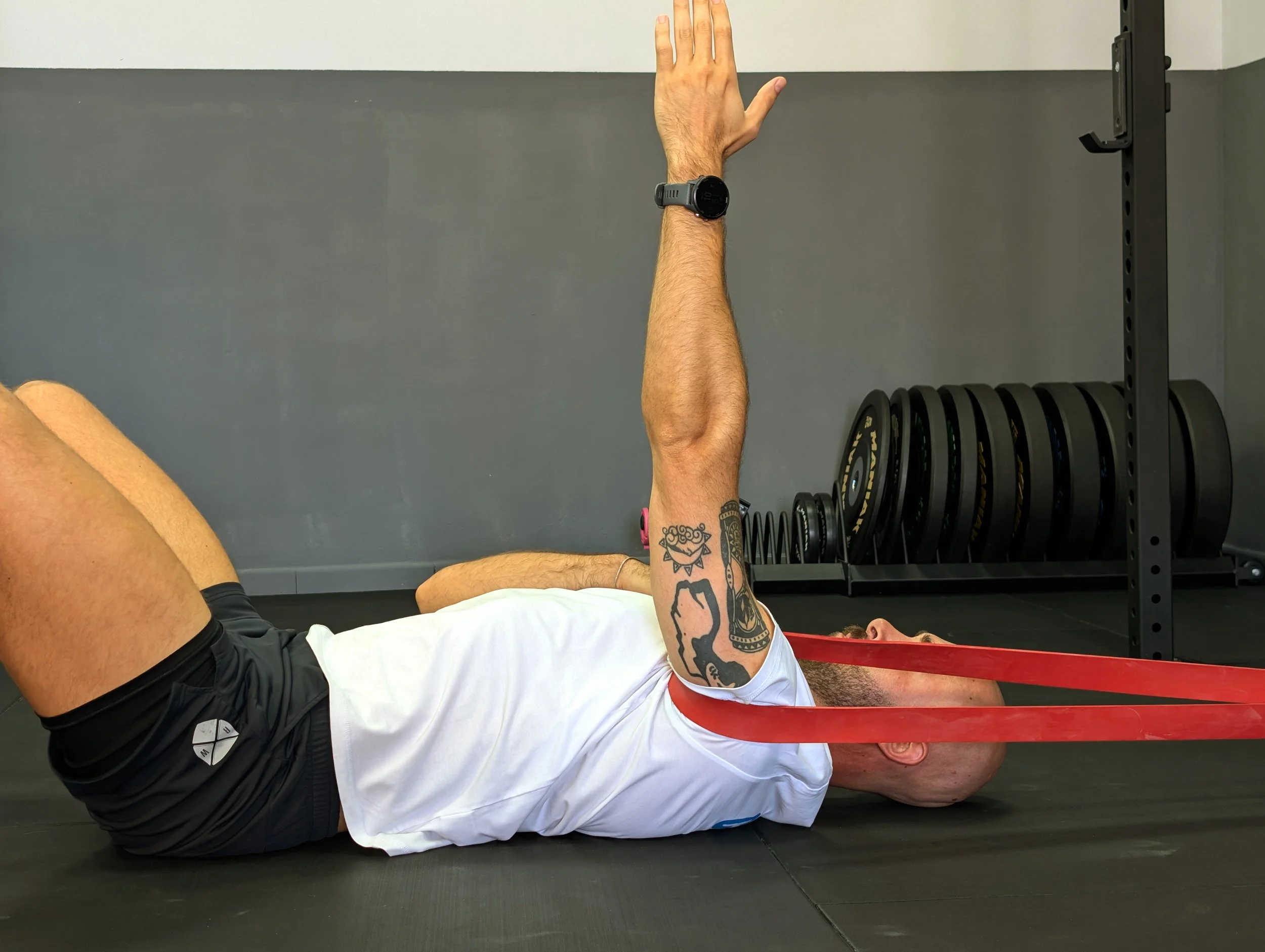
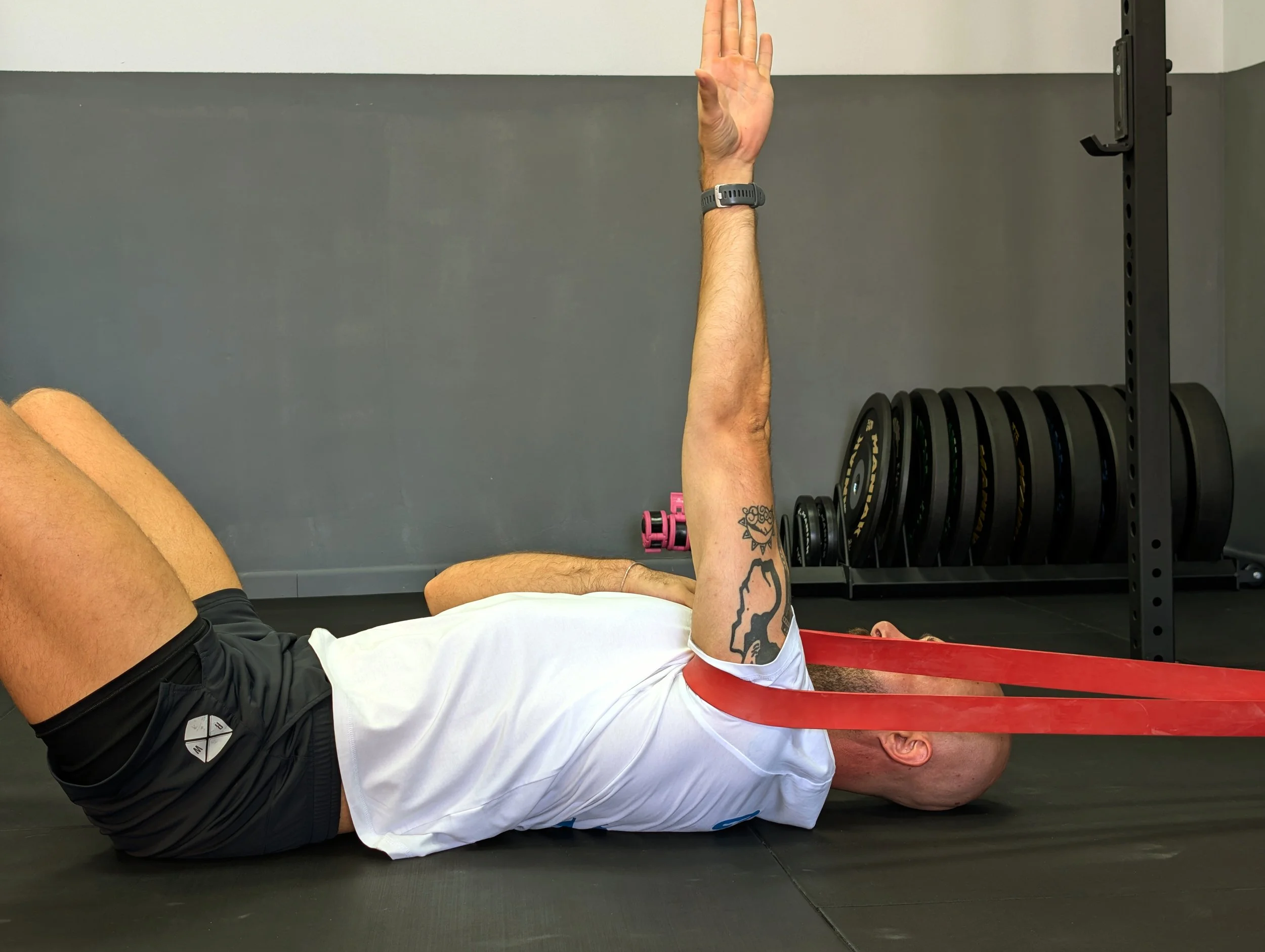
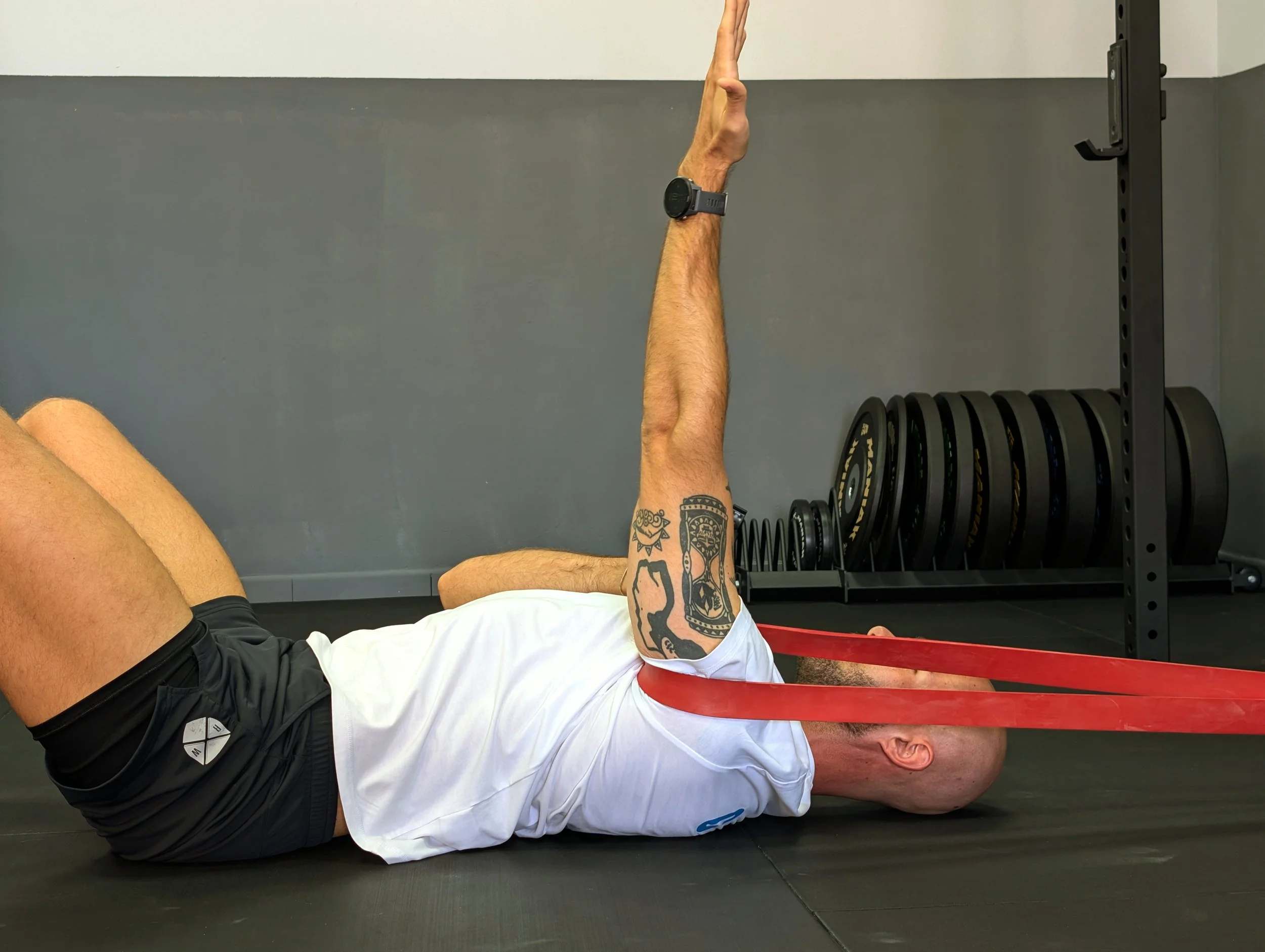
2. Posterior Capsule Mobilisation (Kettlebell or Banded)
Why: Targets stiffness deep within the back of the shoulder joint capsule itself, critical for resetting shoulder position and improving rotation.
How:
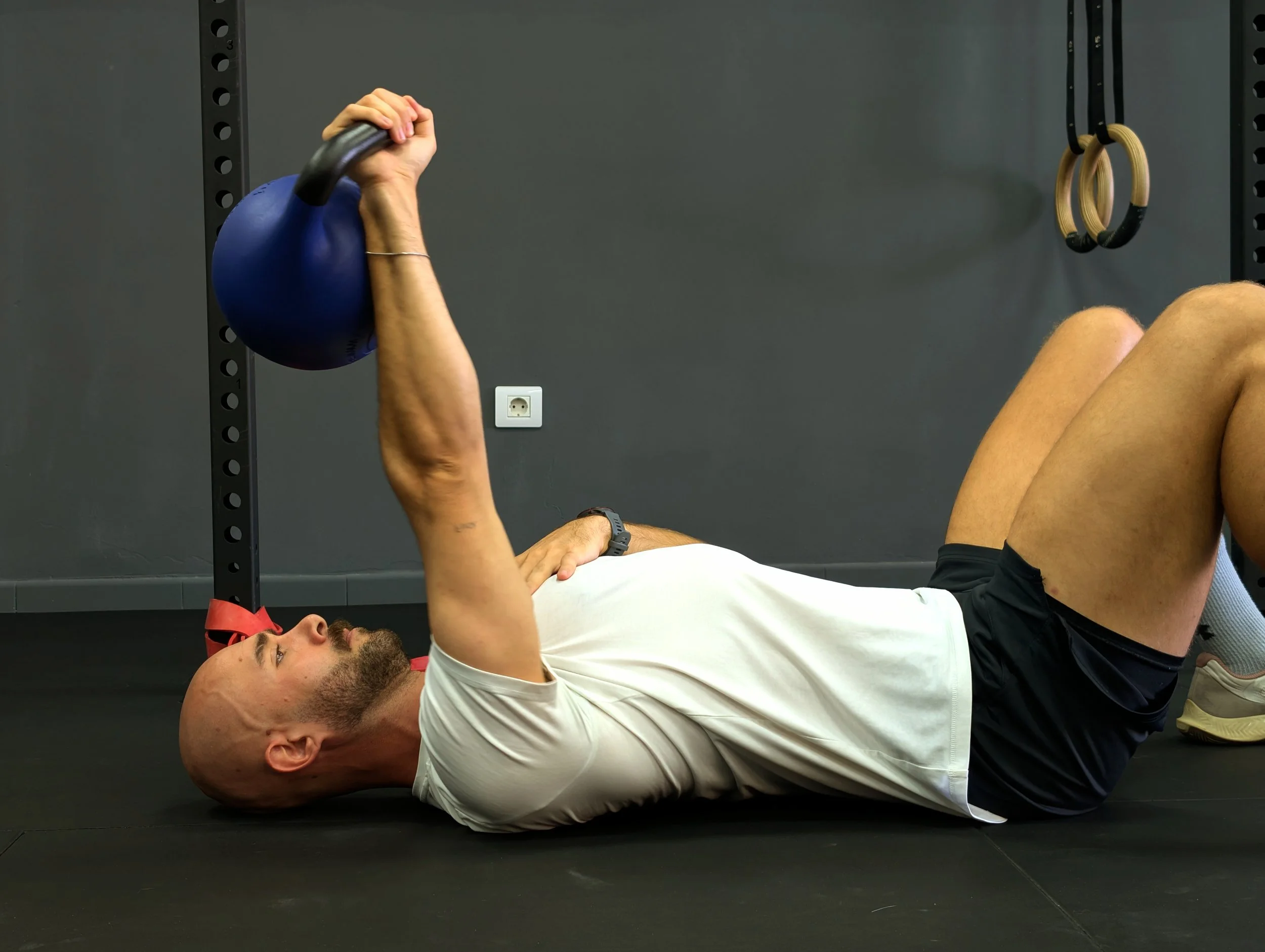
Kettlebell (KB): Lie on your back. Press KB up. Actively pull the shoulder blade back and down onto the floor. Keep elbow locked. Slowly rotate the arm internally/externally. (Requires good control, start light).
Super-D (Banded): Anchor band low behind you. Face away. Punch arm through the band high on the shoulder. Walk forward, creating tension, pulling the shoulder back. Keep elbow locked. Floss by rotating the arm internally/externally, moving the arm across the body.
Tool: Kettlebell or heavy dumbbell, OR Resistance Band.
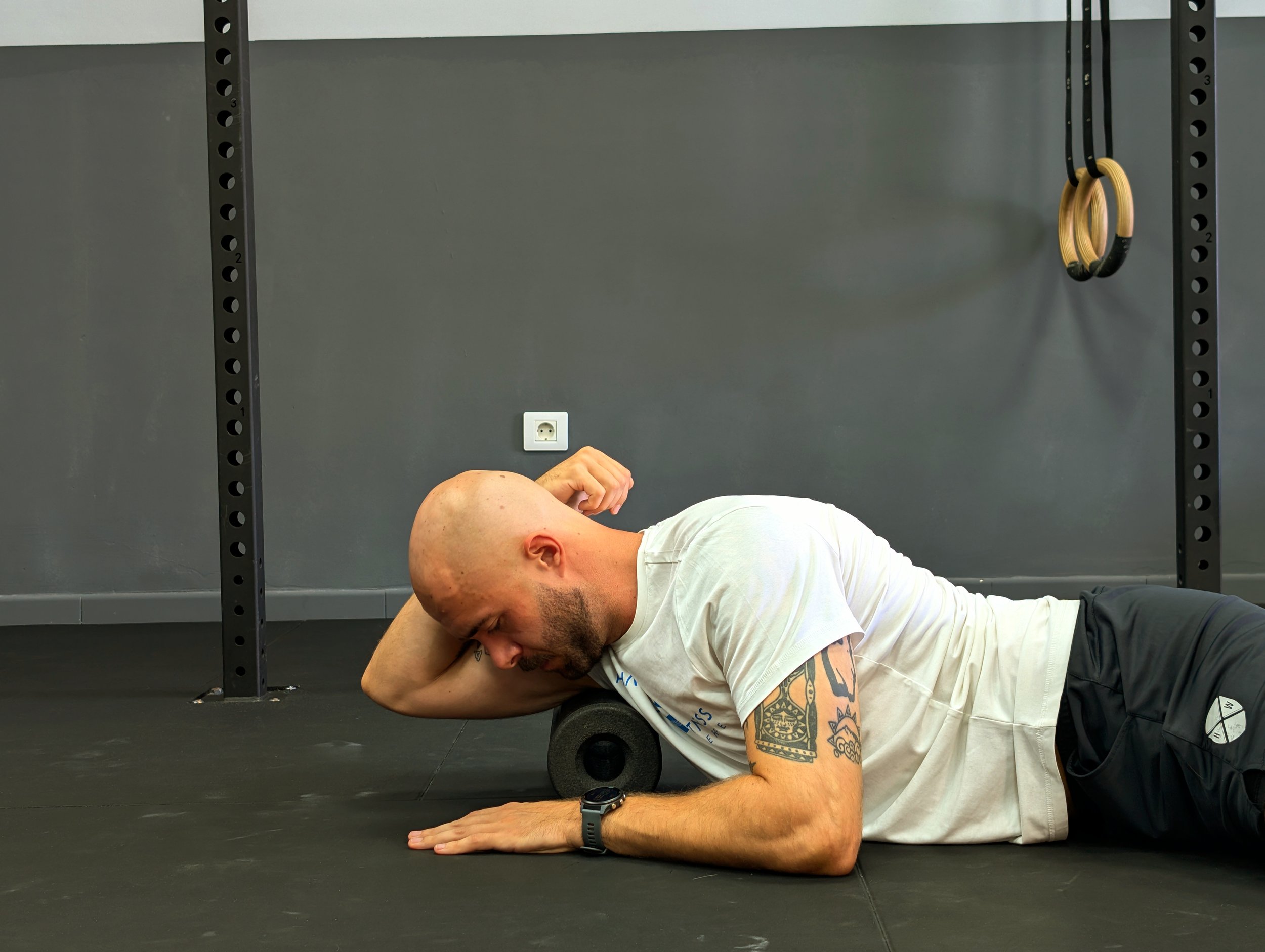
3. Overhead Tissue Smash (Lat Focus)
Why: Targets the large Lat muscle running down the side/back, a major limiter of overhead motion.
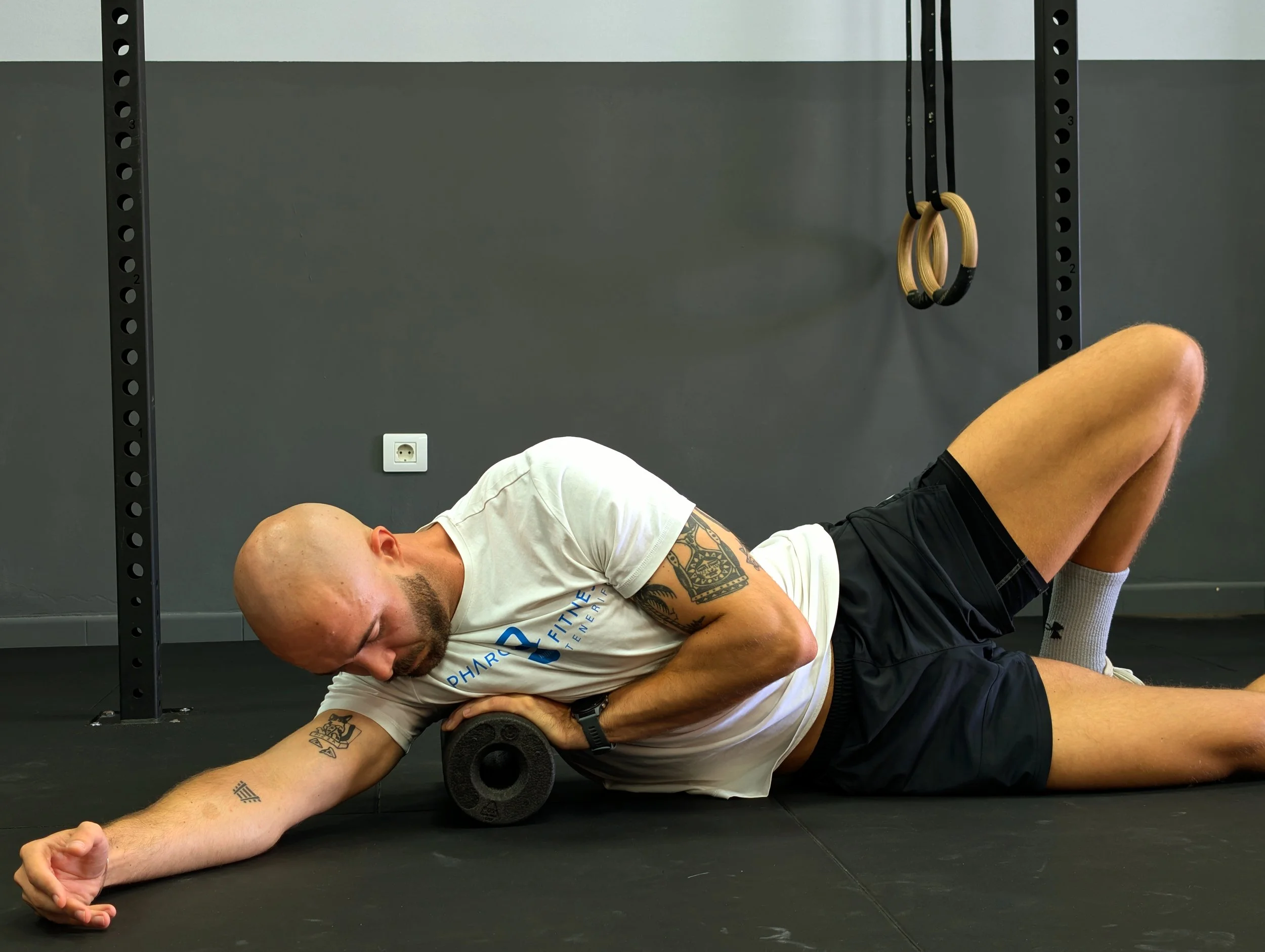
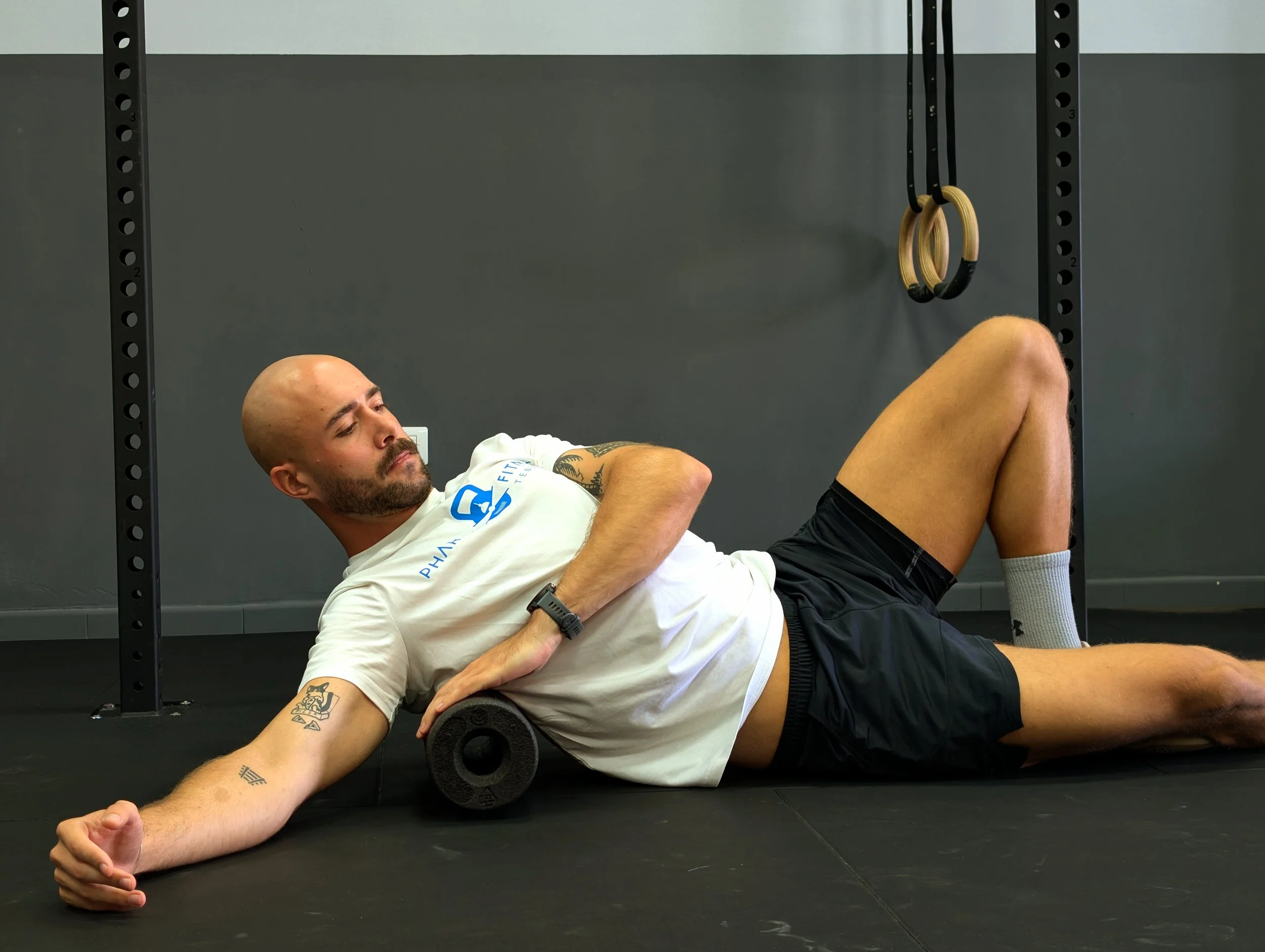
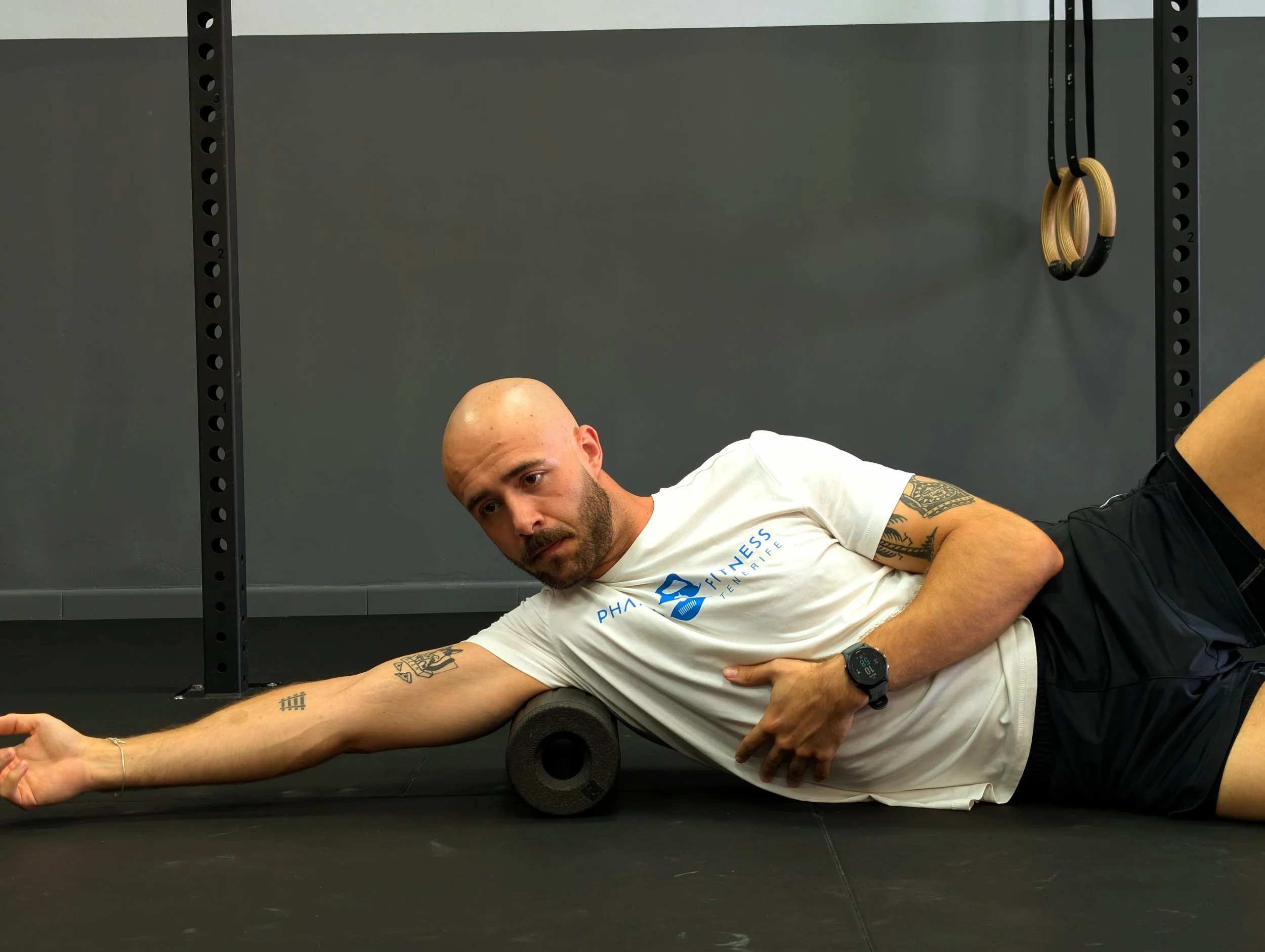
How: Lie on your side with a roller or large ball placed under your armpit/side ribs area. Apply pressure.
Pressure Wave: Slowly roll slightly forward and backwards, or up and down the side of your rib cage towards your hip.
Floss: Move your top arm overhead, across your body, or bend/straighten the elbow.
Contract/Relax: Tense the lat muscle, hold, then relax deeper onto the tool. Can also do this standing, leaning against a wall or rack post.
Tool: Roller (foam or hard), Large Ball, Small Ball (more targeted).

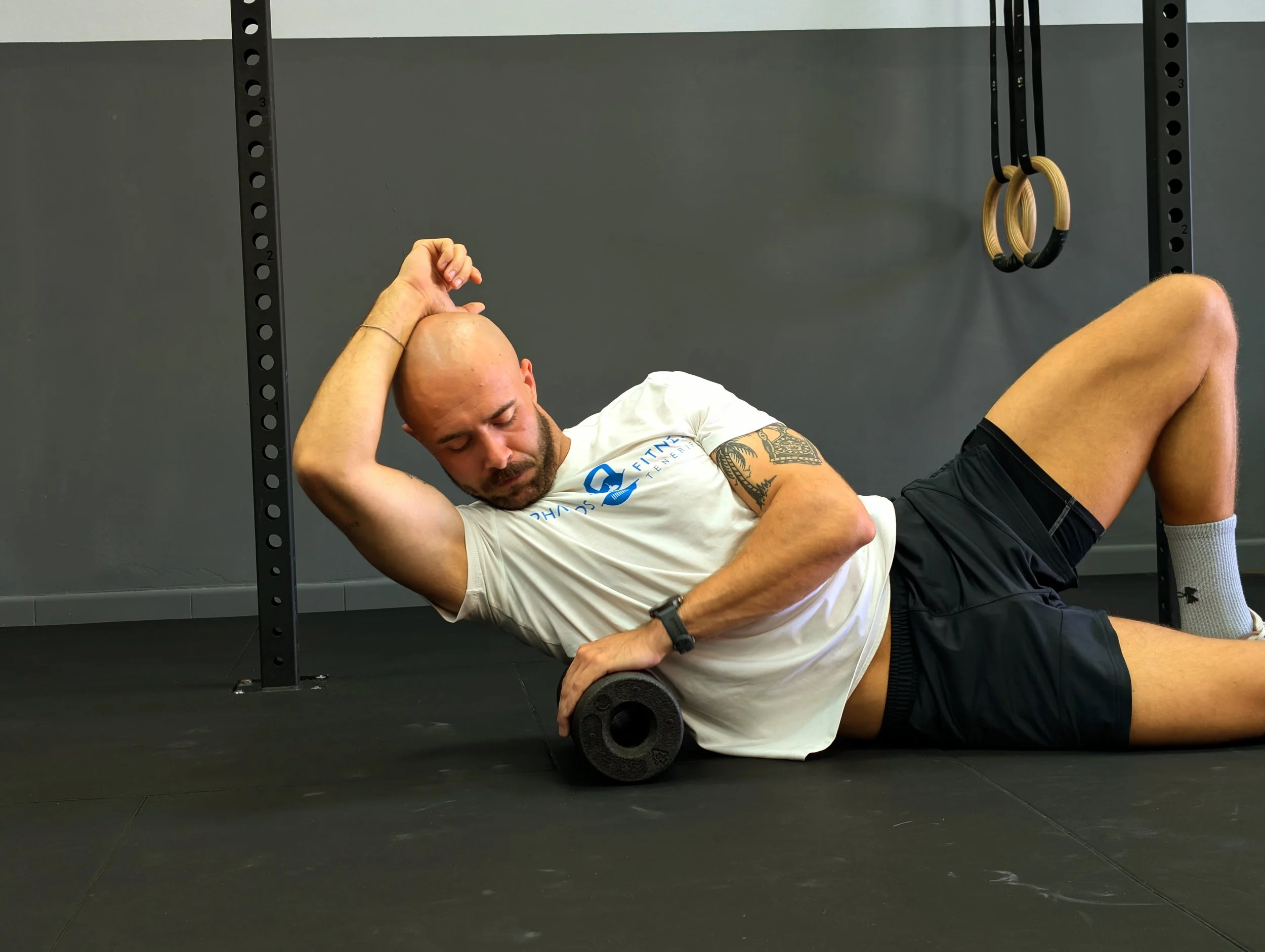
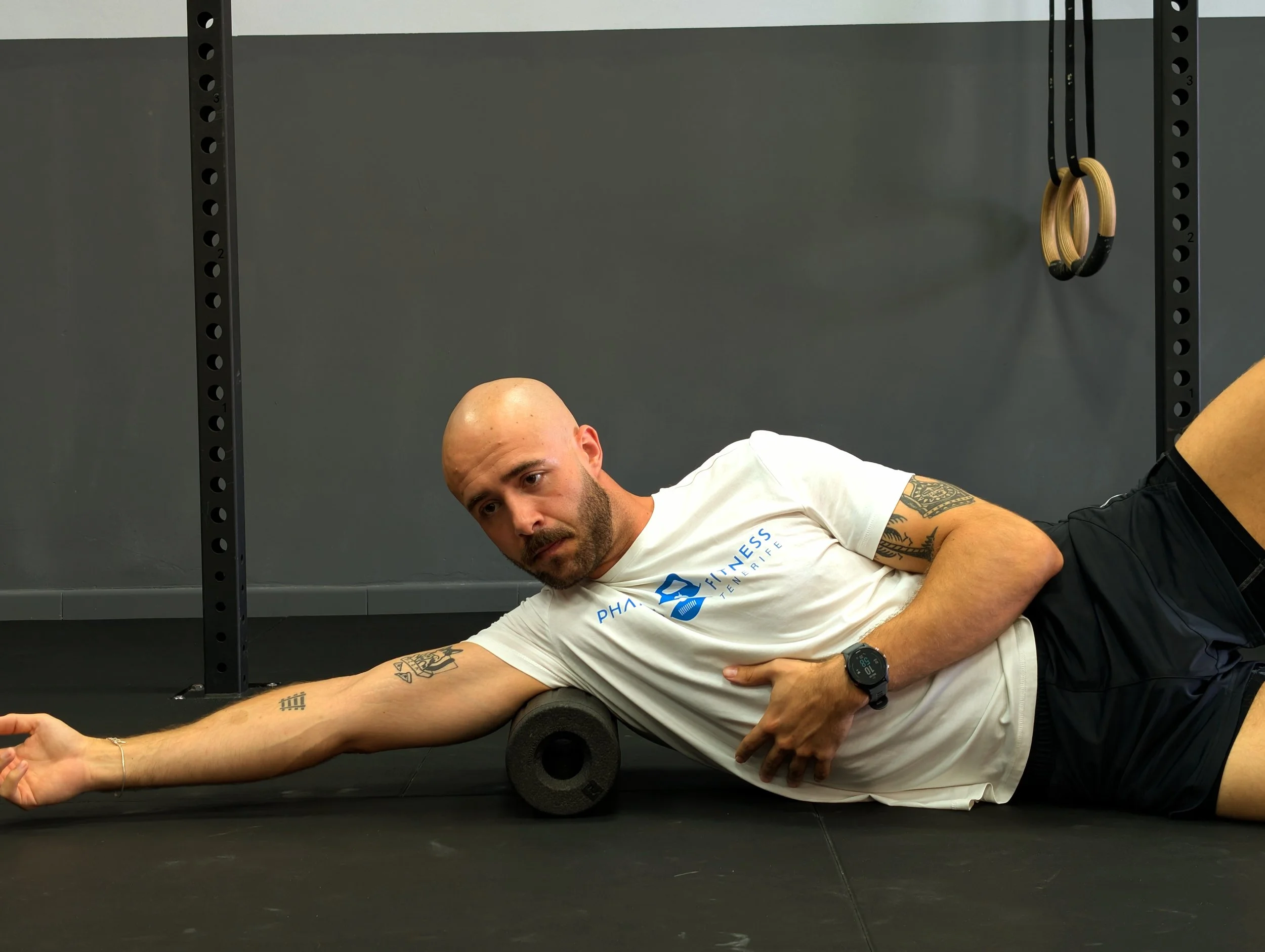
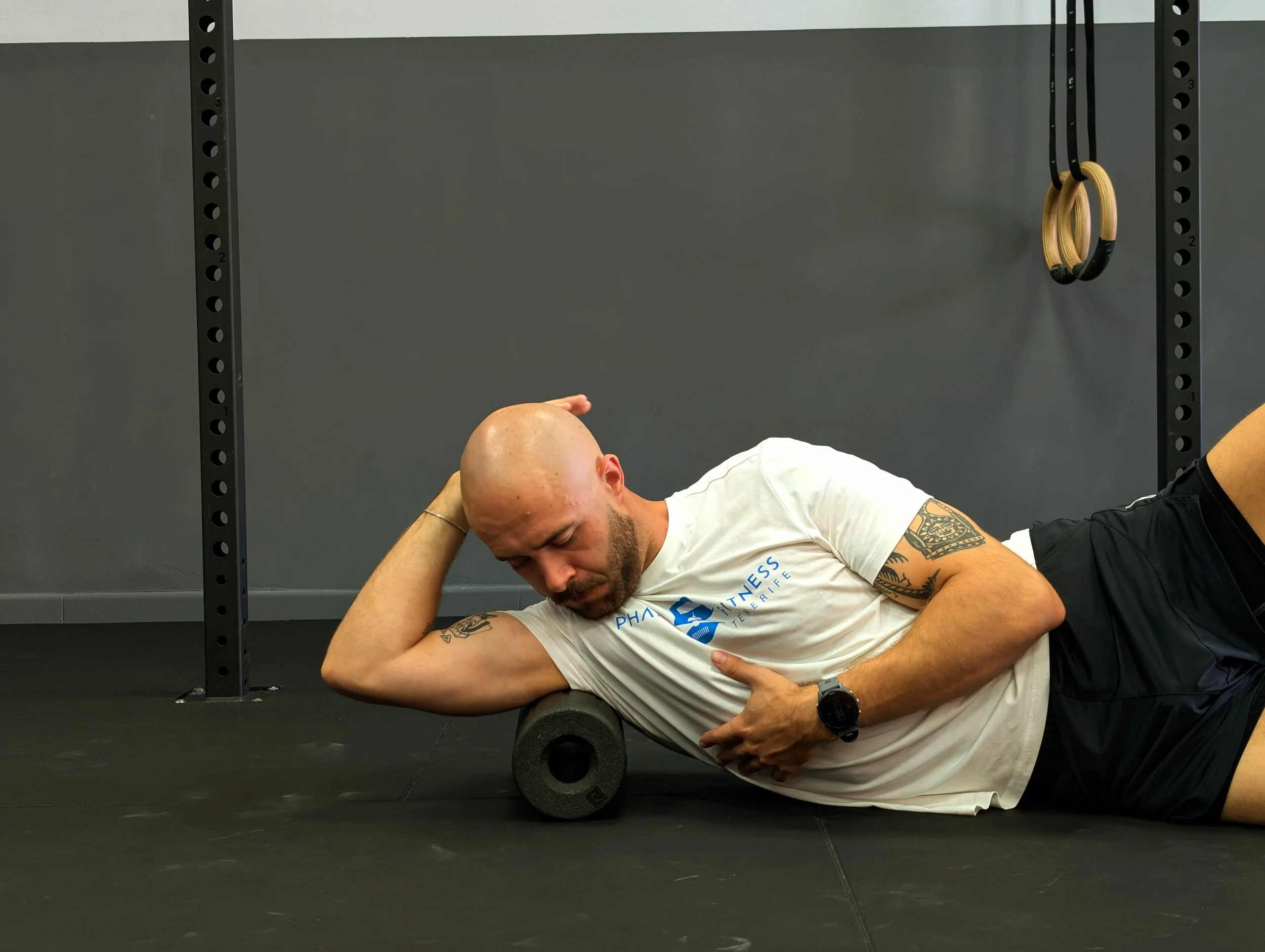
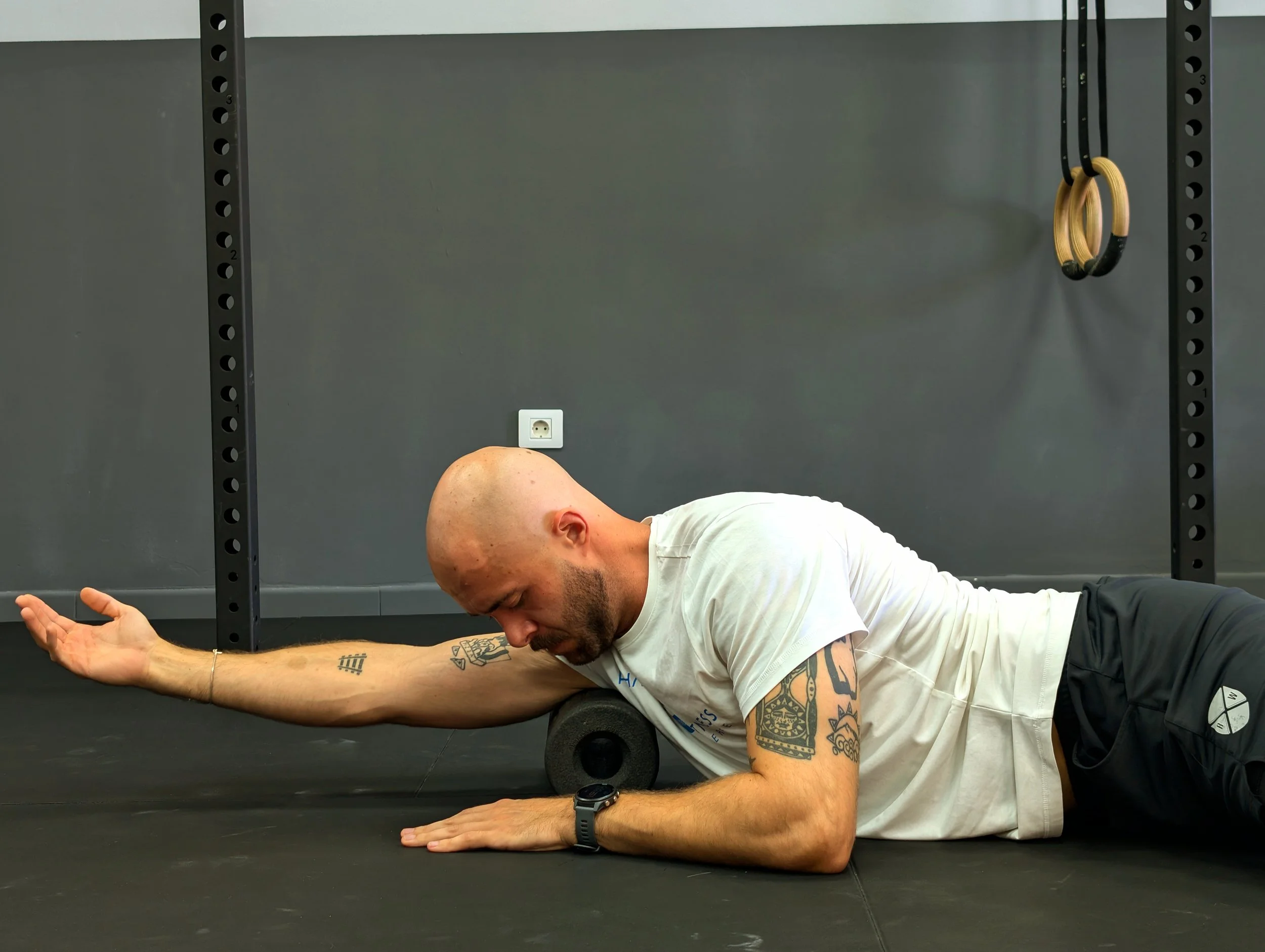
4. Triceps Smash (Overhead Bias)
Why: The long head of the triceps attaches near the shoulder and often restricts reaching fully overhead.
How: Use a ball or roller against a wall or on the floor. Target the upper part of the triceps, close to the armpit and shoulder blade, while positioning your arm partially or fully overhead. Apply pressure and floss by bending/straightening the elbow or rotating the arm.
Tool: Small ball, Large Ball, Roller.
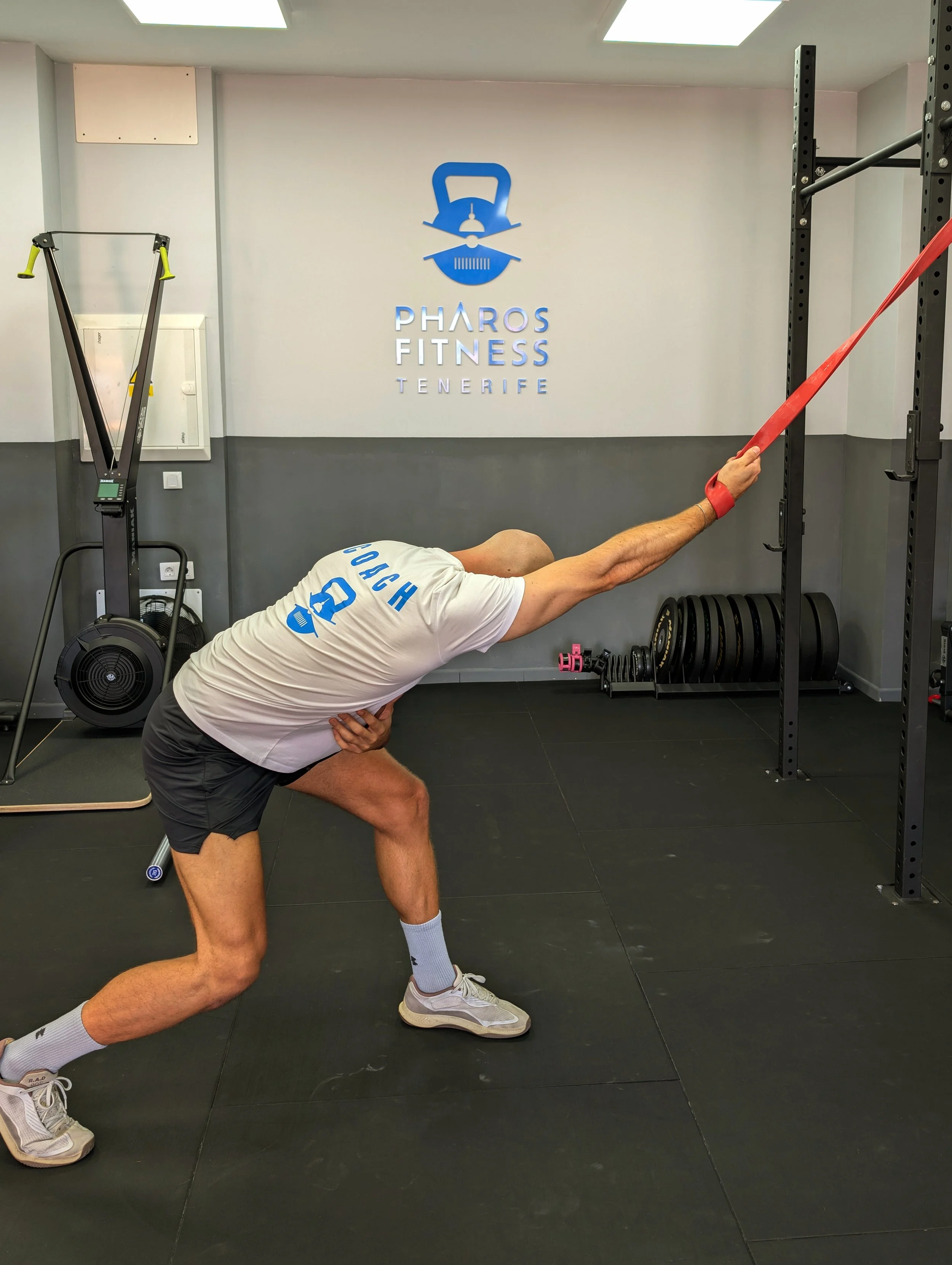
5. Banded Overhead Distraction
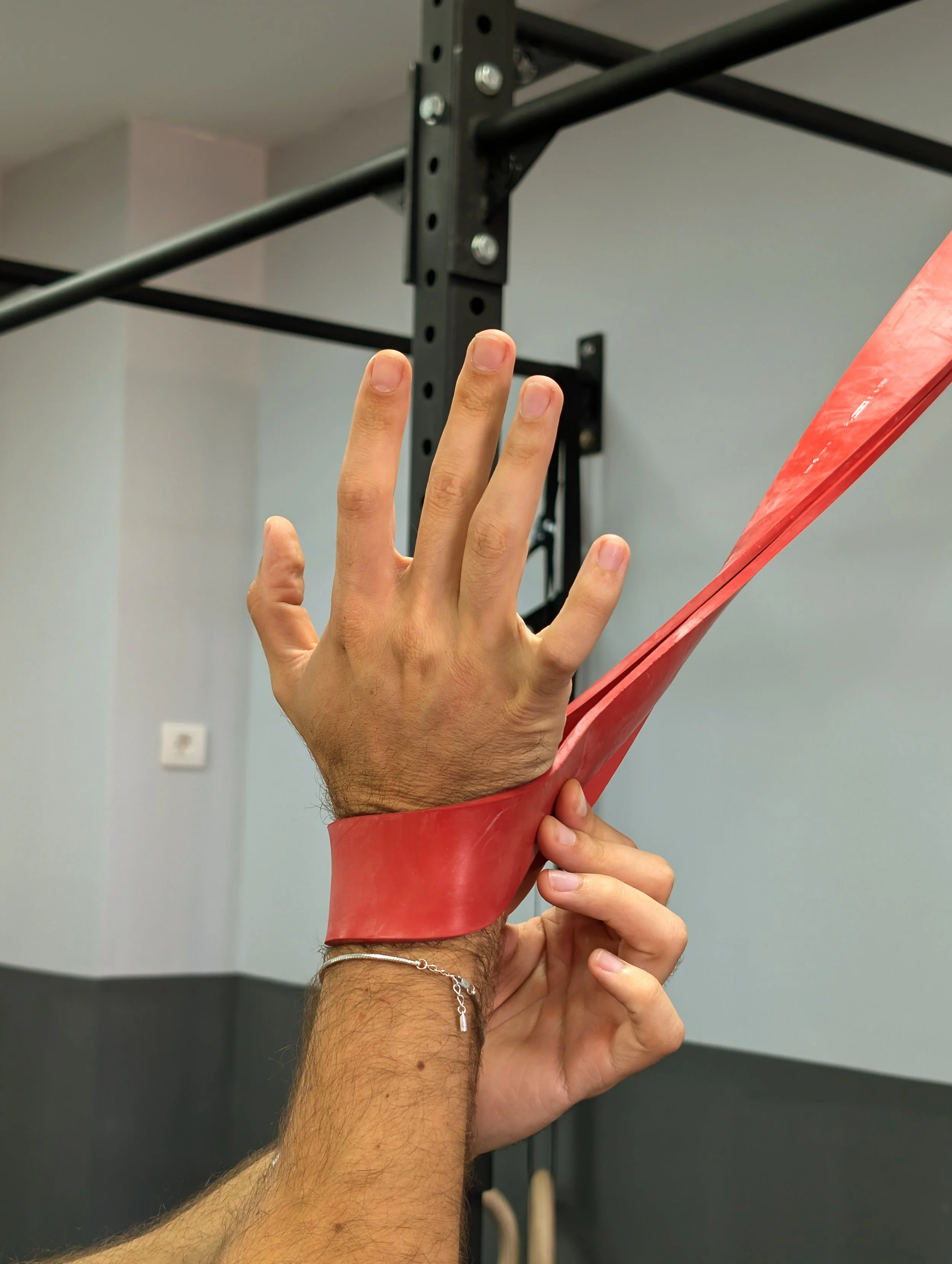
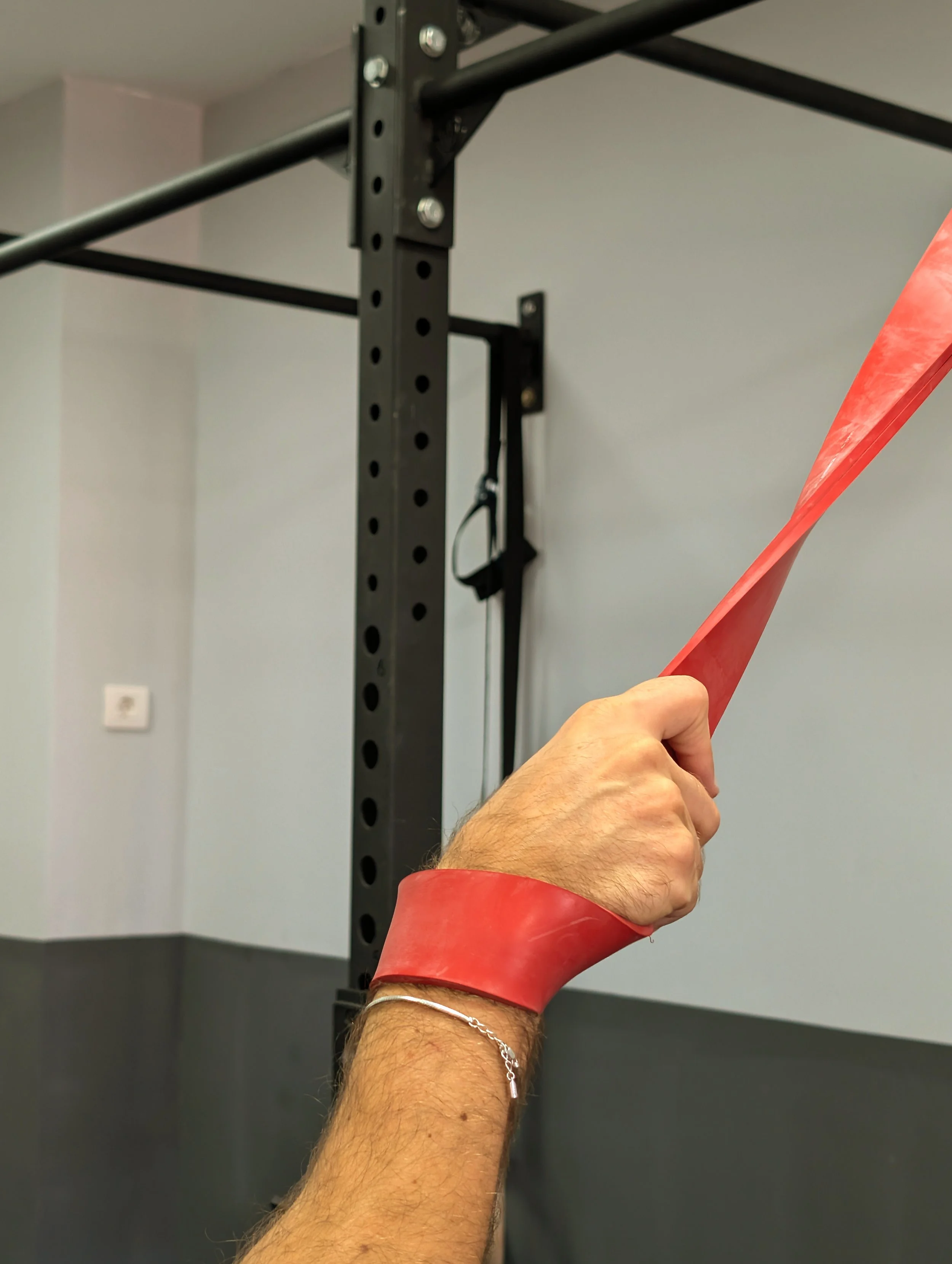
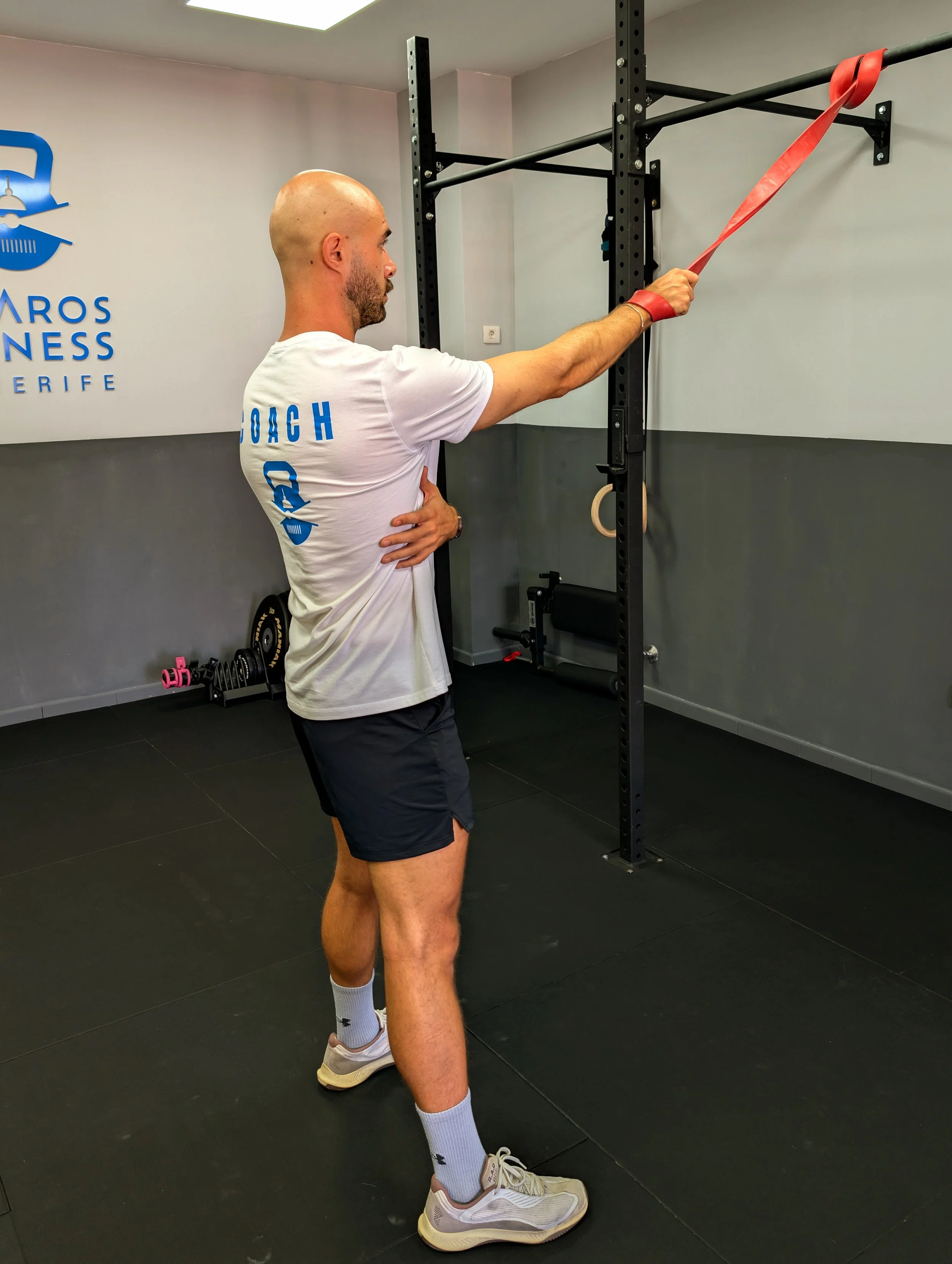
Why: Uses band tension to gently pull the arm bone (humerus) in the socket, creating space and improving overhead range while mobilising tissues at end-range.
How: Anchor band overhead or high in front. Loop wrist/hand through. Step back/hinge forward, letting band pull arm overhead/forward. IMPORTANT: Keep palm up/thumb back (bias external rotation). Keep ribs down/belly tight.
Oscillate: Gently pulse in and out of the end-range stretch.
Contract/Relax: Gently press hand down against band tension, hold, relax deeper. Explore different angles by rotating torso slightly.
Tool: Band.
6. Overhead with External Rotation Bias (Banded Elbow)
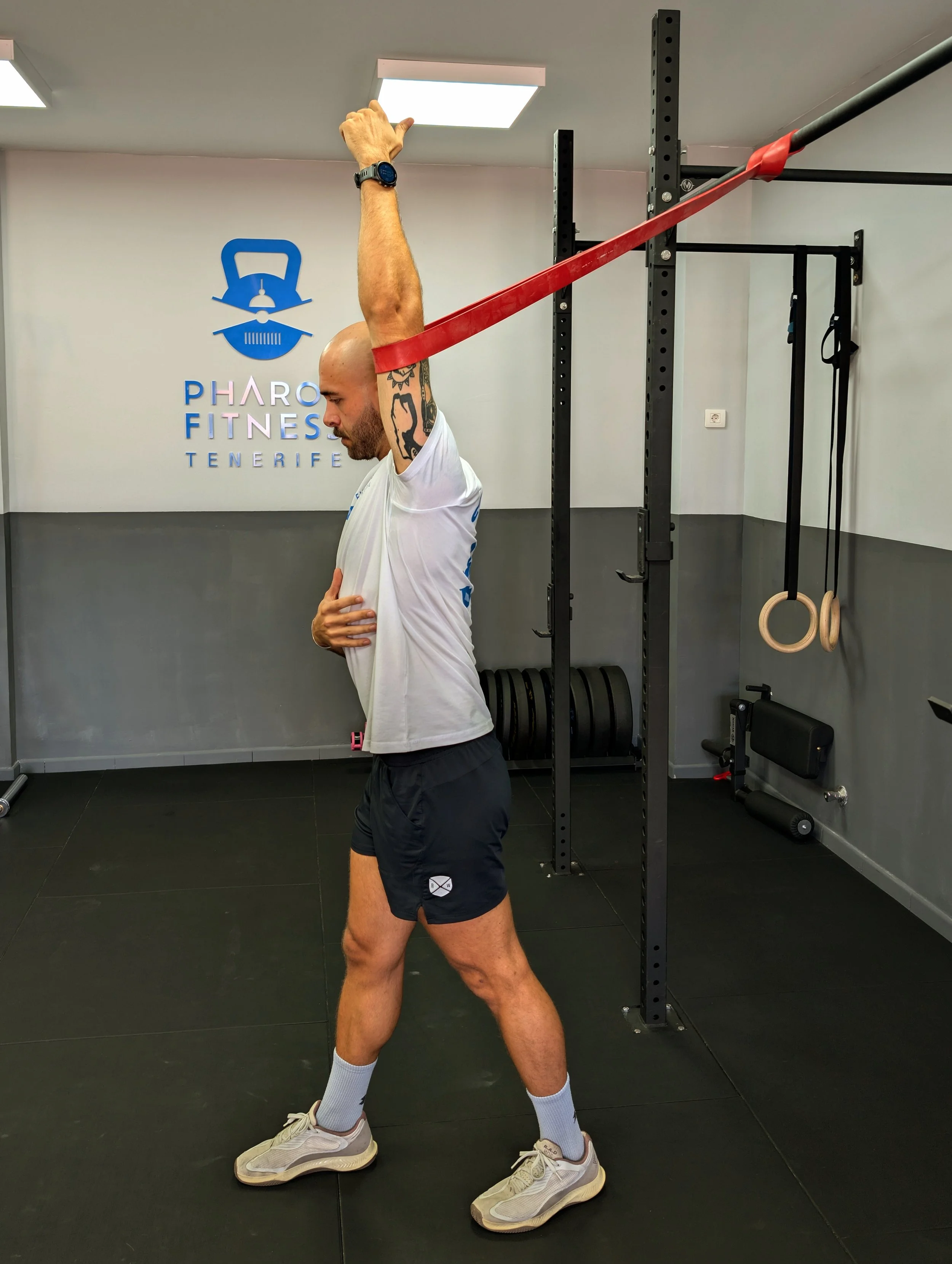
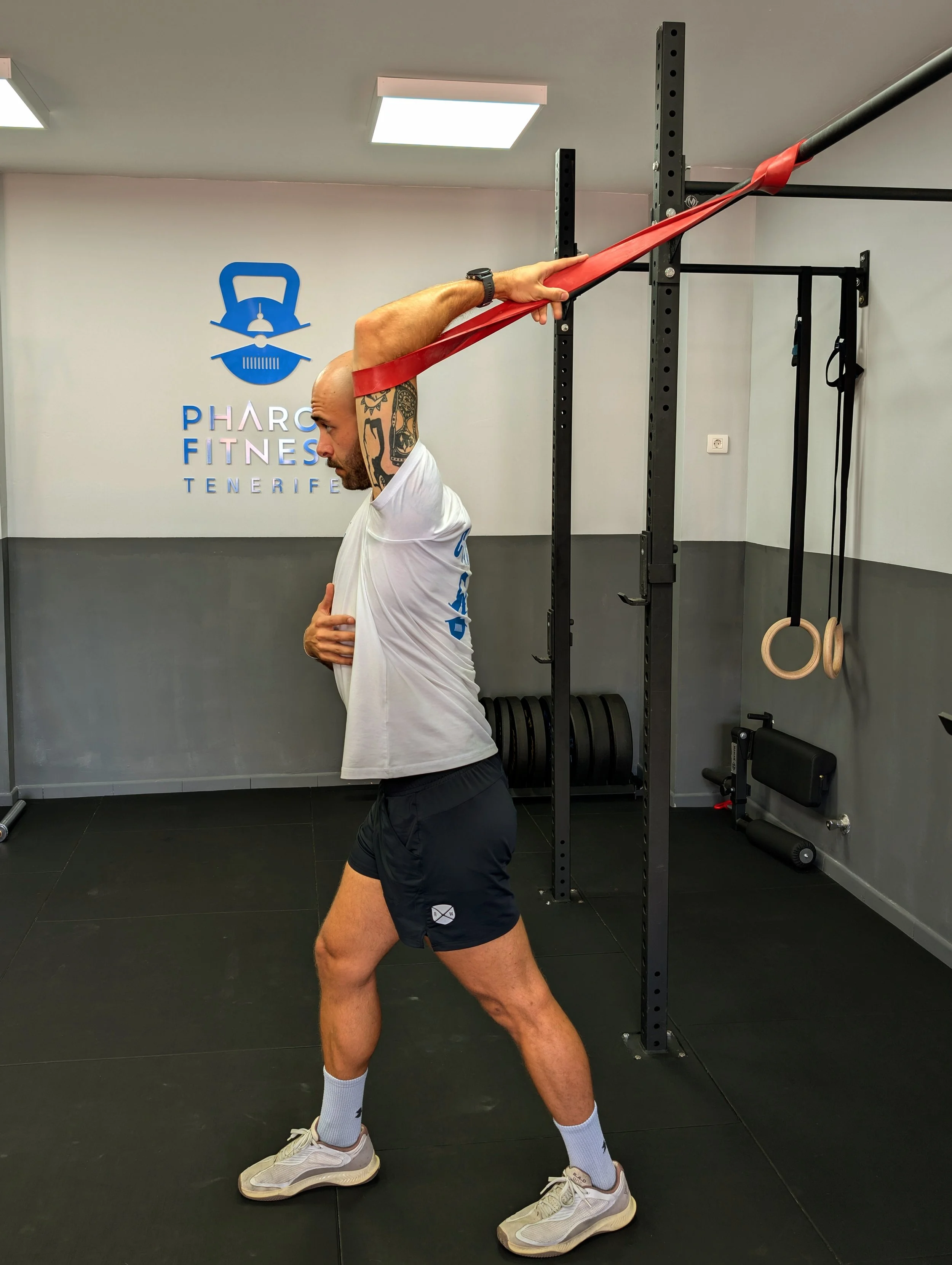
Why: Similar to above but anchoring band at elbow biases external rotation more aggressively, crucial for stable overhead position.
How: Anchor band overhead. Punch arm through, loop band above elbow. Step back/hinge forward. Use opposite hand to gently pull banded forearm down/across (encouraging external rotation) while letting band pull upper arm overhead. Oscillate. Contract/relax.
Tool: Band.
Key Reminders for Success:
Don't Arch Your Back! When reaching overhead (mobilising or lifting), keep ribs down and belly tight. Don't compensate for tight shoulders by overextending your lower back.
Armpits Forward: This is the key cue for stable external rotation when overhead. Think about rotating your armpits to face forward.
Full Lockout: Aim for straight elbows in overhead positions. Bent elbows often indicate compensation for stiffness .
Connect the Dots: Tightness here is often linked to Prescription 2 (Thoracic Spine) and Prescription 3 (Chest/Anterior Shoulder). Work on all related areas!
Important Notes:
Nerves/Blood Vessels: Be careful around the armpit. Avoid positions that cause sharp, shooting pain, numbness, or tingling down the arm.
Good vs. Bad Pain: Mobilising tight muscles/capsules is uncomfortable. Joint pinching or sharp pain means you need to adjust or stop.
Band Position: Ensure bands are placed correctly (high on the shoulder/hip for joint distraction, around the wrist/elbow/foot for specific techniques).