
MOBILITY - PRE-WORKOUT 2 (POSTERIOR CHAIN & SHOULDER PRIMER)
Welcome! This program focuses on preparing your hamstrings and lower back for circuits and conditioning days, while mobilising your shoulder capsule for safe pressing or pulling.
Common Issues This Helps:
Tight hamstrings, restricting kettlebell swings or deadlifts.
Shoulder pain related to poor posture or a stiff upper back.
Difficulty reaching overhead comfortably.
Quick Check (Assessment):
Toe Touch: With straight legs, can you hinge at the hips and touch your toes without excessive rounding in the mid-back?
Overhead Reach: Can you raise your arms straight overhead without arching your lower back, bending elbows, or shrugging excessively?
Your Mobility Practices:
Aim for approx. 2 minutes per technique/area unless otherwise noted. Breathe deeply!
Note: Because you have 15 minutes, please choose 3 of the 5 options below to complete your session.)
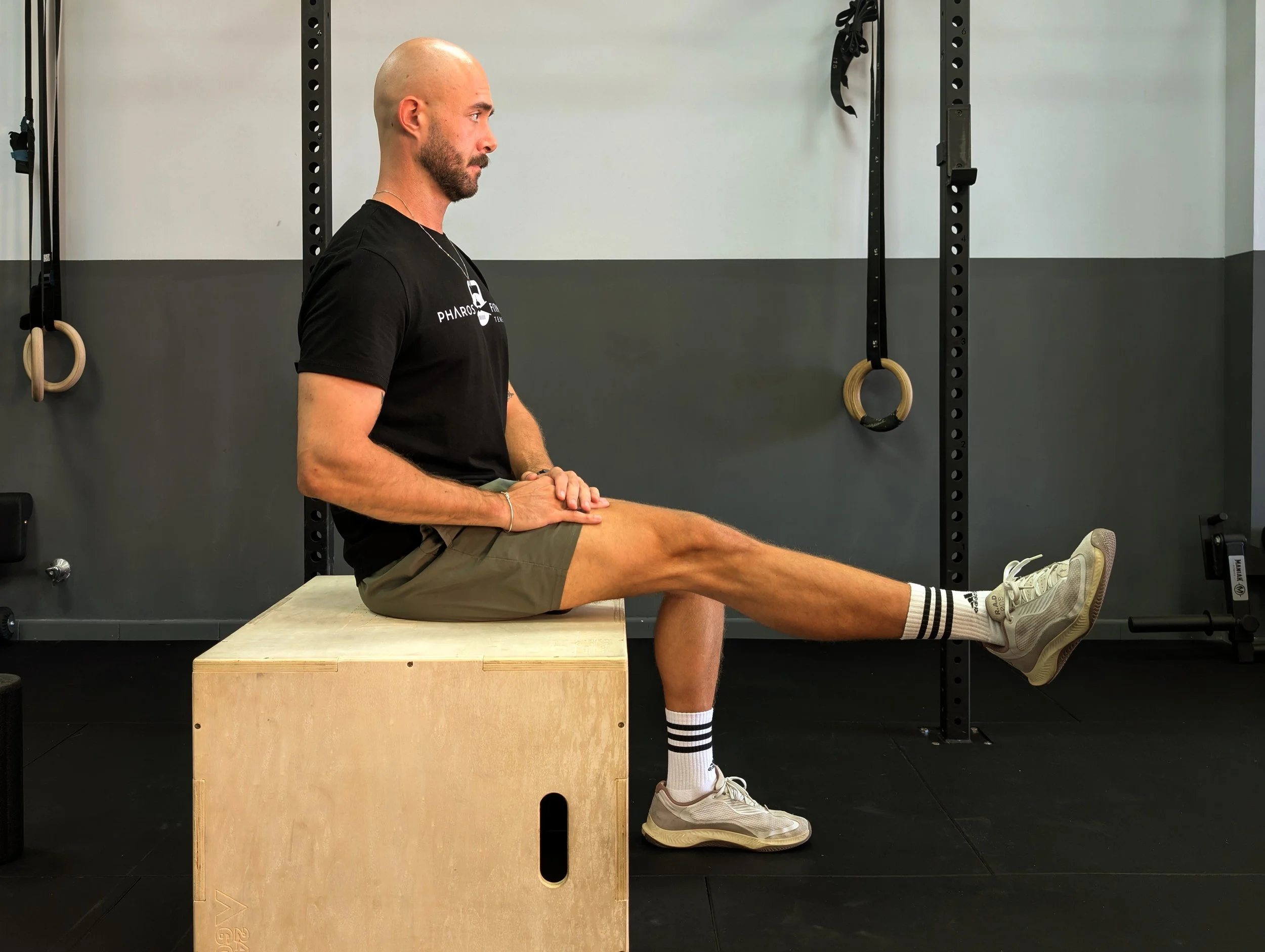
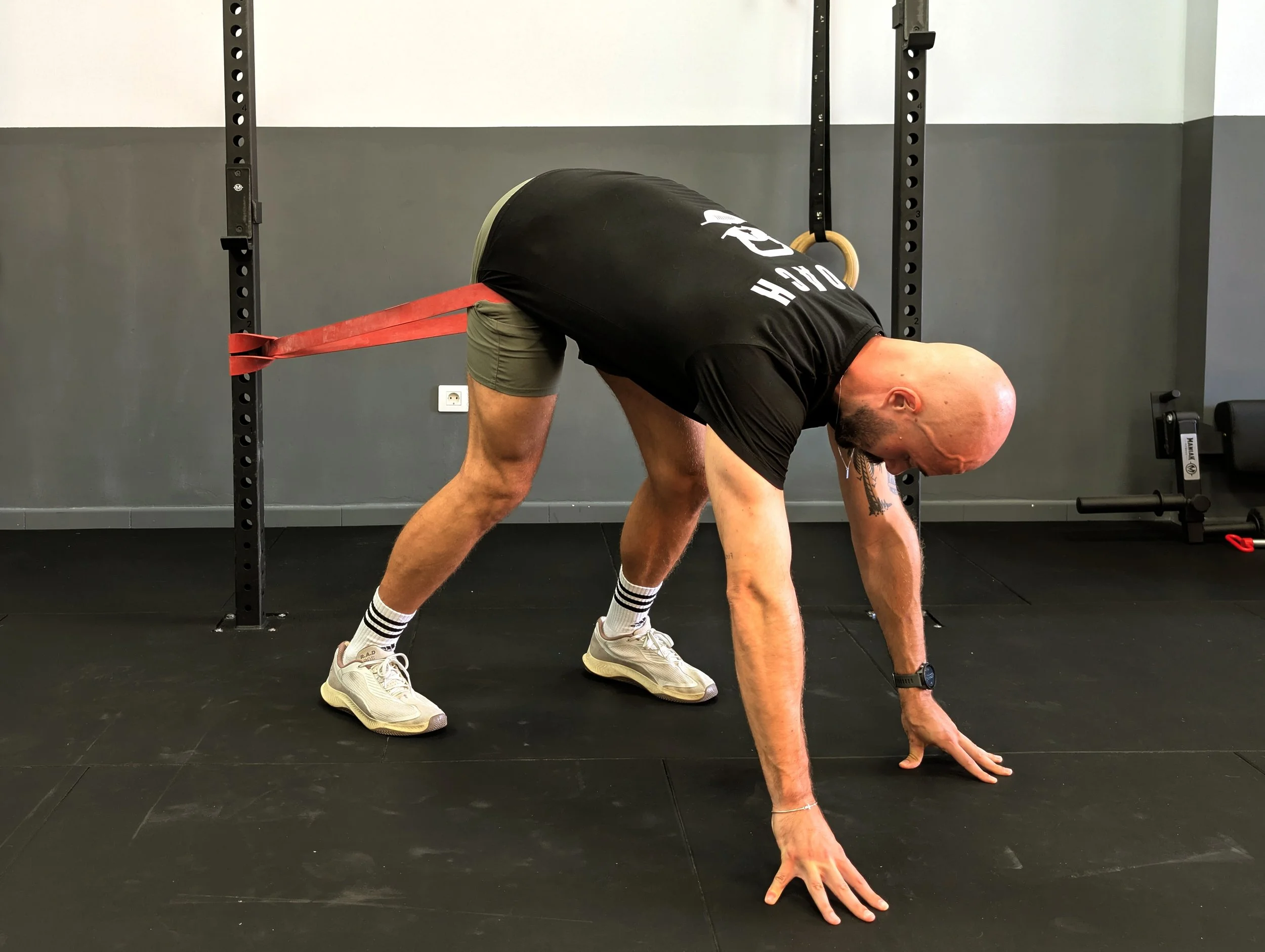
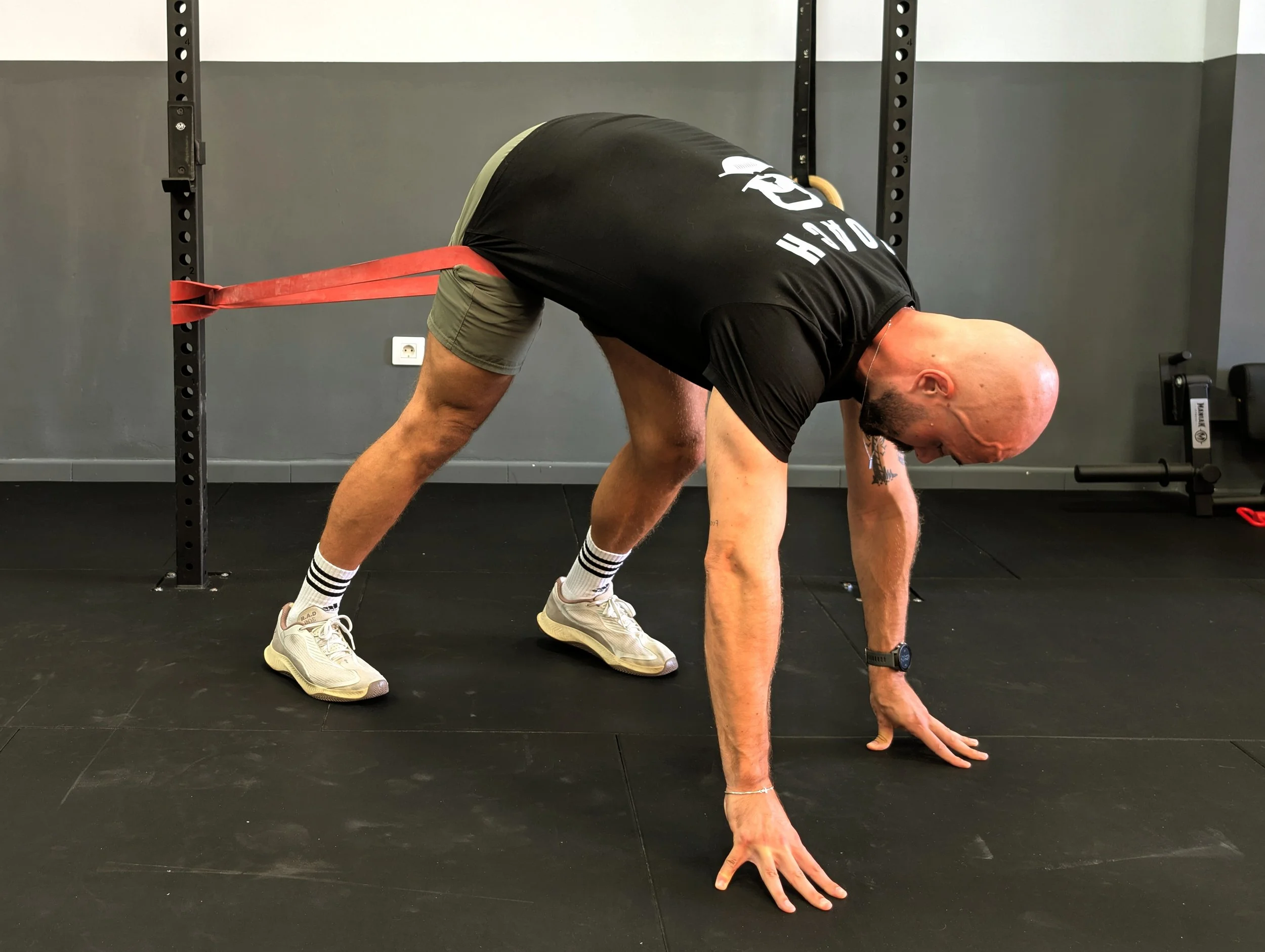
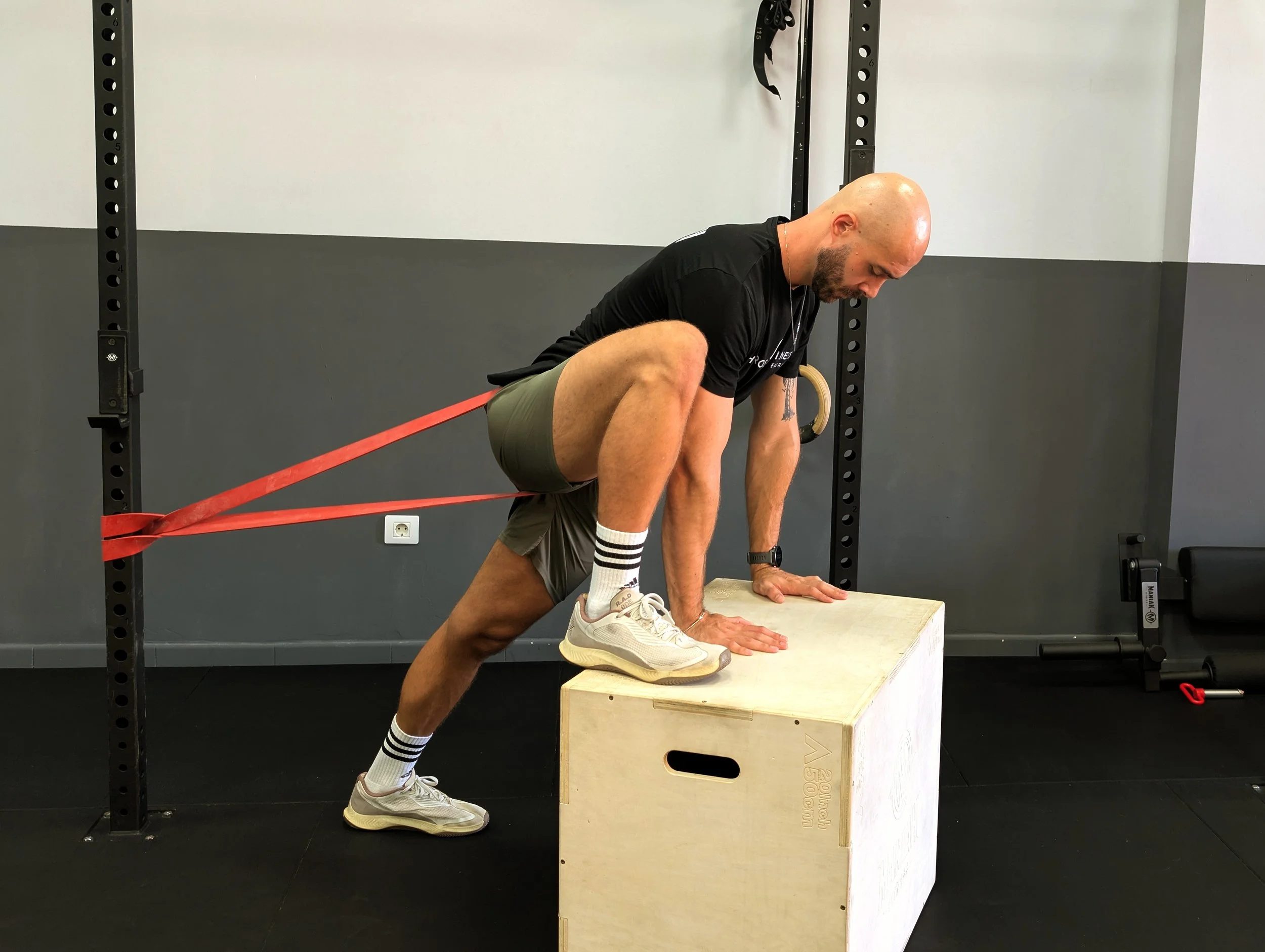
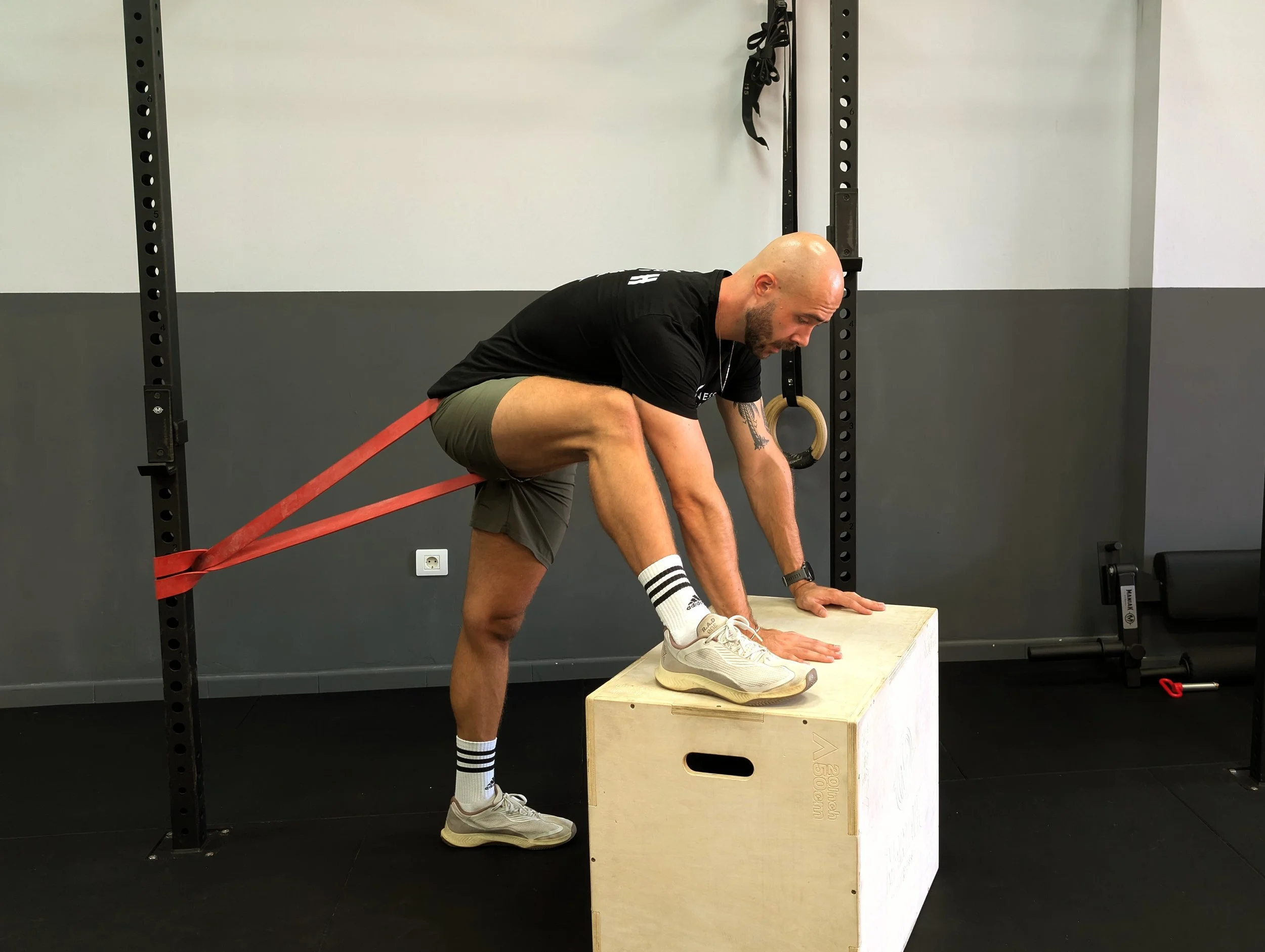
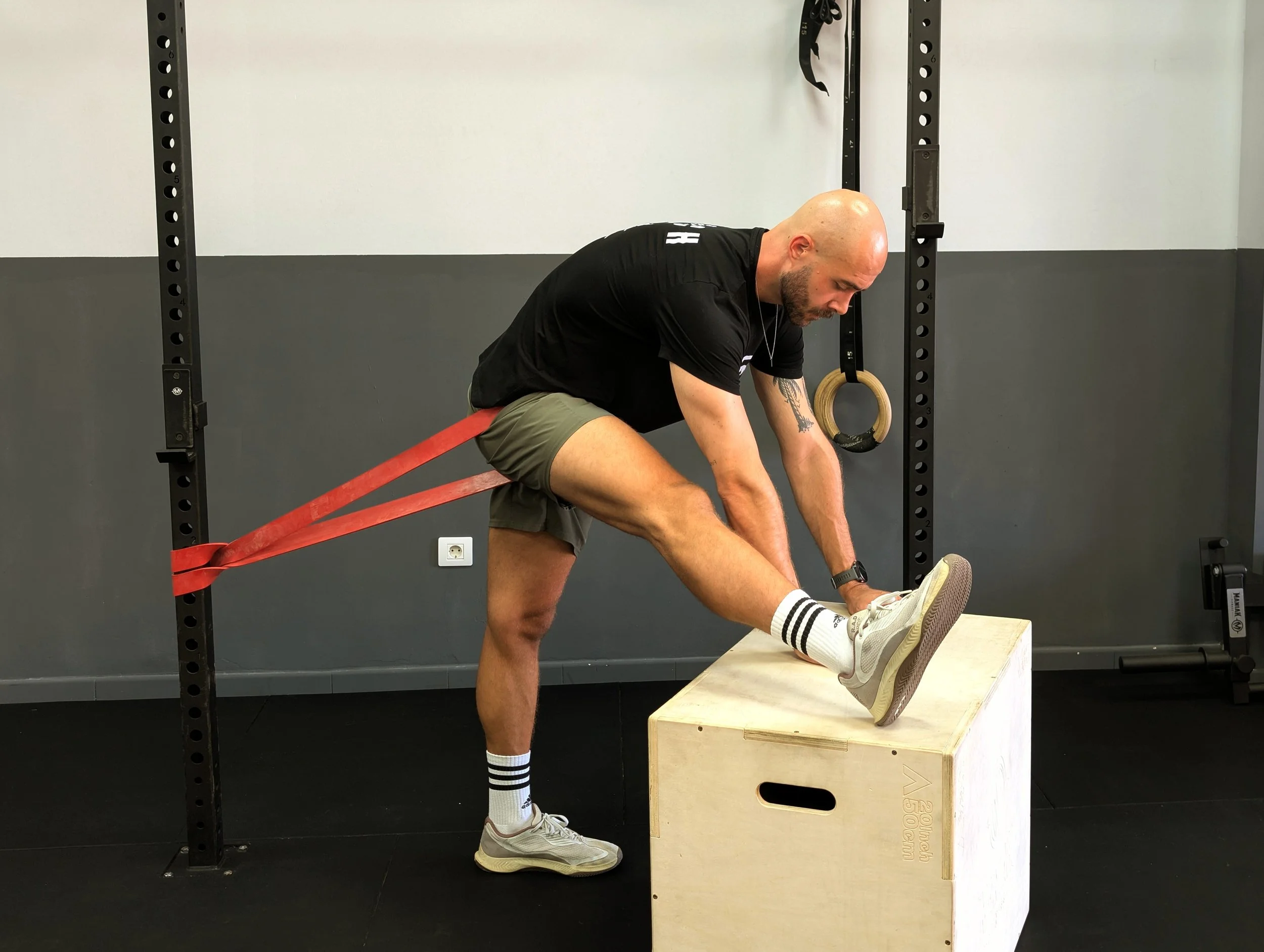
1. Banded Hamstring Distraction
Why: Restores sliding surfaces in the back of the leg, improving hip hinge mechanics
How: Lie on your back. Loop a heavy band over one foot and hold the other end. Keep the leg straight and actively pull it toward your chest.
Contract/Relax: Contract your quad to lock the knee straight for 5 seconds, exhale, and pull the leg slightly closer to your chest.
Tools: Heavy Band.
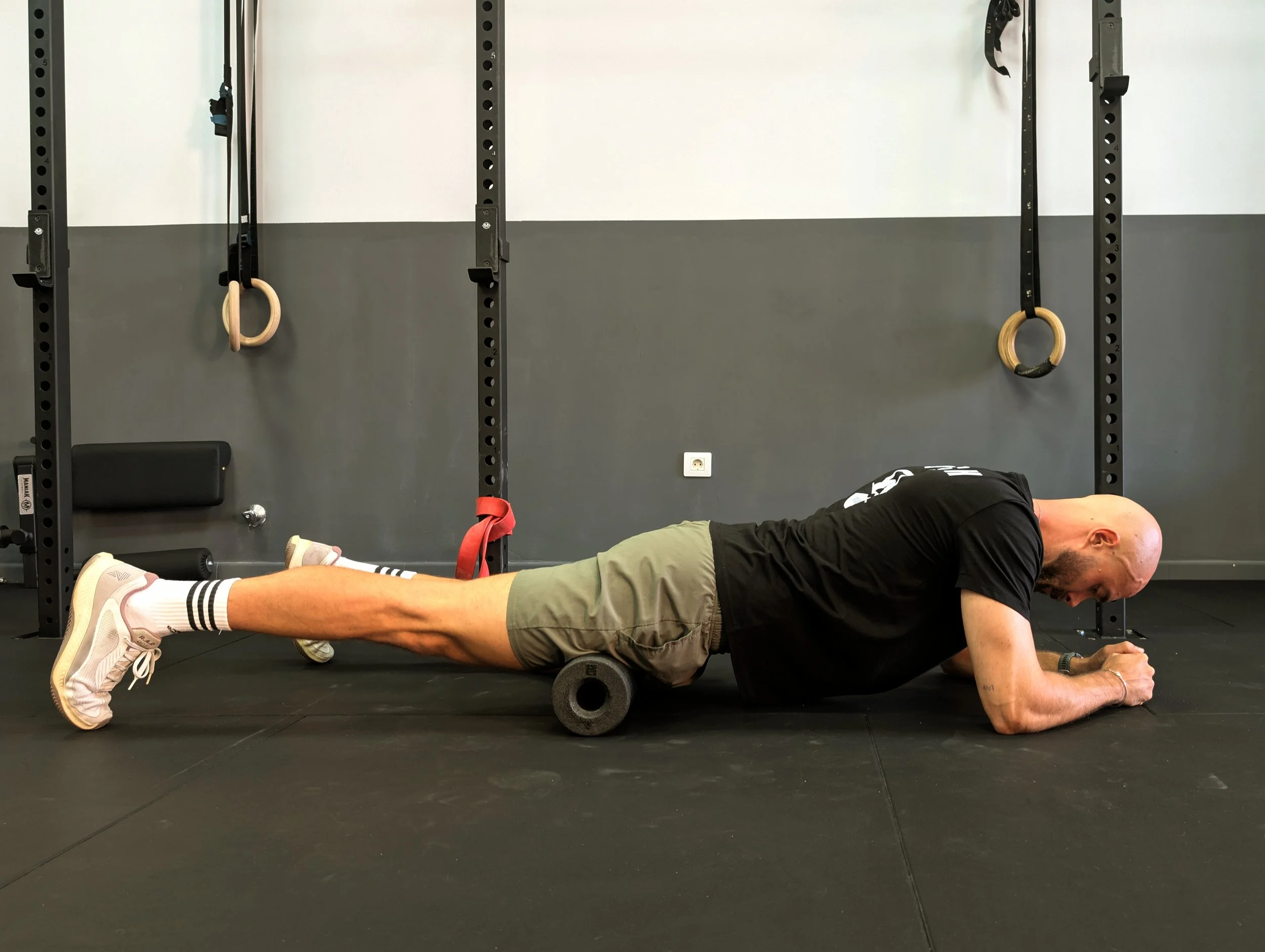
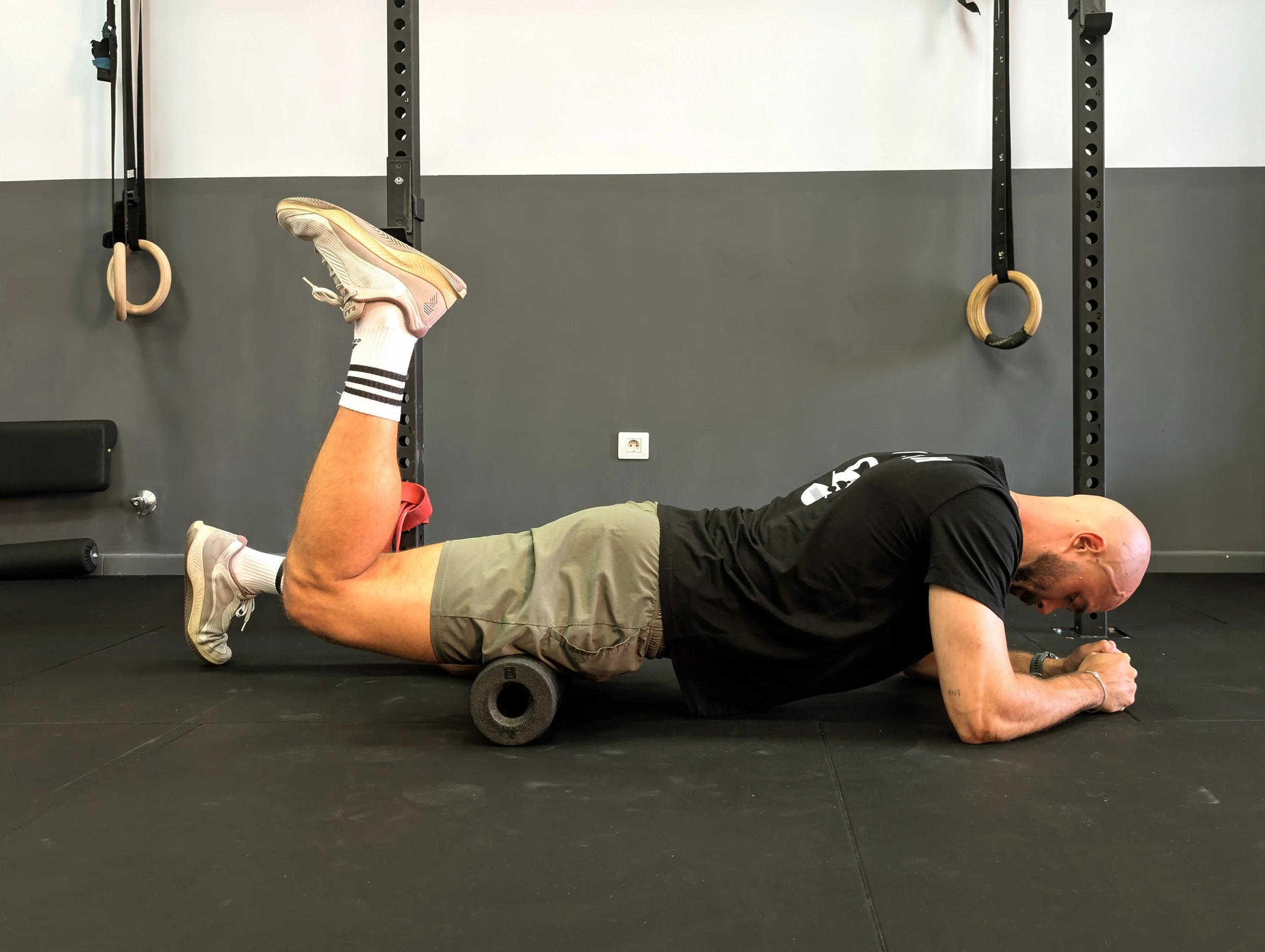
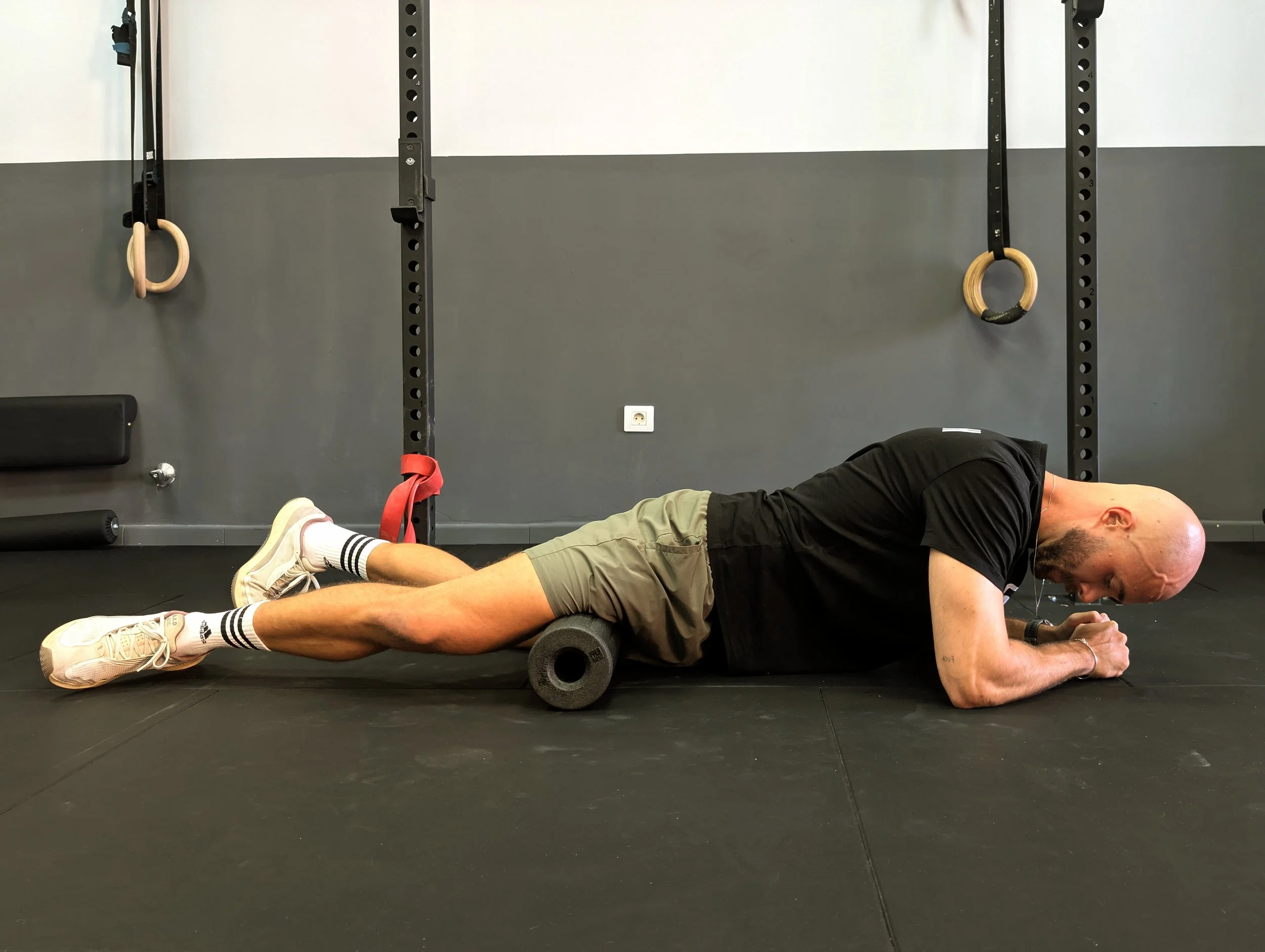
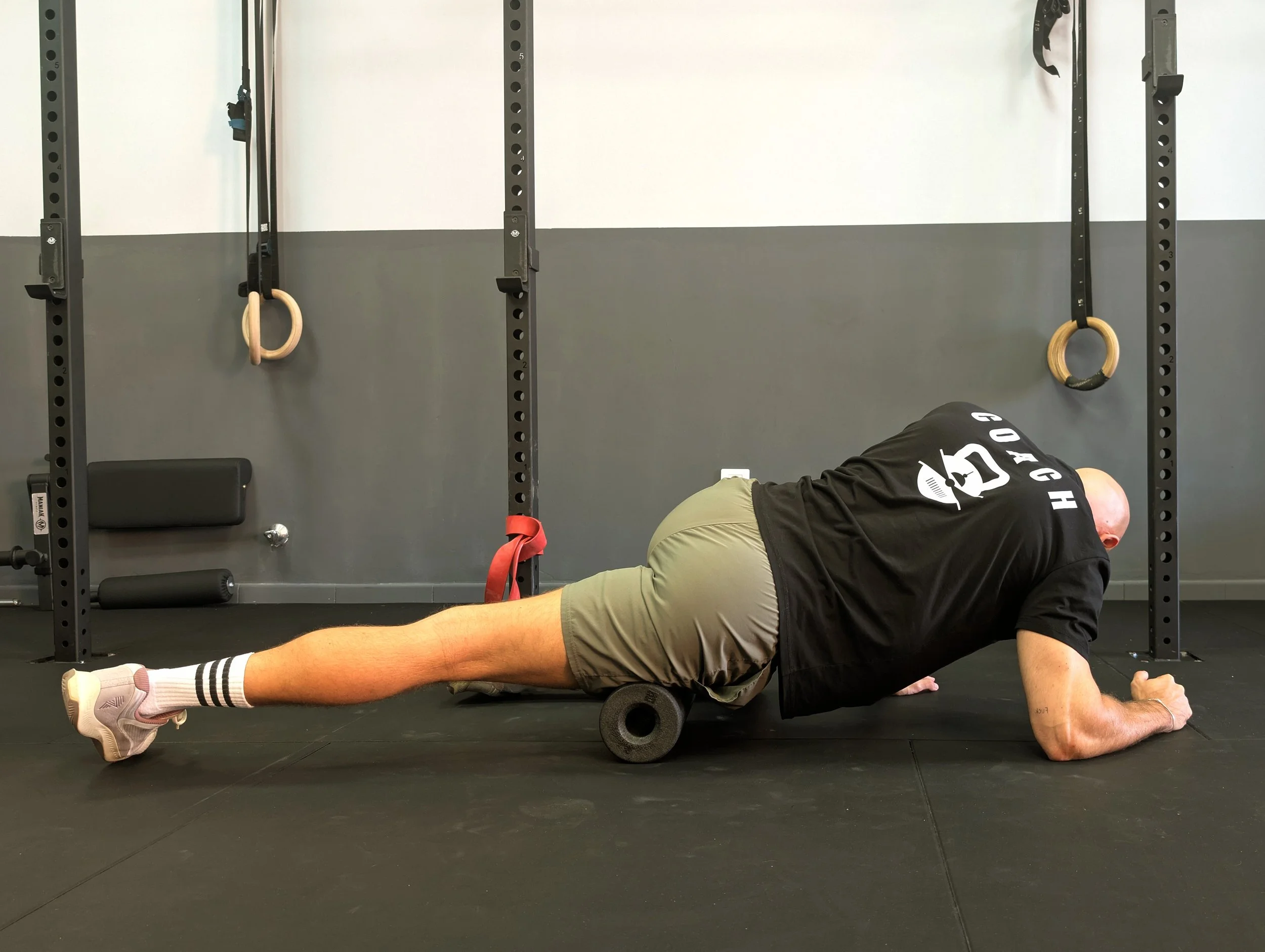
2. Global Shoulder Smash
Why: Clears up restrictions in the rotator cuff and posterior shoulder, allowing the shoulder to sit in a stable position.
How: Lie on the floor or lean against a wall. Pin a ball right behind the shoulder (posterior delt/infraspinatus).
Floss: Slowly move your arm across your chest and up/down to floss the tissue over the ball.
Tool: Small Ball.
3. Lat Smash & Roll
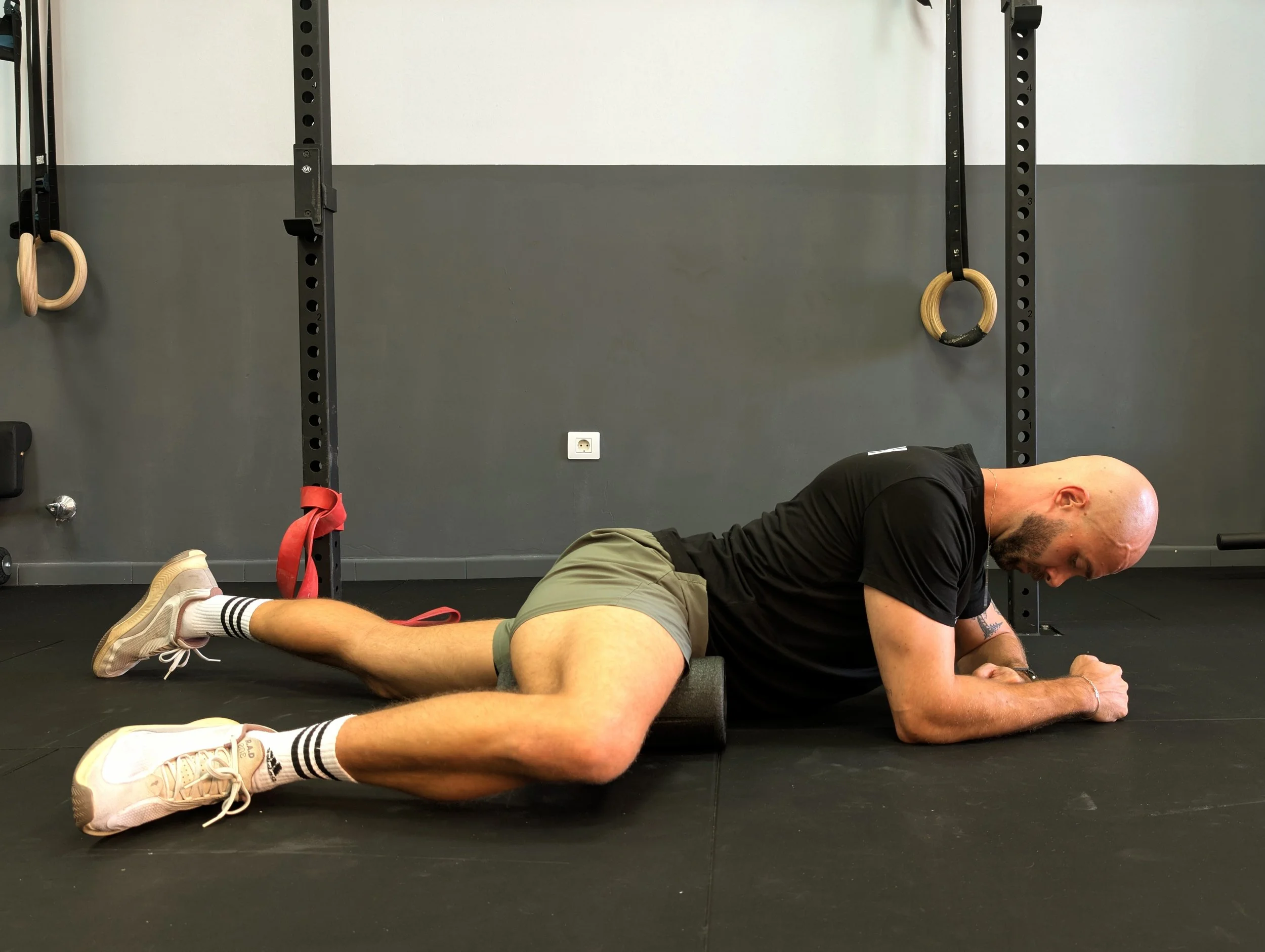
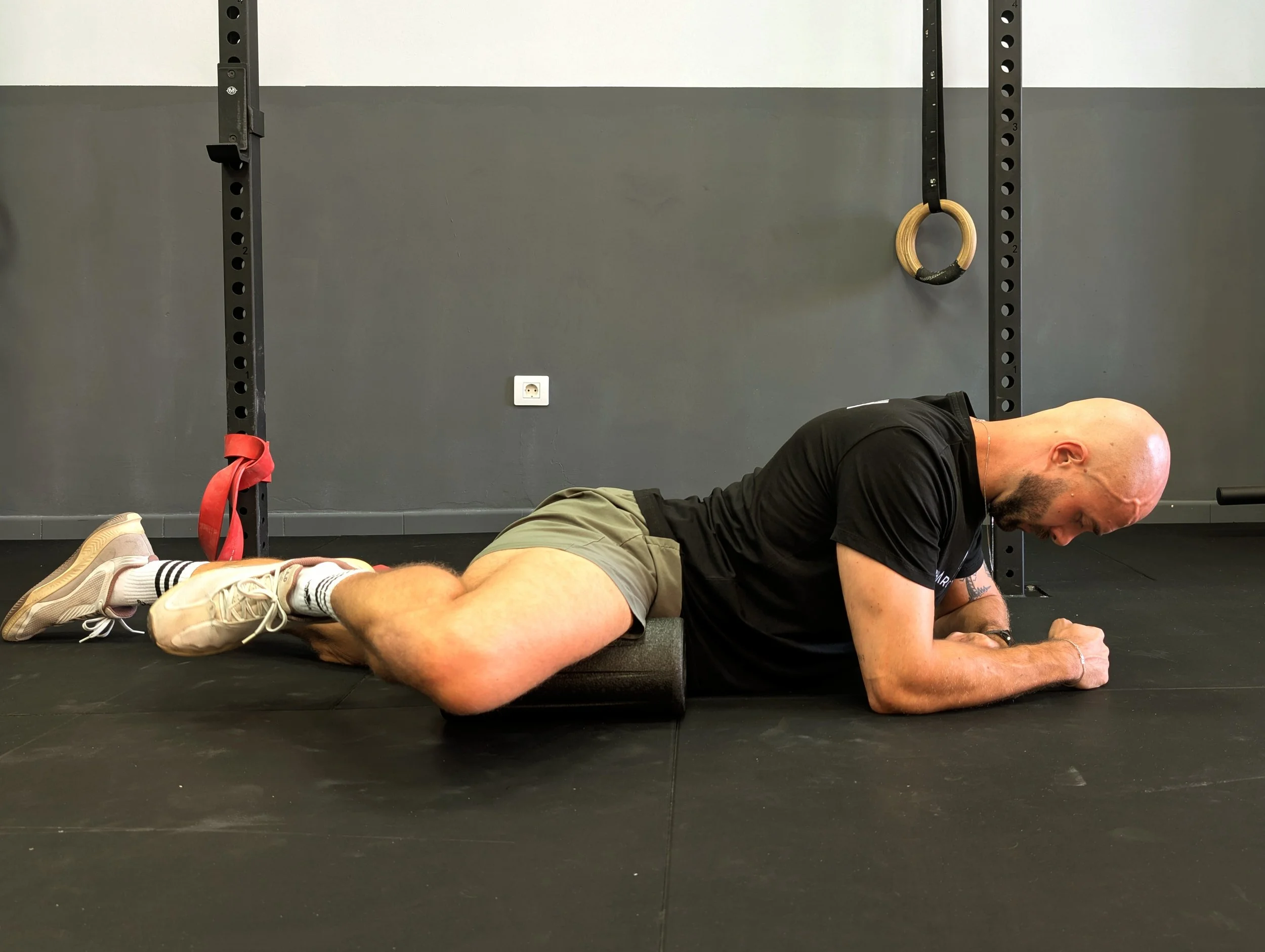
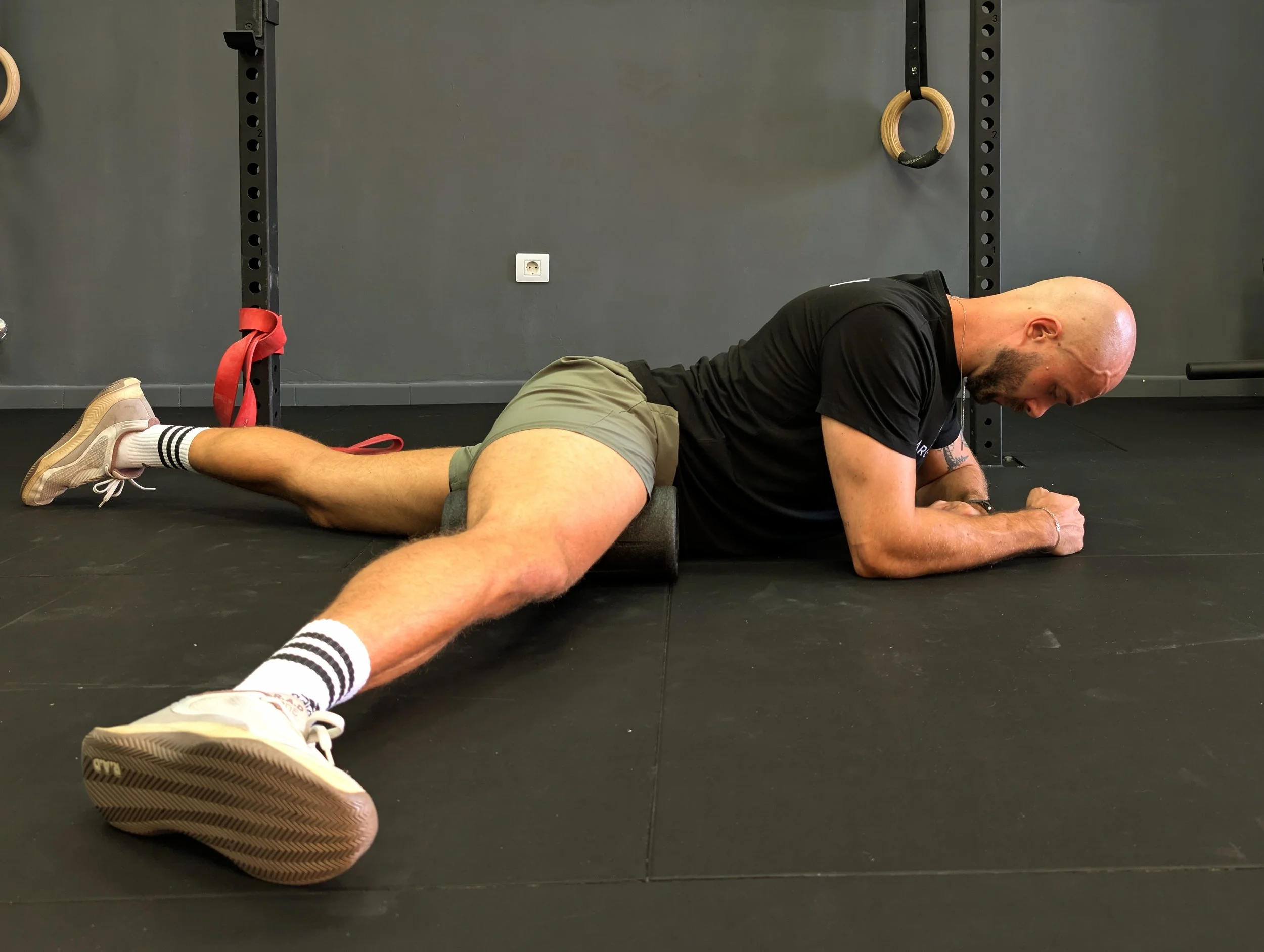
Why: The lats are massive restrictors of overhead movement. Smashing them improves shoulder flexion and breathing capacity.
How: Lie on your side with a foam roller deep in the armpit/lat area. Keep your arm extended straight overhead.
Floss: Slowly roll up and down the side of the ribcage. When you find a tender spot, roll your chest slightly toward the floor and then toward the ceiling.
Tool: Foam Roller.
4. Banded Chest & Anterior Shoulder Stretch
Why: Opens up the pecs and front of the shoulder, combating the rolled-forward posture from desk work.
How: Anchor a band at chest height. Loop your hand in, turn away from the rig, and step forward until there is tension across the pec.
Contract/Relax: Press your hand forward into the band for 3 seconds, then relax and let the band pull your arm further back.
Tools: Heavy Band.

5. Yoga Push-Up (Down Dog to Cobra)
Why: Dynamically moves the spine through full flexion and extension while opening the shoulder blades.
How: Flow from a plank position, lowering to the floor. Arch up into a gentle cobra (to extend the spine), and then press back into a downward dog, actively driving your chest toward your toes.
Tools: Bodyweight.
Key Reminders for Success:
Stable Shoulders: When lifting or reaching, think about setting your shoulder blades back and down slightly (don't excessively pinch). Use external rotation ("break the bar," "armpits forward").
Important Notes:
Breathe! Holding your breath increases tension. Focus on deep, diaphragmatic breaths during mobilisations.
Pressure Control: Adjust your body weight to manage pressure. Start lighter if needed. Softer tools (foam roller, taped tennis balls) are good starting points.