
MOBILITY - UPPER BACK, TRAPEZIUS AND SCAPULA
Welcome! This program focuses on releasing tension and improving mobility in your upper and mid-back, shoulder blades (scapulae), and the often-tight trapezius muscles ("traps"). Stiffness here is common with desk work and can lead to neck pain, headaches, and poor shoulder function.
Common Issues This Helps:
Upper/middle back pain and stiffness
Neck pain that feels connected to your upper back or traps
Tension headaches starting at the base of the neck or upper back
"Knots" or chronic tension in the upper traps
Shoulder pain related to poor posture or a stiff upper back
Difficulty reaching overhead comfortably
General stiffness from "Desk Neck" or rounded shoulders
Quick Check (Assessment):
Posture Check: Do your shoulders round forward? Is your upper back excessively curved (kyphosis)?
Overhead Reach: Can you raise your arms straight overhead without arching your lower back, bending elbows, or shrugging excessively?
Thoracic Extension: Can you gently lift your chest towards the ceiling (extending your upper back) without arching your lower back?
Shoulder Blade Movement: How do your shoulder blades move when you raise your arms? Do they "wing" out?
Your Mobility Practices:
(Aim for approx. 2 minutes per technique/area unless otherwise noted. Breathe deeply!
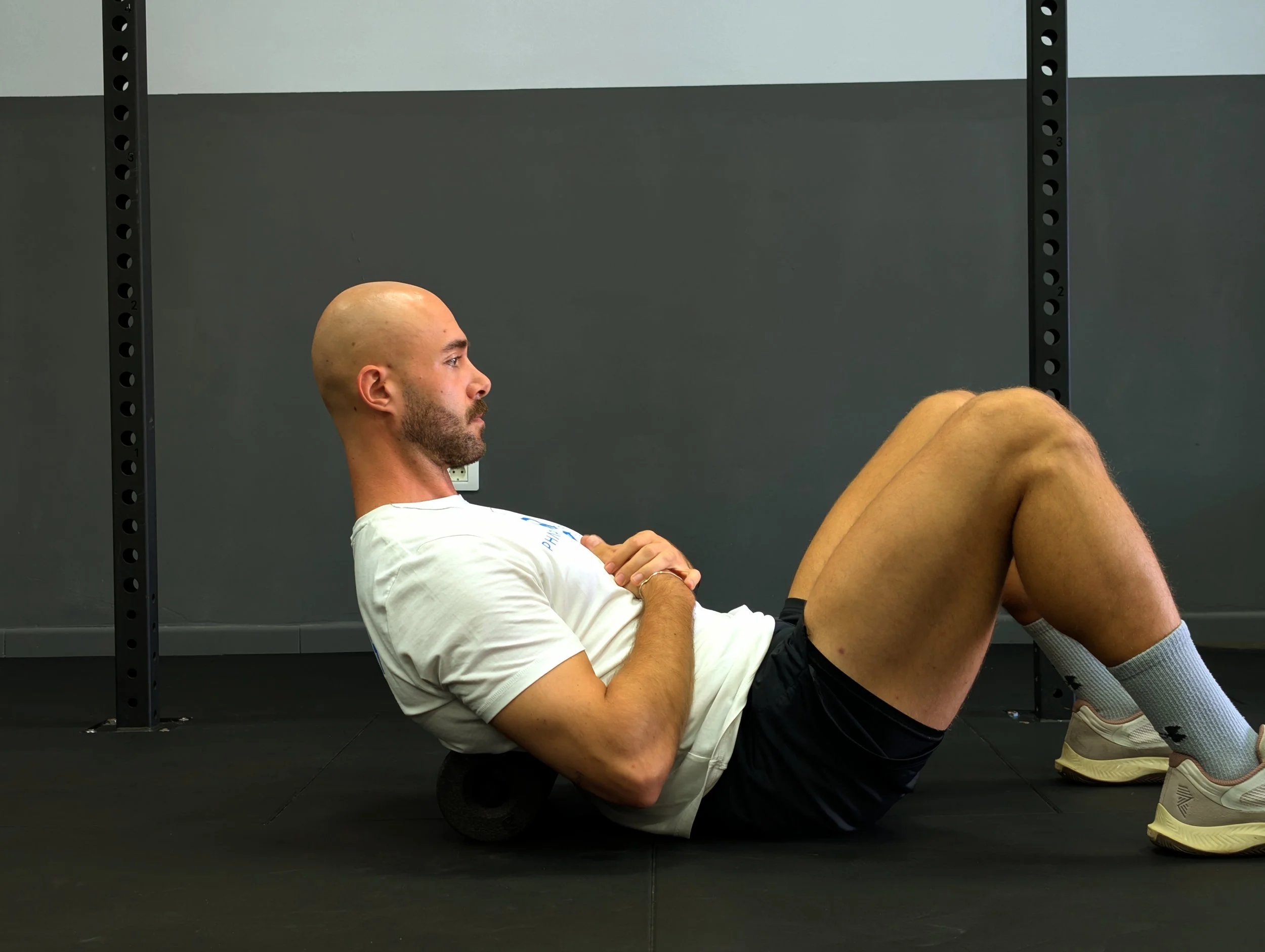
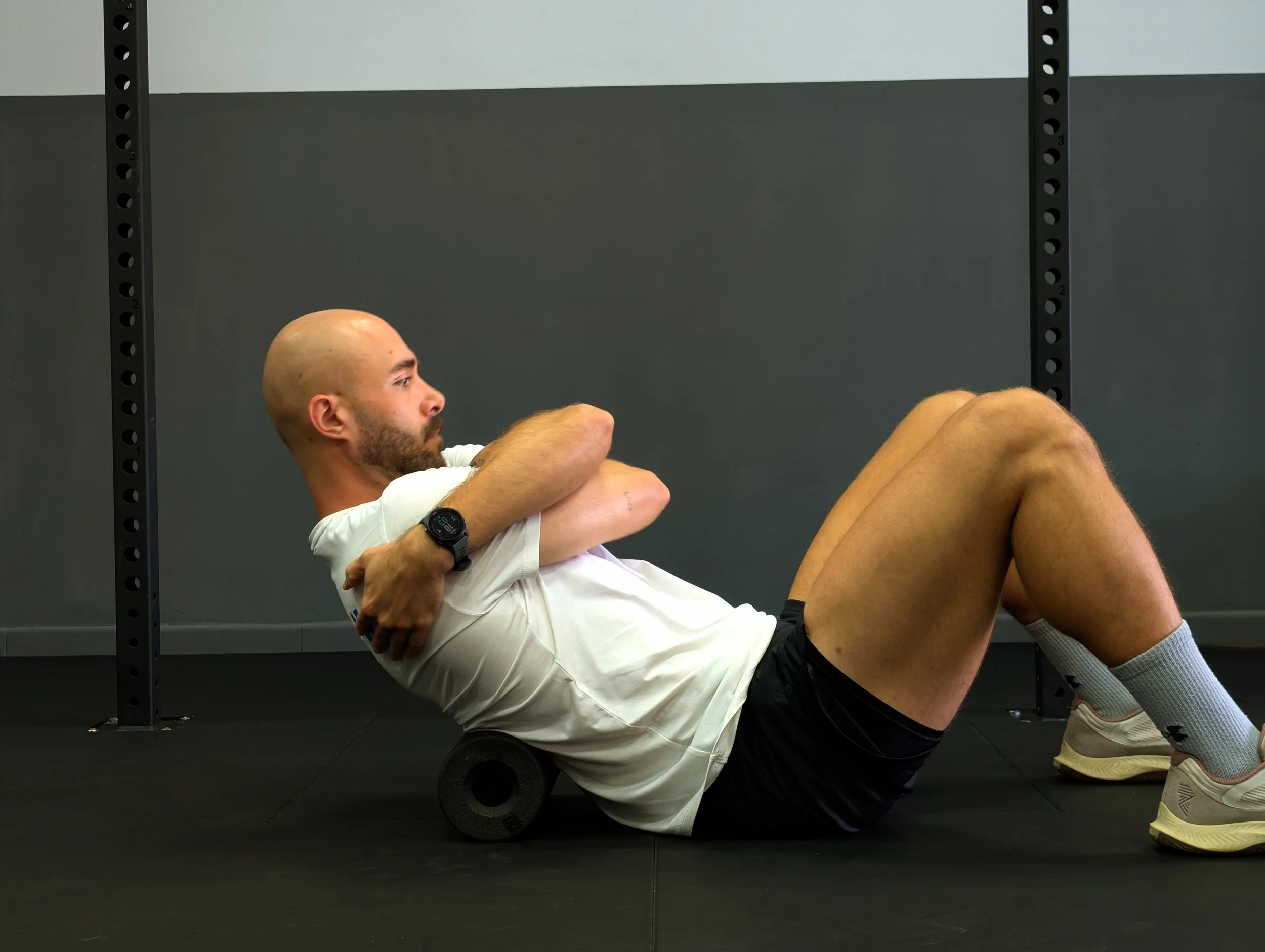
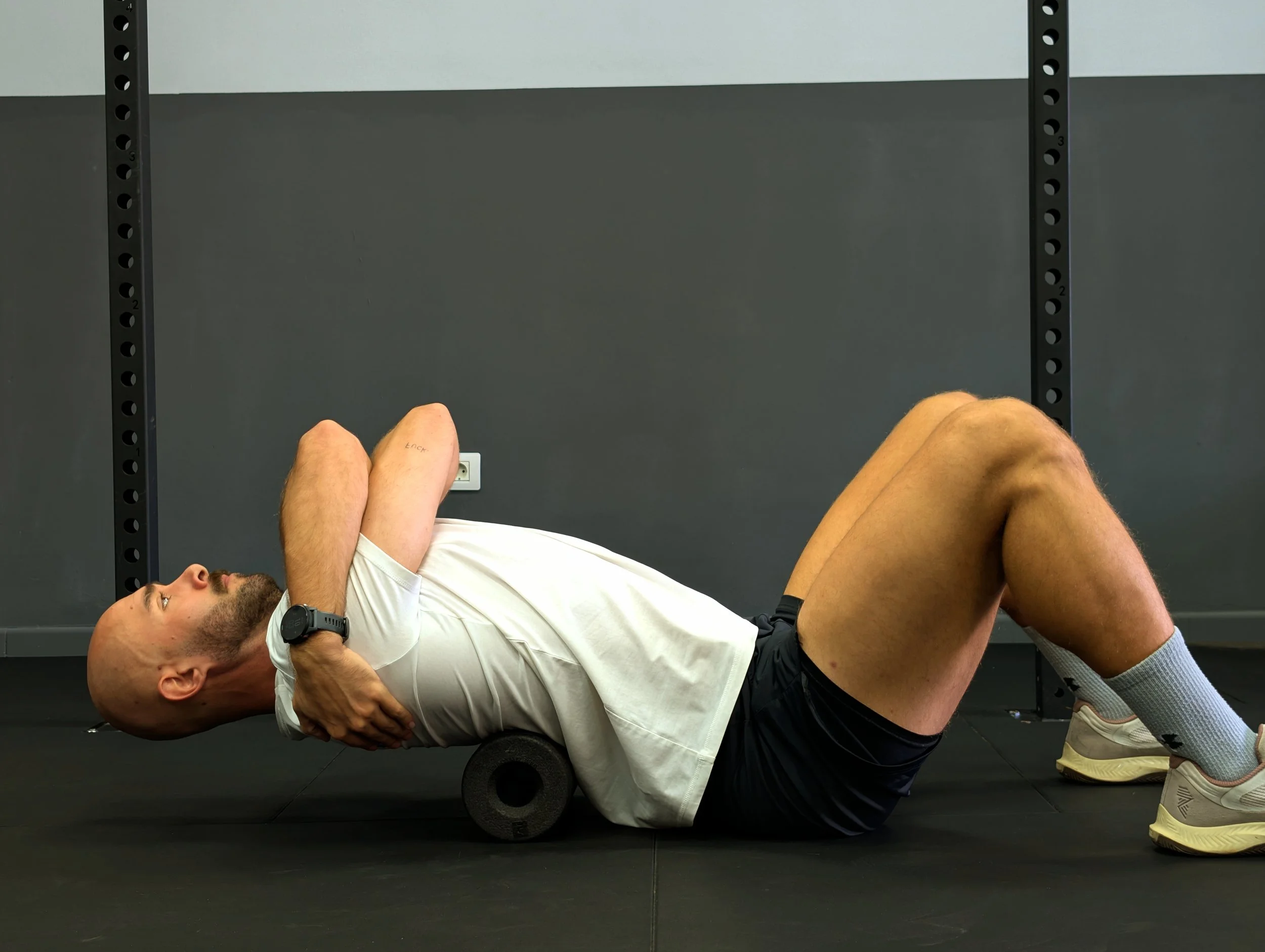
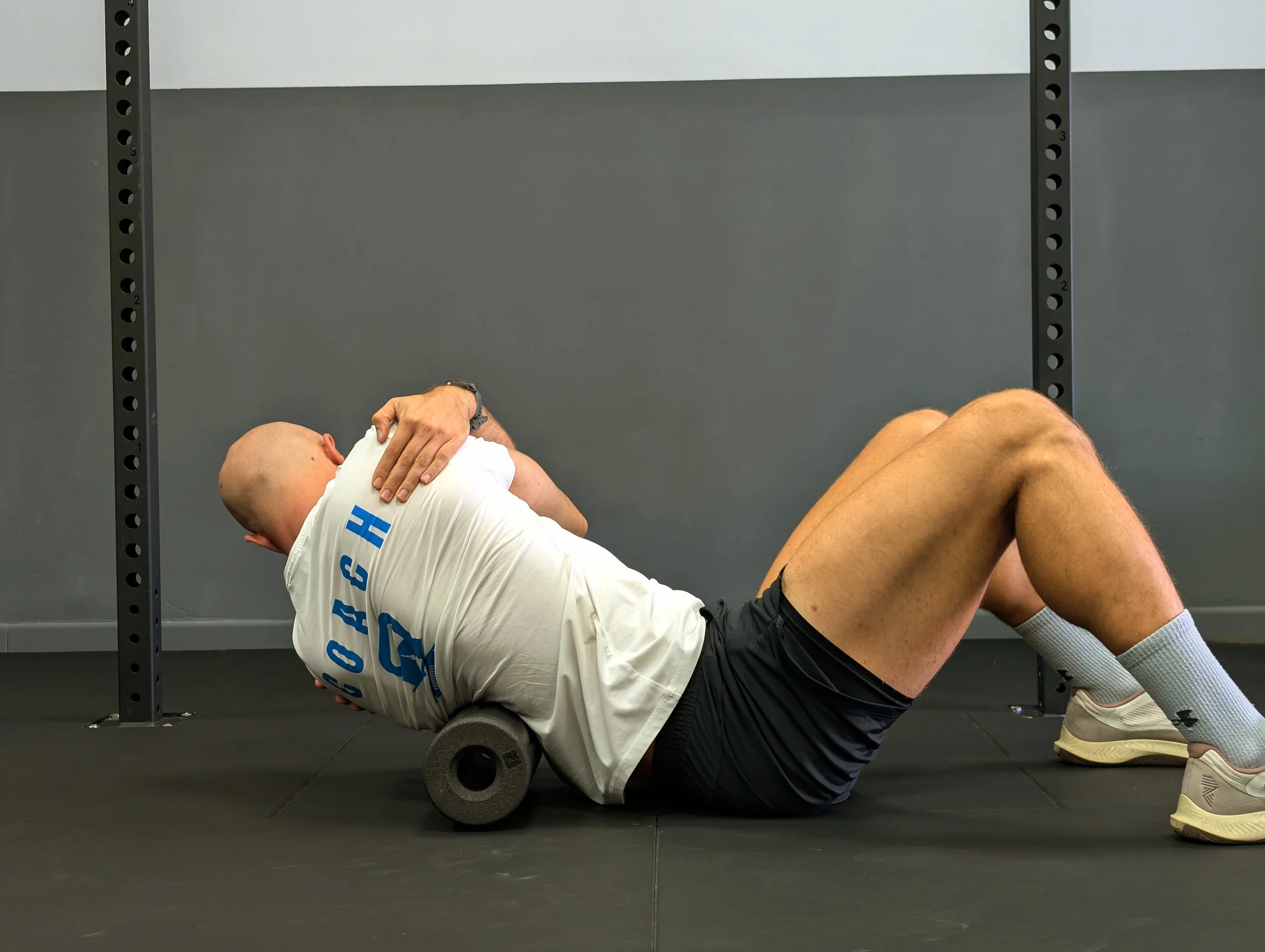
1. T-Spine Smash (Thoracic Spine Mobility)
Why: Improves the ability of your upper/mid-back to extend and rotate, which is crucial for good posture and healthy shoulder movement .
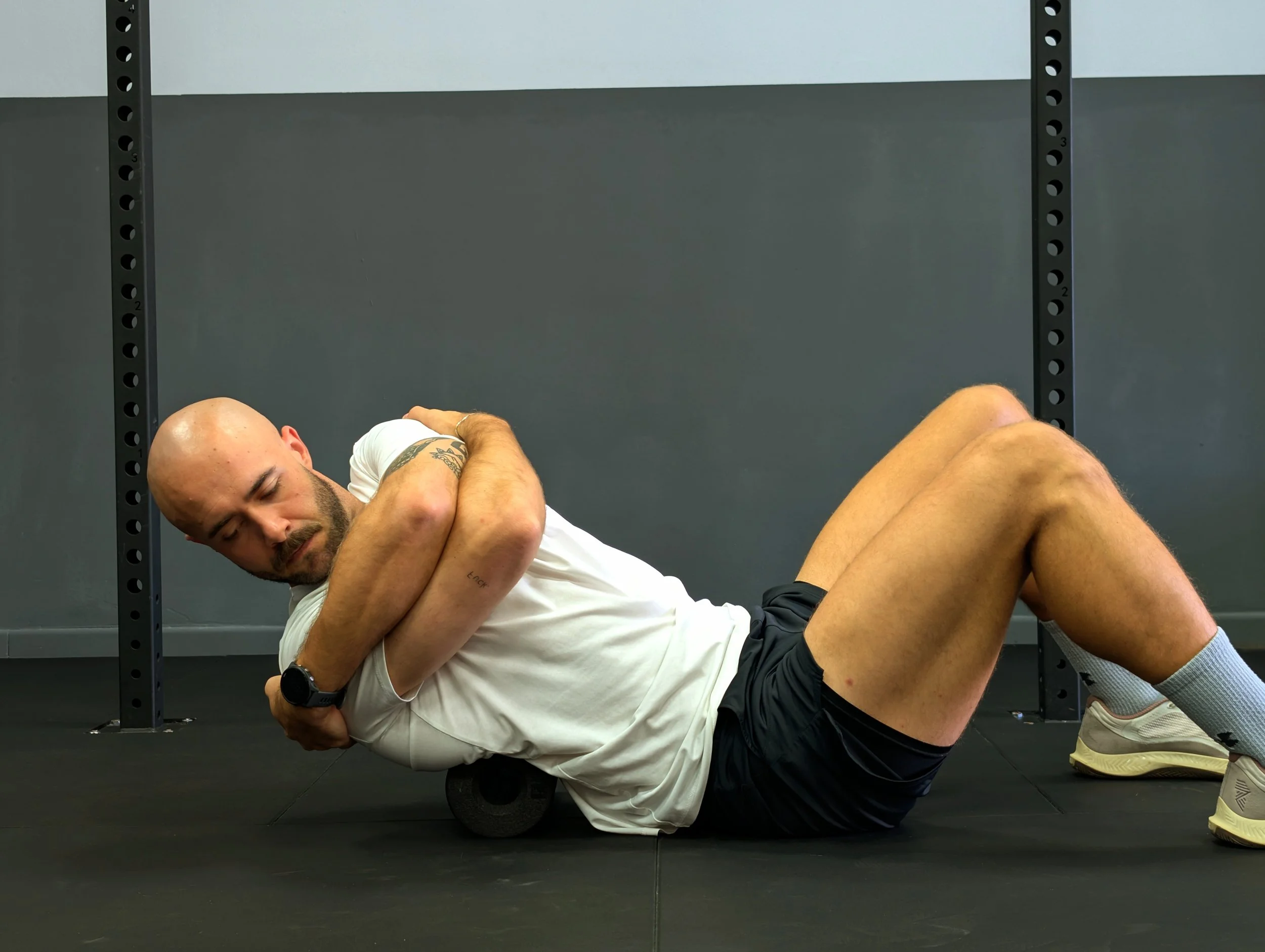
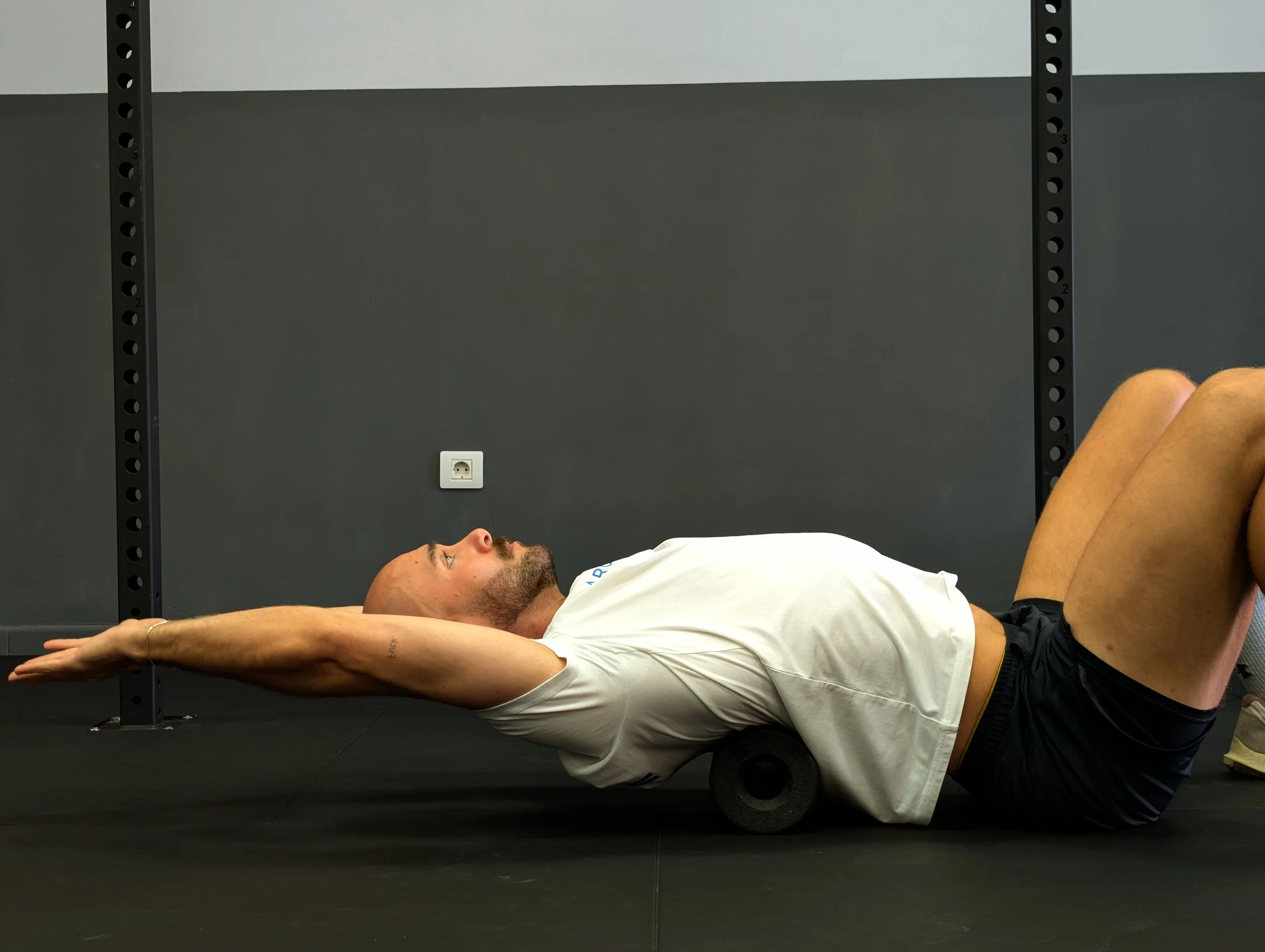
How: Lie on your back with a roller or peanut tool placed horizontally under your upper/mid-back.
Extension: Cross arms over chest ("hug yourself"). Gently arch back over the tool, taking deep breaths. You can lift your hips slightly for more pressure. Move the tool up/down a few inches at a time, focusing on stiff areas.
Rotation/Side-to-Side: While hugging yourself, gently roll slightly side-to-side across the muscles next to your spine .
Overhead Bias: Keep abs engaged (prevent low back arch). Reach arms straight overhead. Gently arch your upper back over the tool.
Tool Options: Use a foam roller for general mobility. Use a peanut tool (double lacrosse ball) for more targeted pressure between vertebrae. A barbell on the floor or a keg can be used for more aggressive pressure if coached.
Tools: Roller (foam/hard), Peanut Tool, optional Barbell/Keg.
2. Trap & Shoulder Smash
Why: Targets knots and stiffness in the upper traps and along the inner edge of the shoulder blade, common areas for tension.
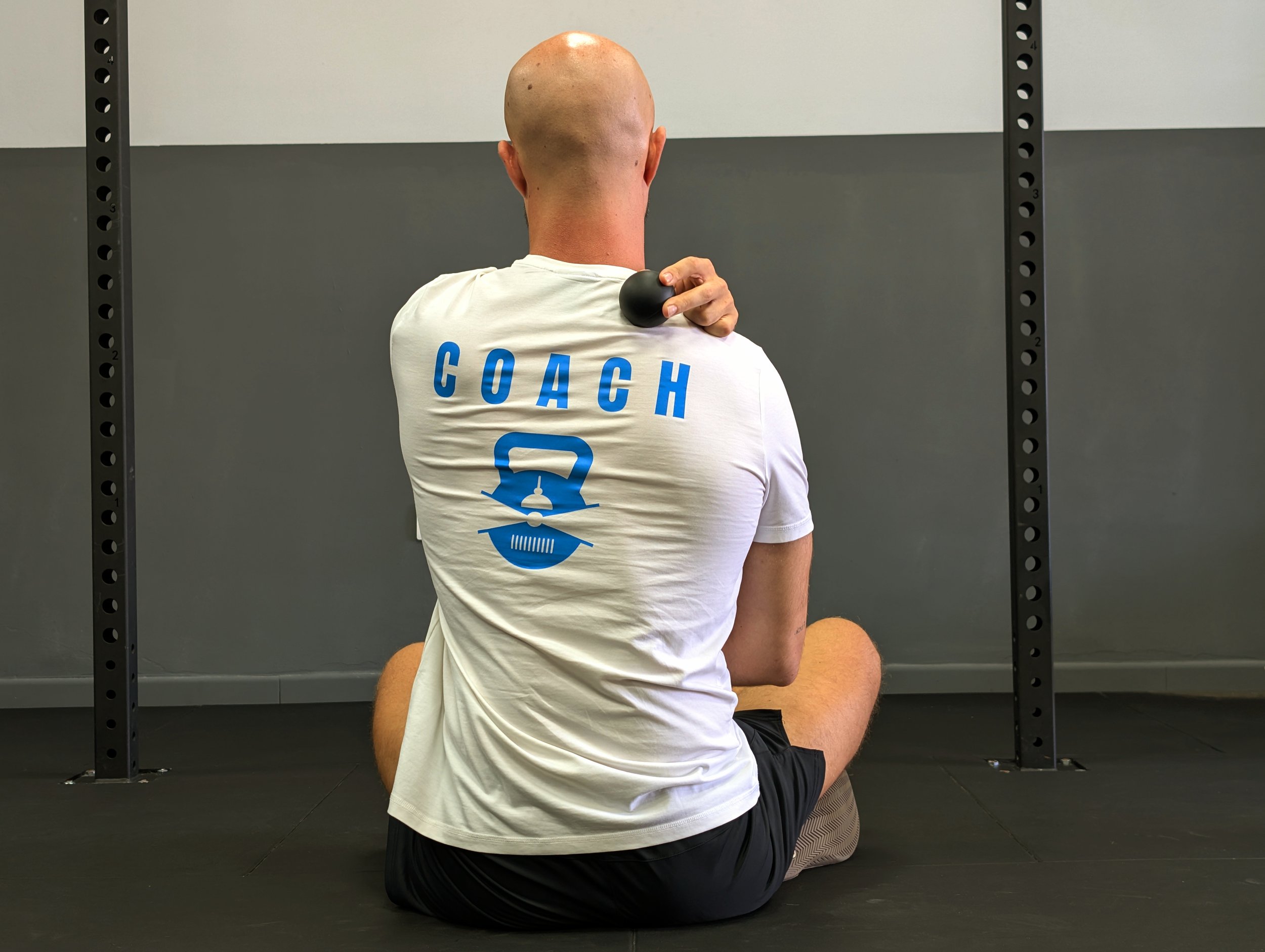
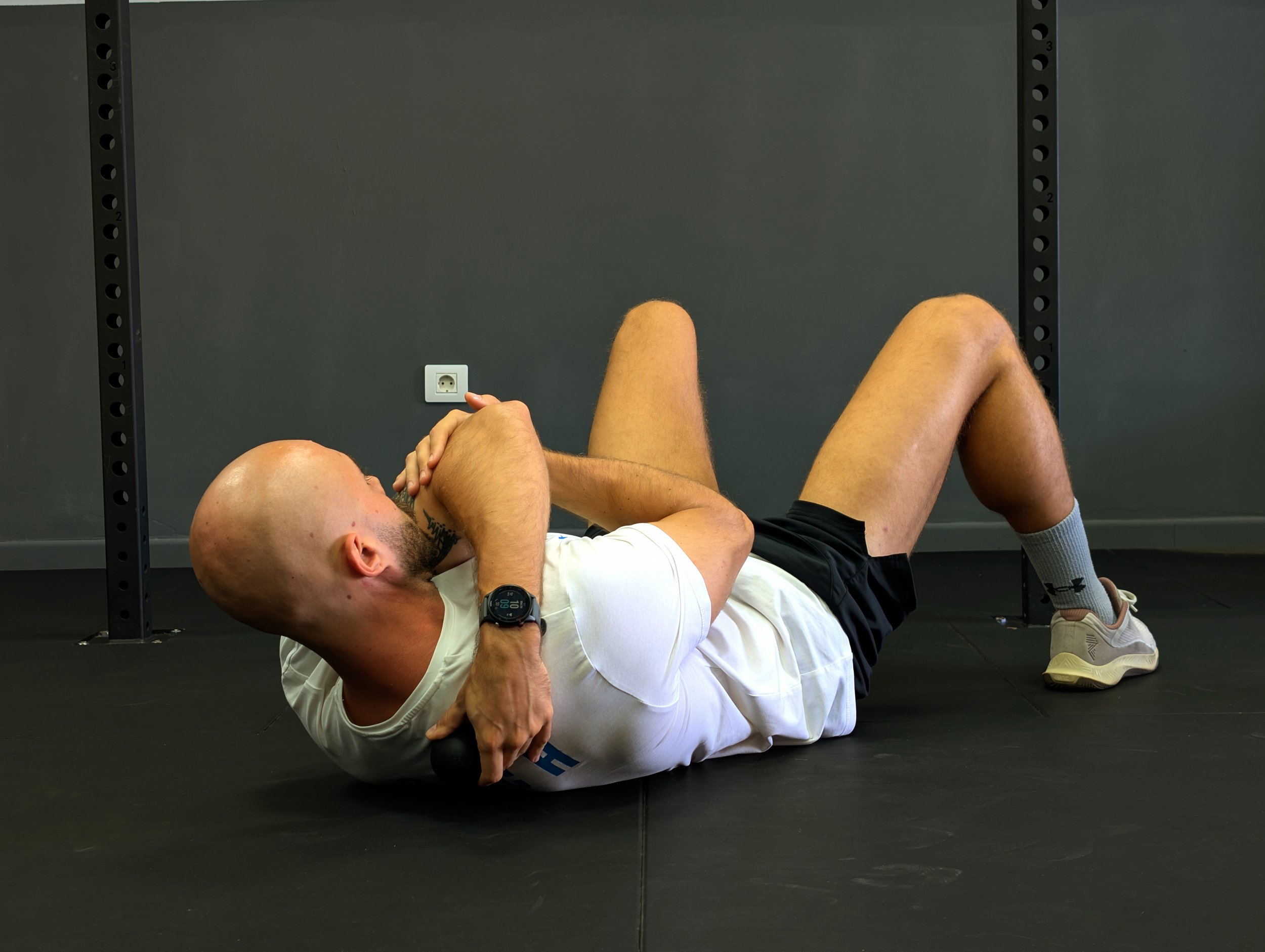
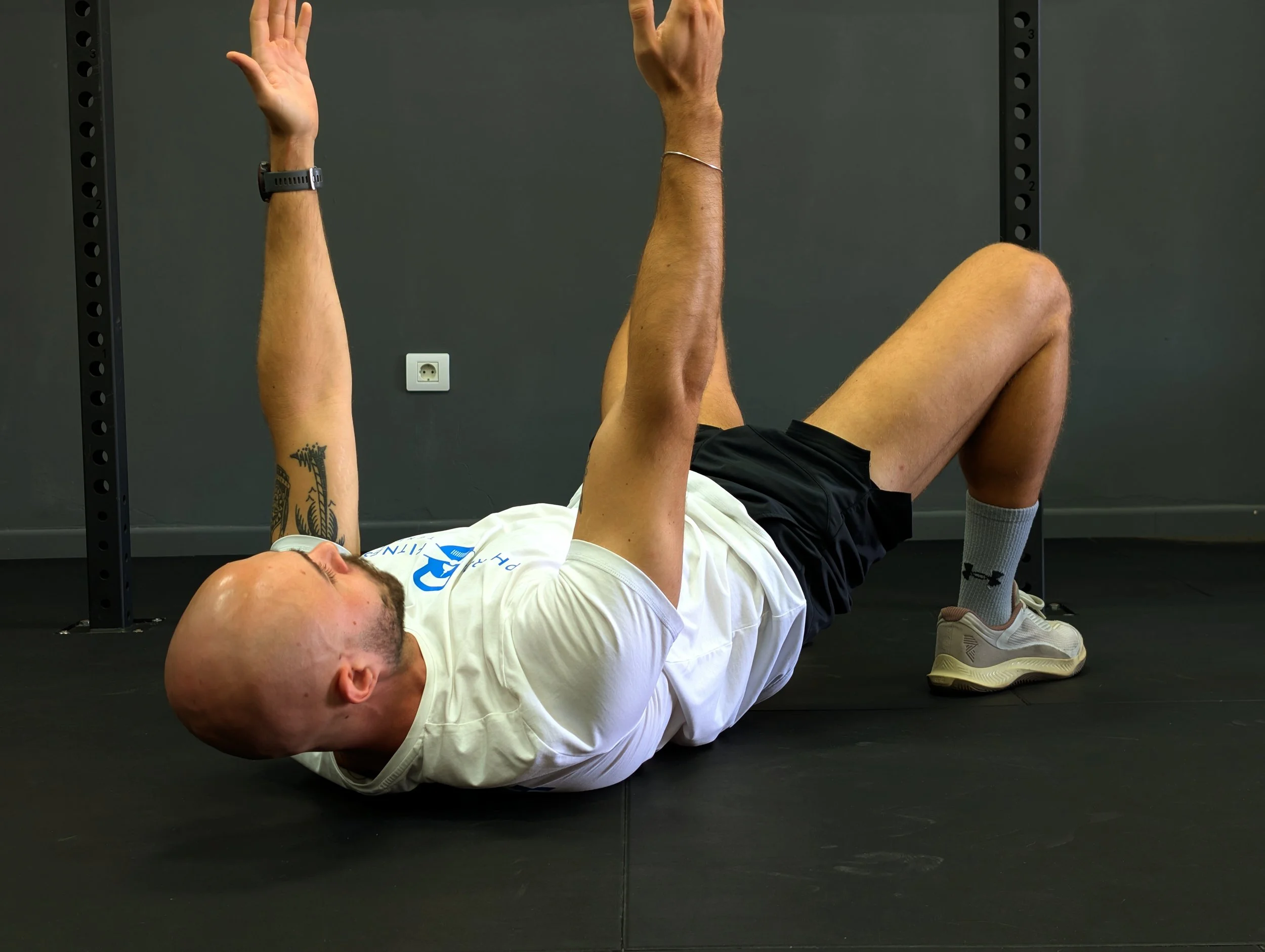
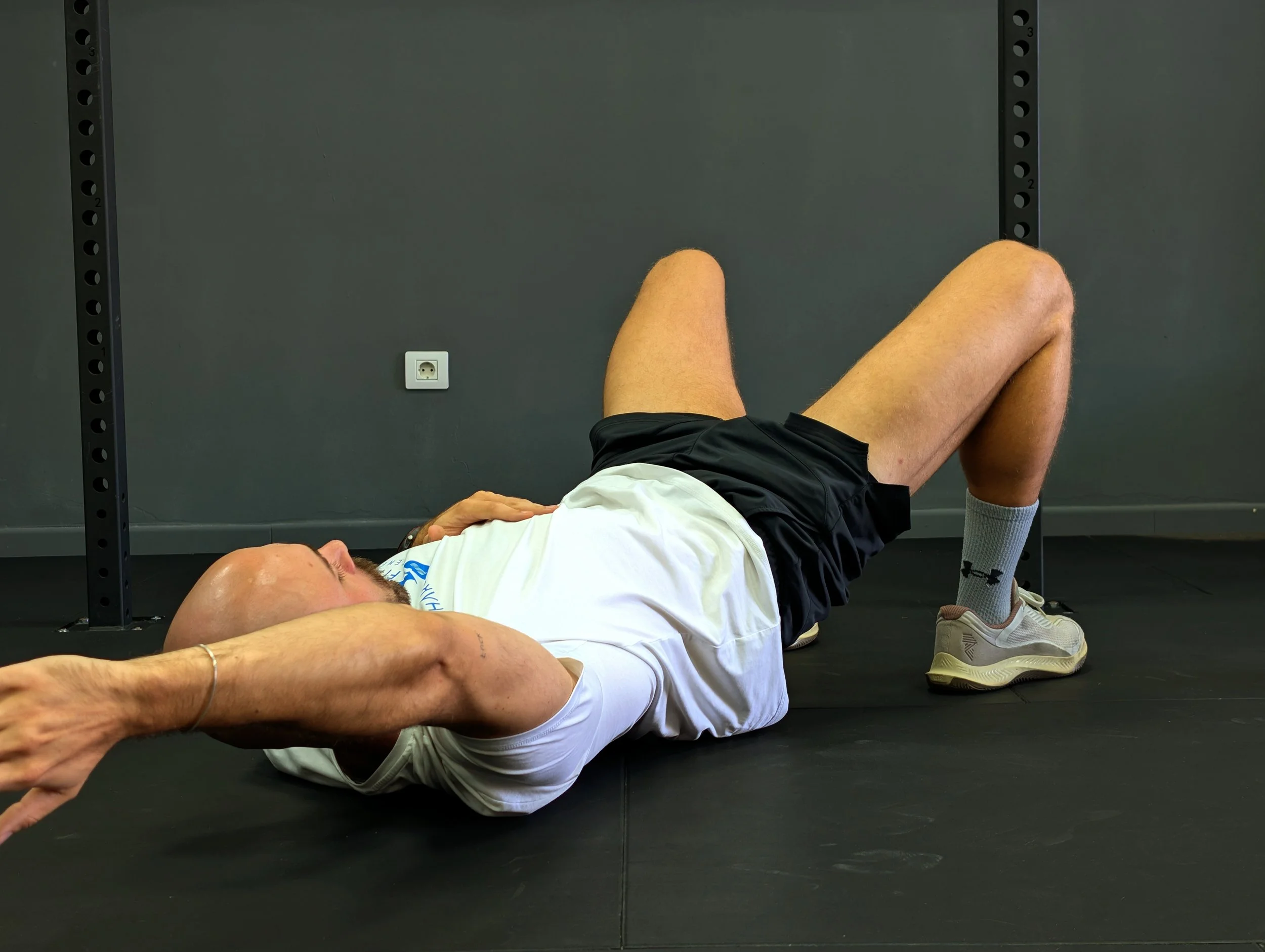
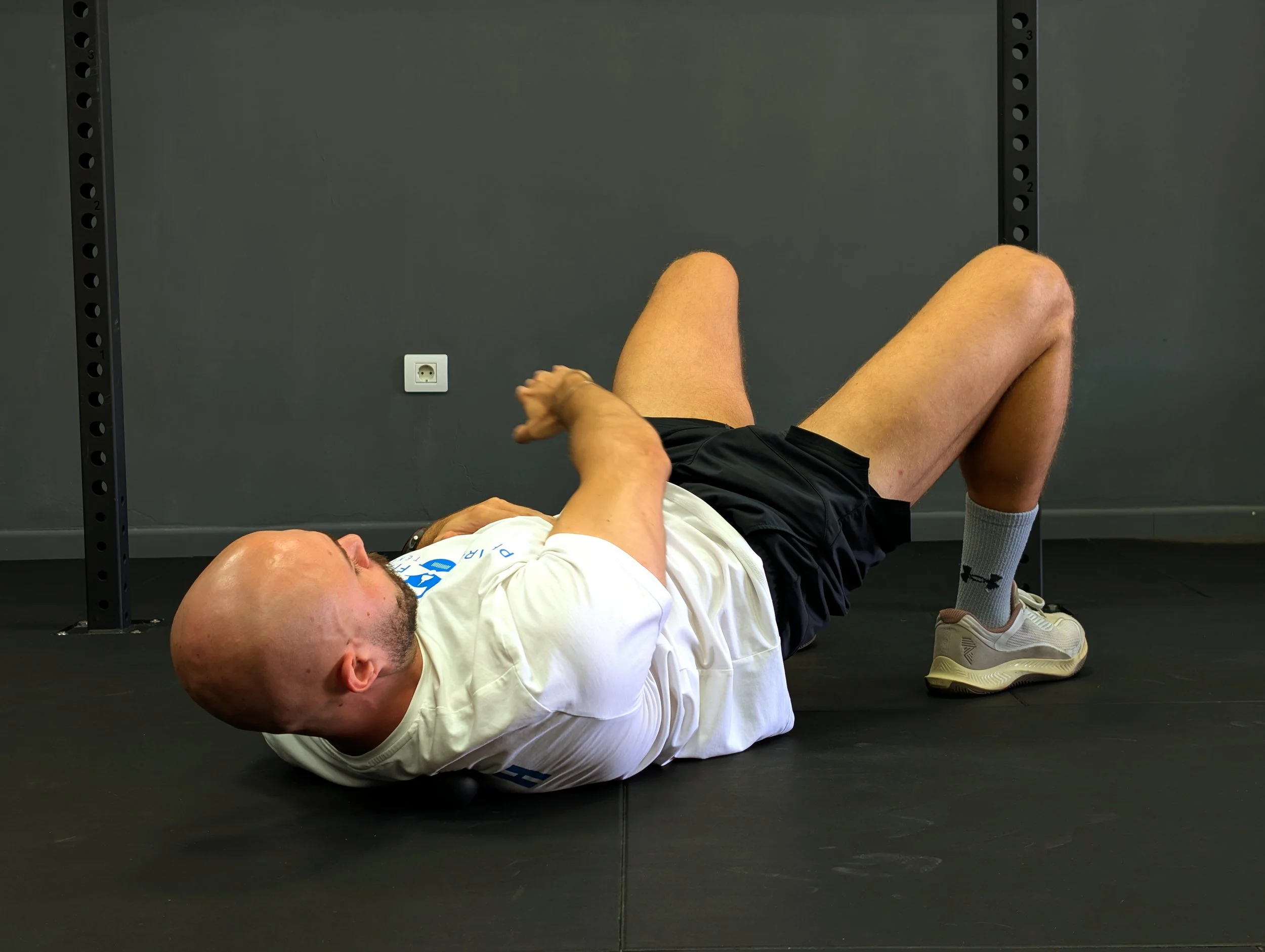
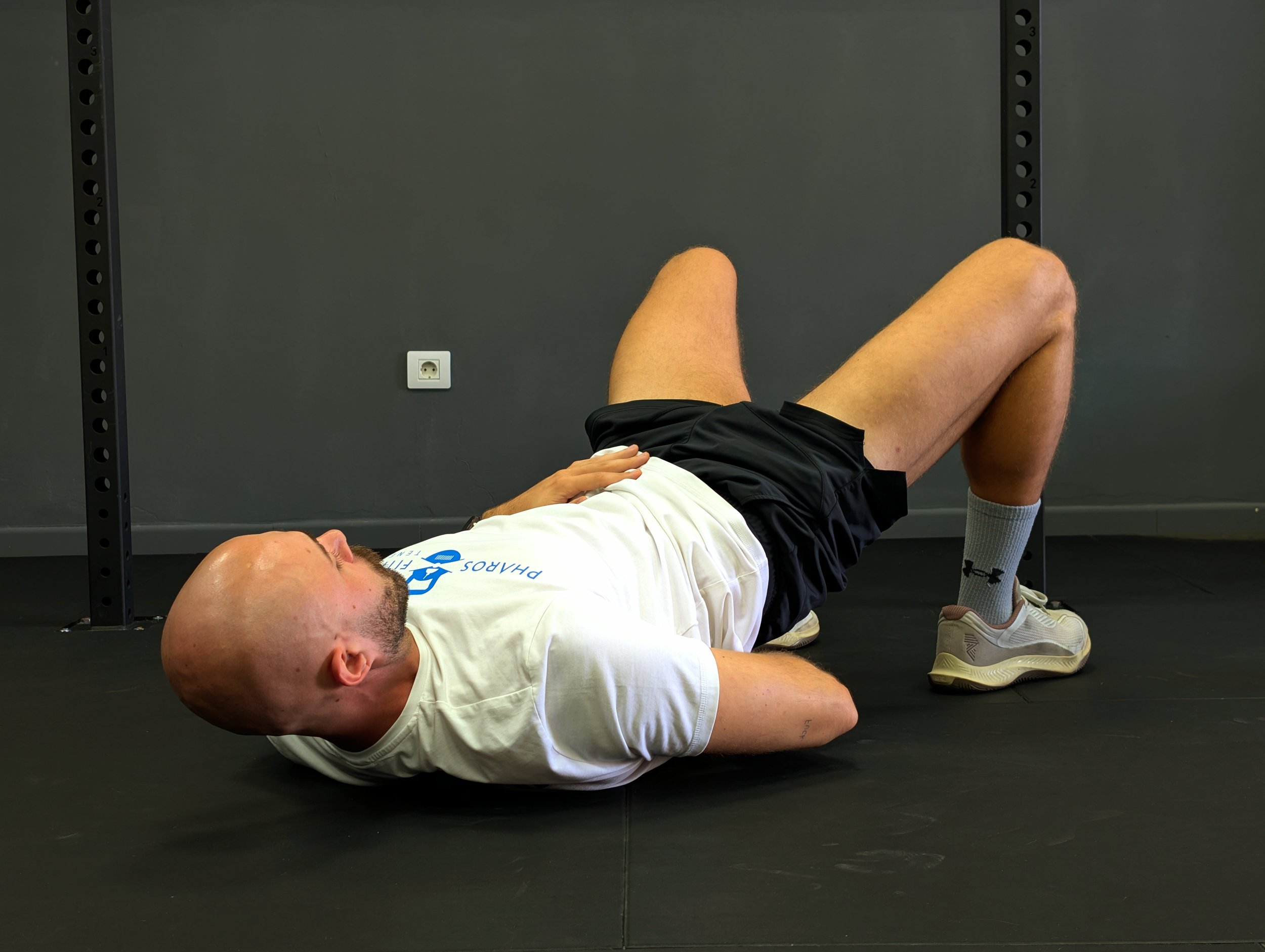
How: Lie on your back. Place a small ball under your upper trap (fleshy area between neck and shoulder tip). Find a tender spot. Apply pressure (lift hips if needed).
Floss: Slowly move your arm through different ranges: straight overhead , across your body towards the opposite hip, hand behind your lower back. Keep the movement controlled. Explore the inner border of the shoulder blade..
Tool: Small Ball (lacrosse ball recommended).
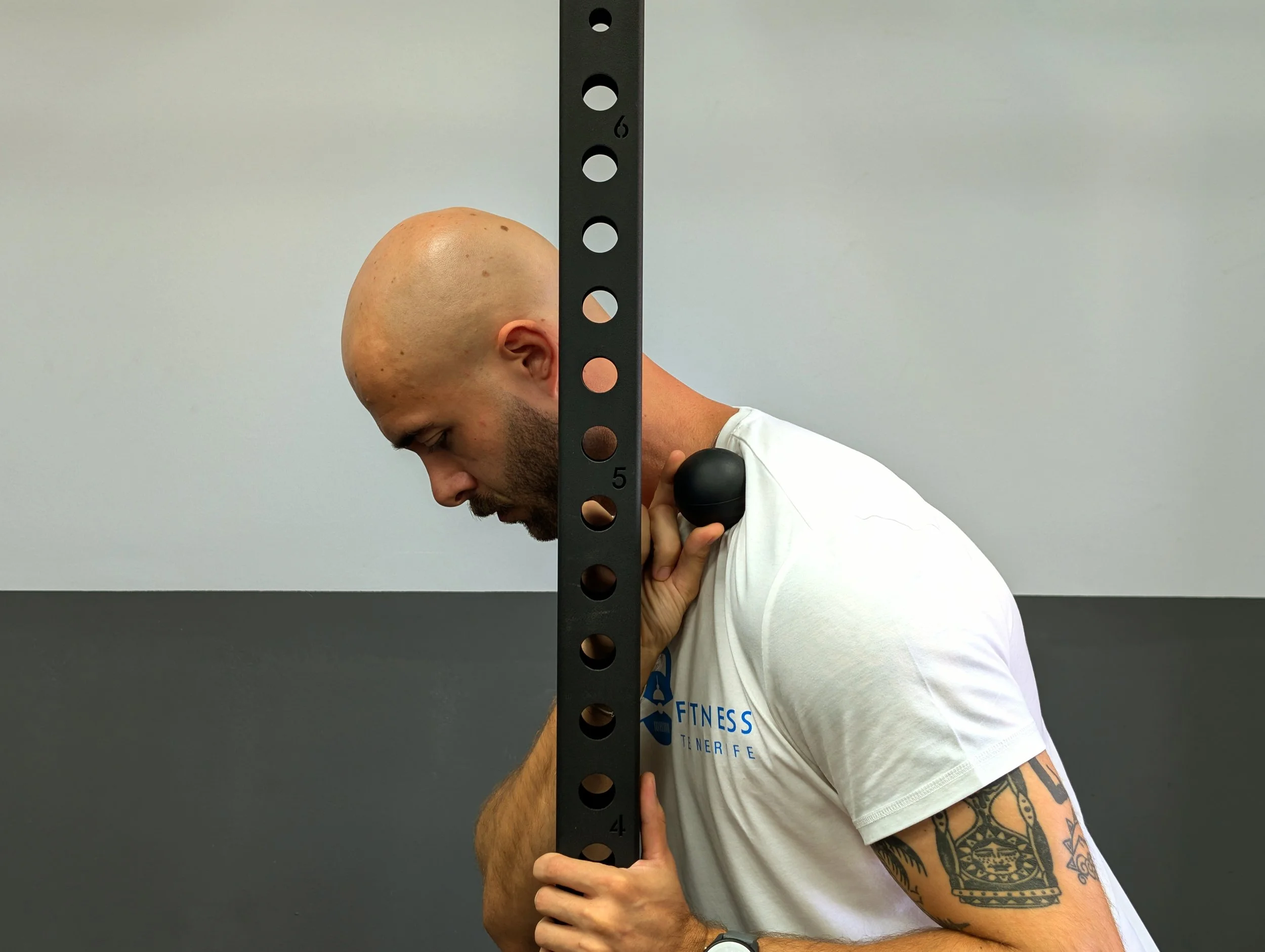
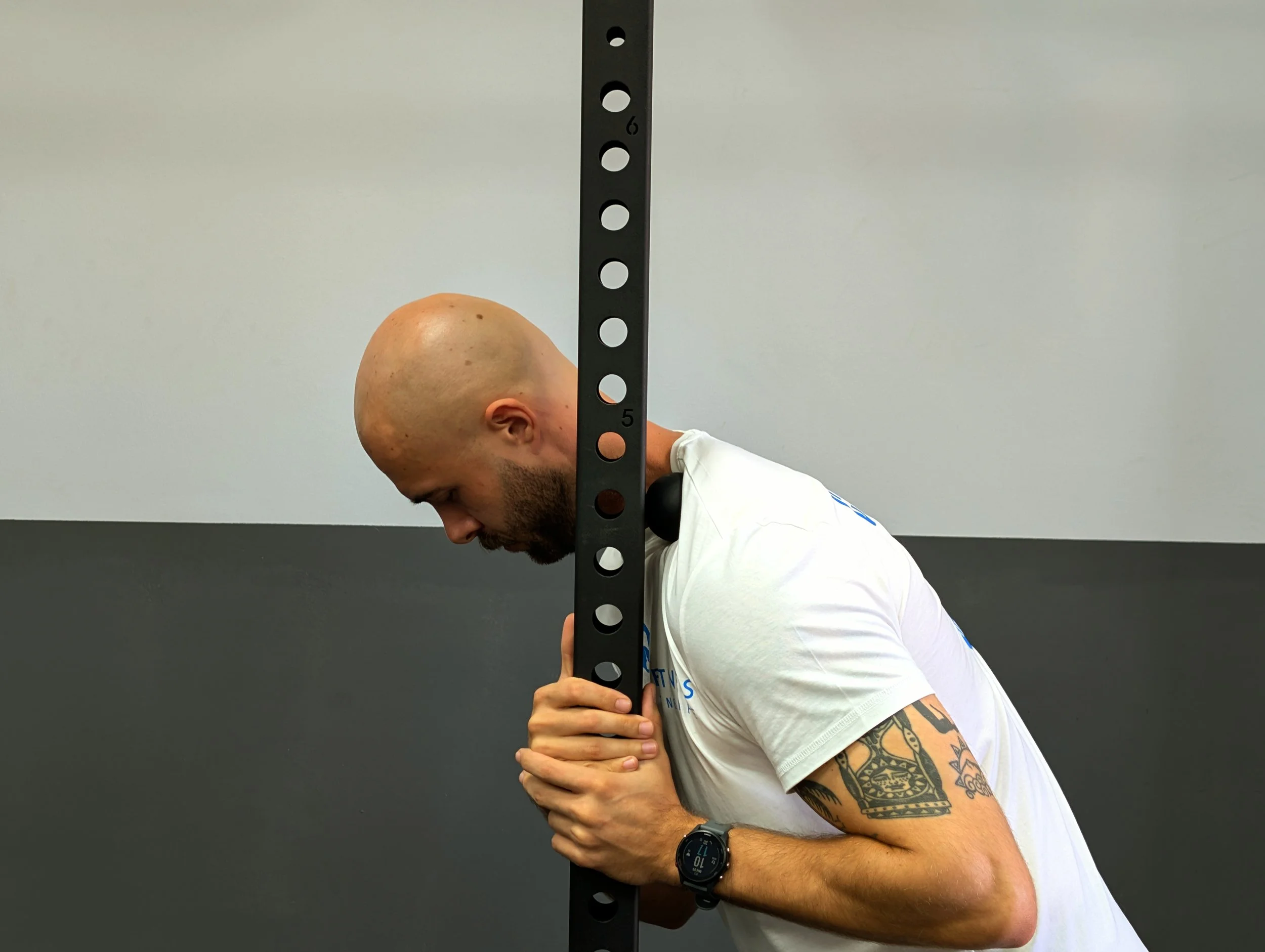
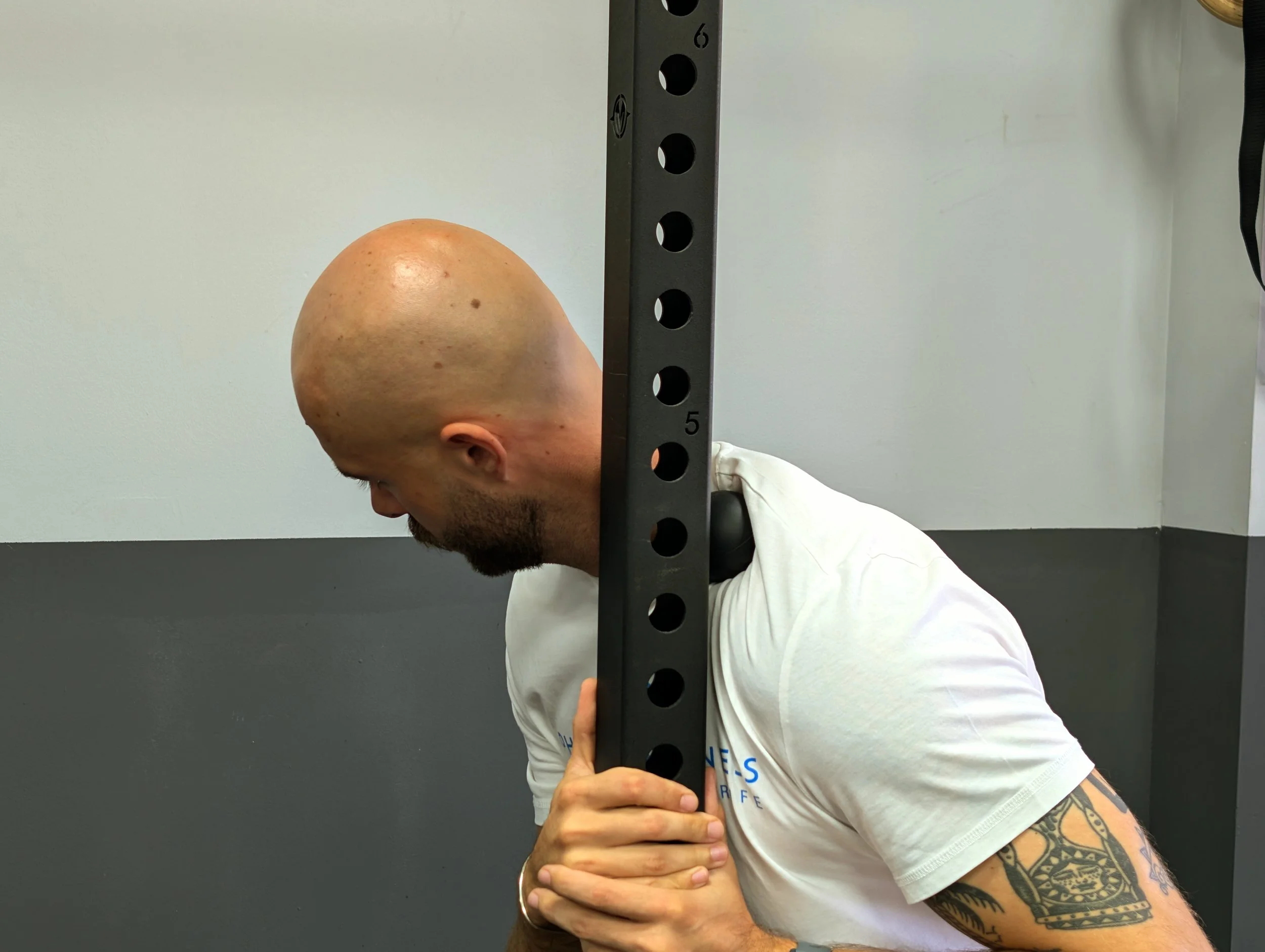
3. Trap & First Rib Smash (Standing/Leaning)
Why: Focuses on the often very tight junction where the neck, trap muscle, and first rib meet. Crucial for neck relief and improving overhead mechanics.
How: Stand in a doorway, corner, or next to a rack post. Pin a small ball between the structure and the target area (deep in the trap, just behind/below collar bone). Lean your body weight into the ball.
Floss: Gently move your arm overhead or behind your back. Tilt your head away from the ball. Shrug shoulder up/down slightly.
Contract/Relax: Gently press shoulder/trap into ball for 3-5 sec, then relax deeper.
Tool: Small Ball (lacrosse ball recommended).
4. Overhead Rib Mobilisation
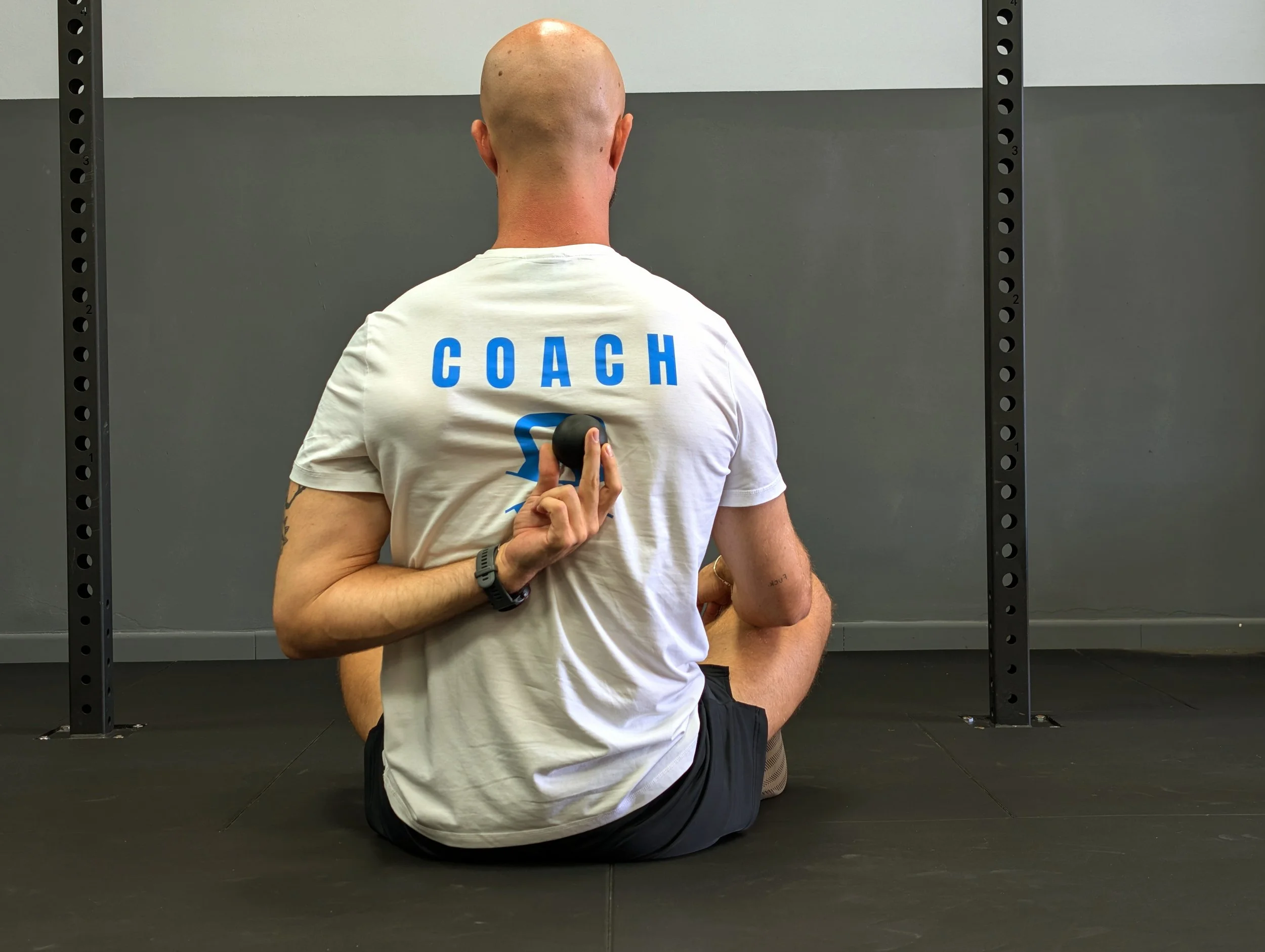
Why: Improves how your shoulder blade glides over your ribs, which can limit shoulder motion if restricted.
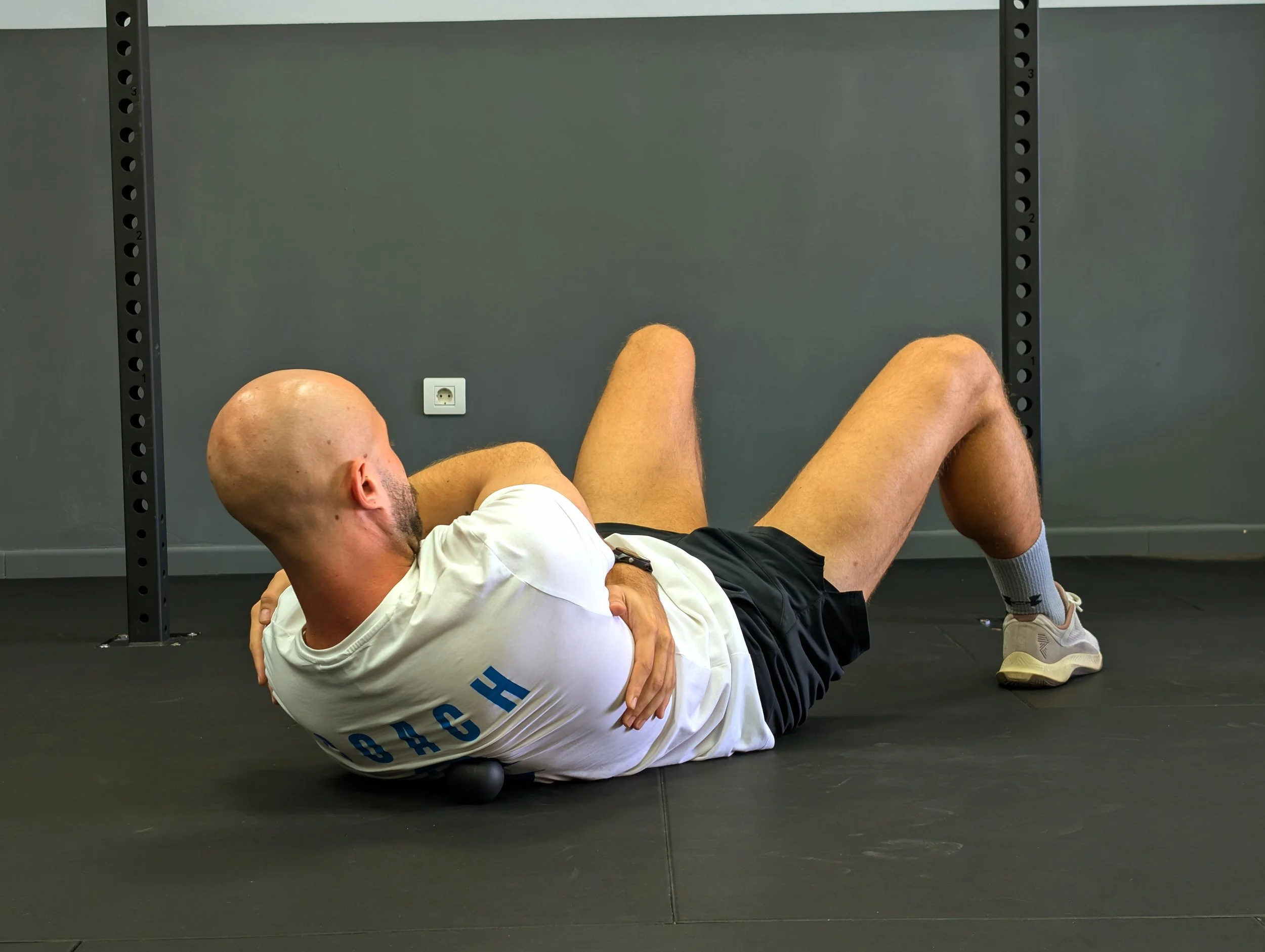
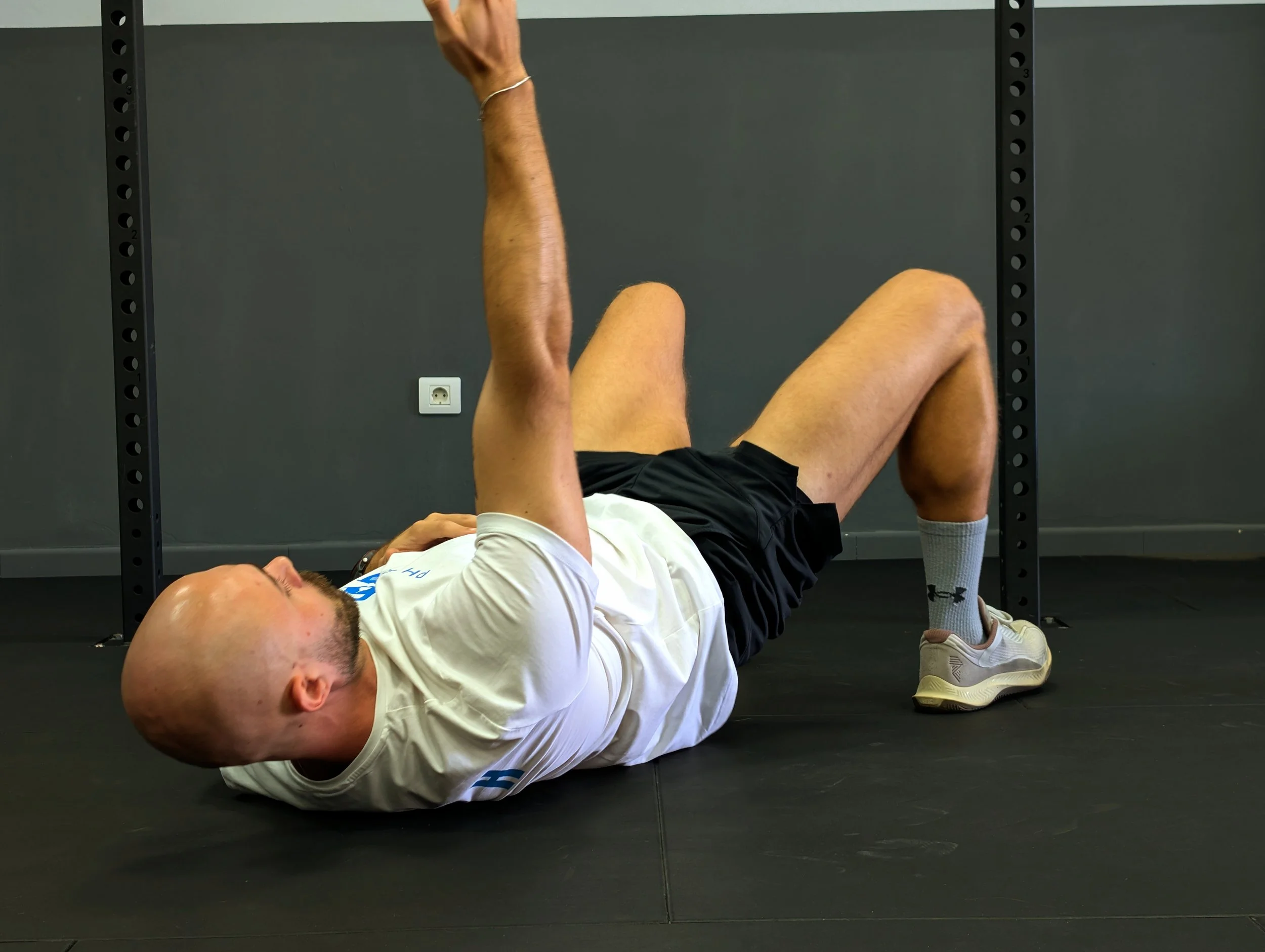
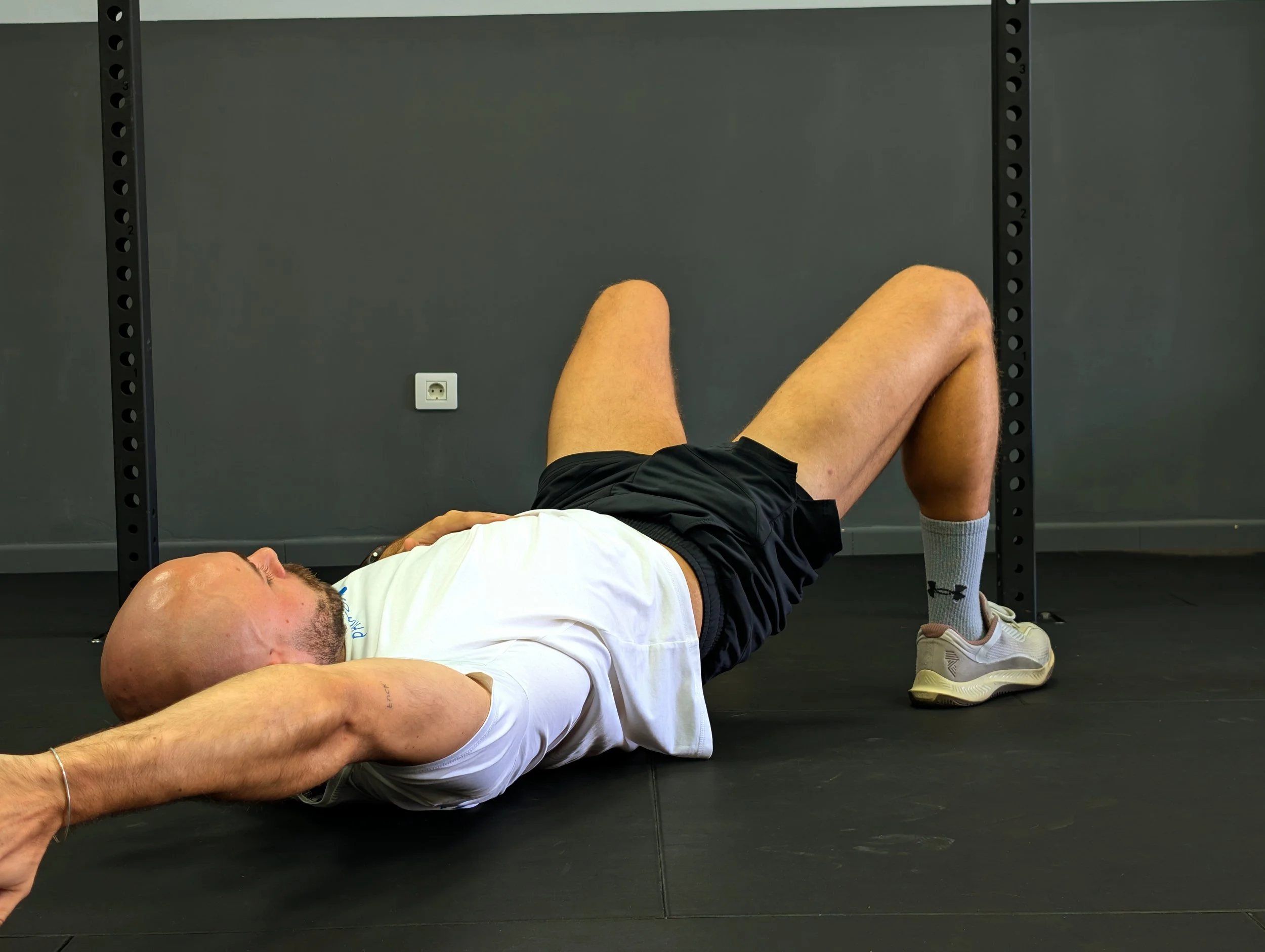
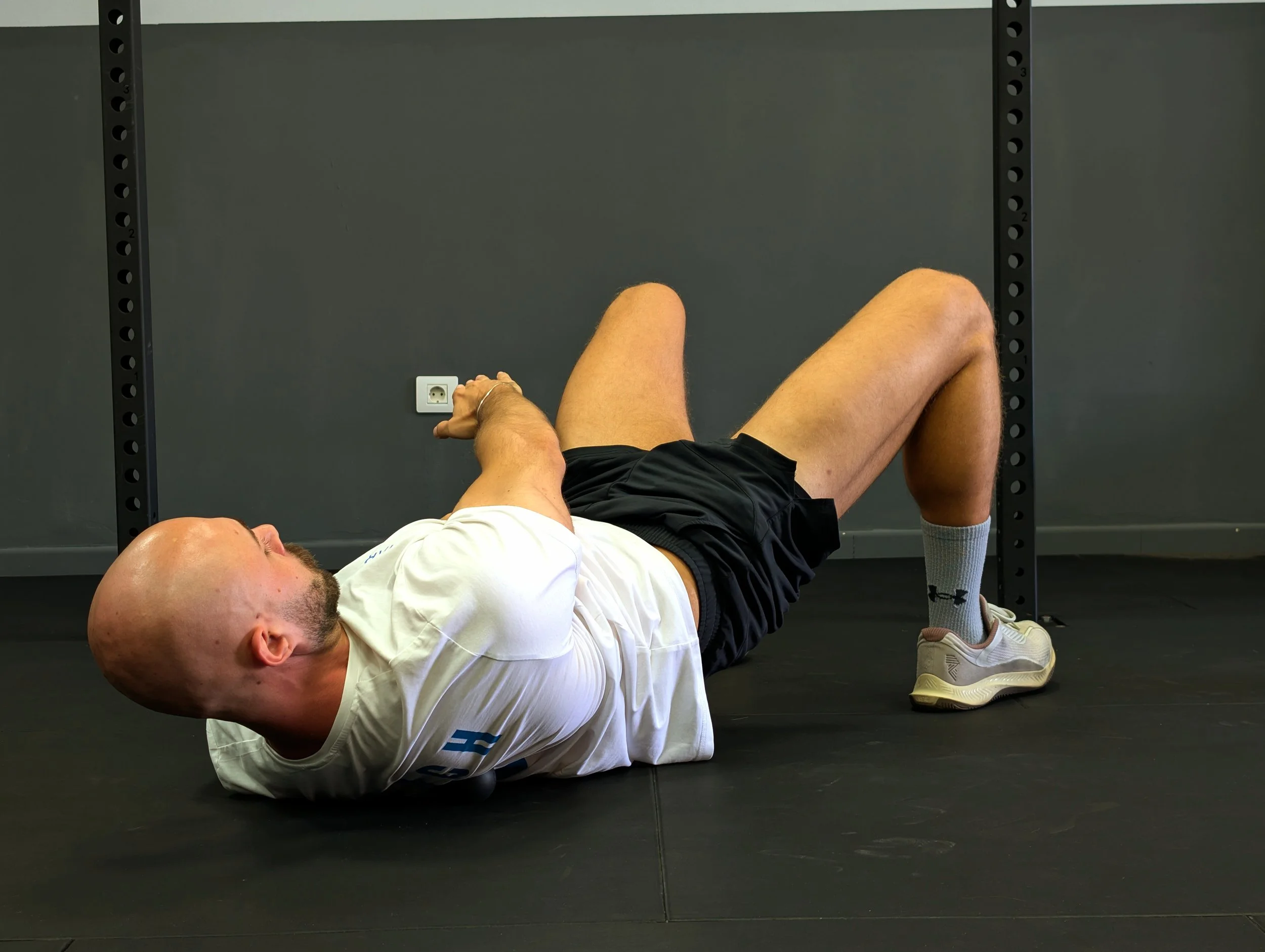
How: Lie on back, similar setup to Trap Smash, but place the ball between your shoulder blades and spine, directly on the ribs. Find a tender rib spot. Bridge hips up for pressure.
Floss: Slowly move your arm overhead and across your body, feeling the shoulder blade move over the ball/ribs. Breathe deeply into the pressure.
Tool: Small Ball (lacrosse ball recommended).
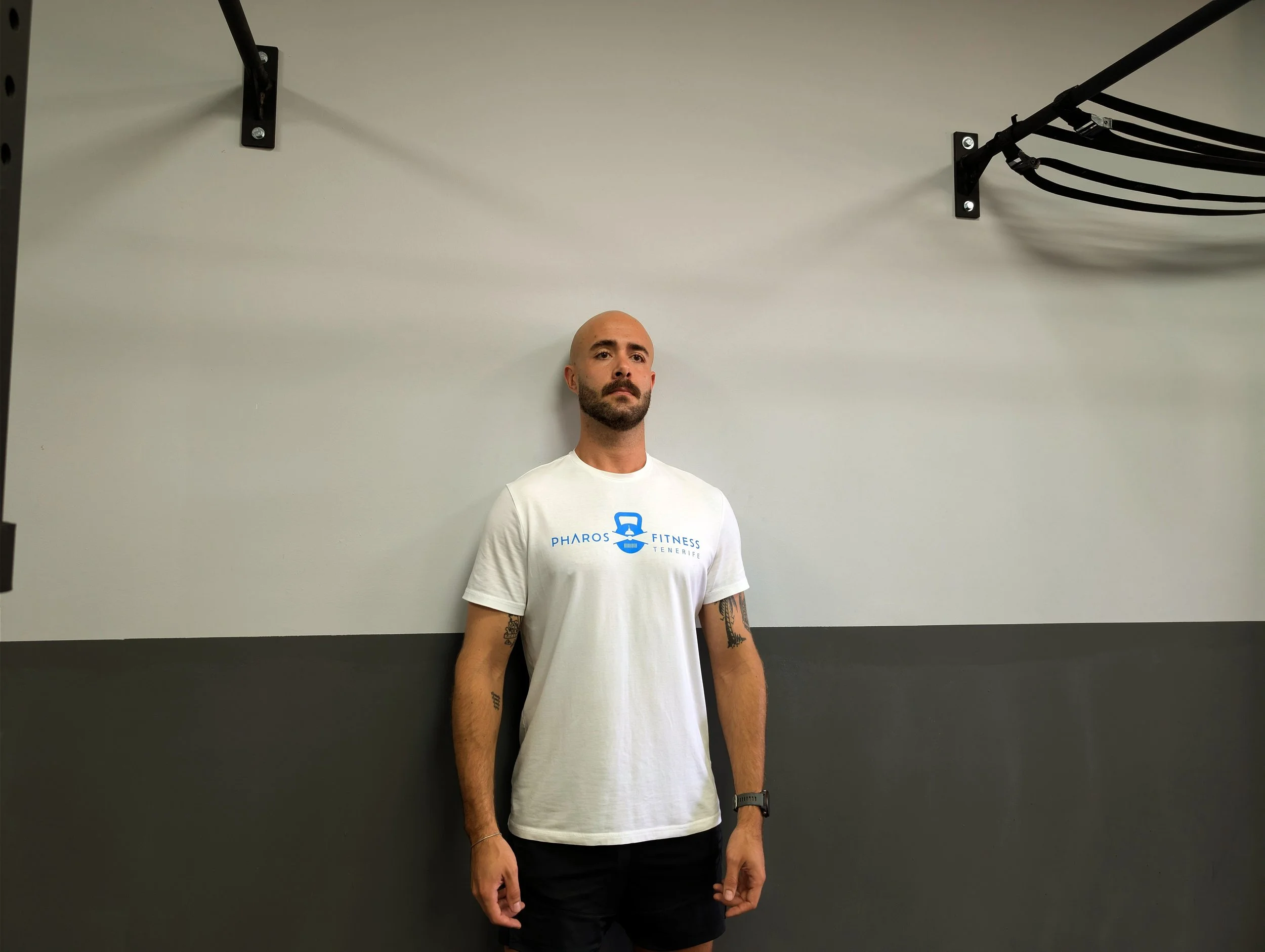
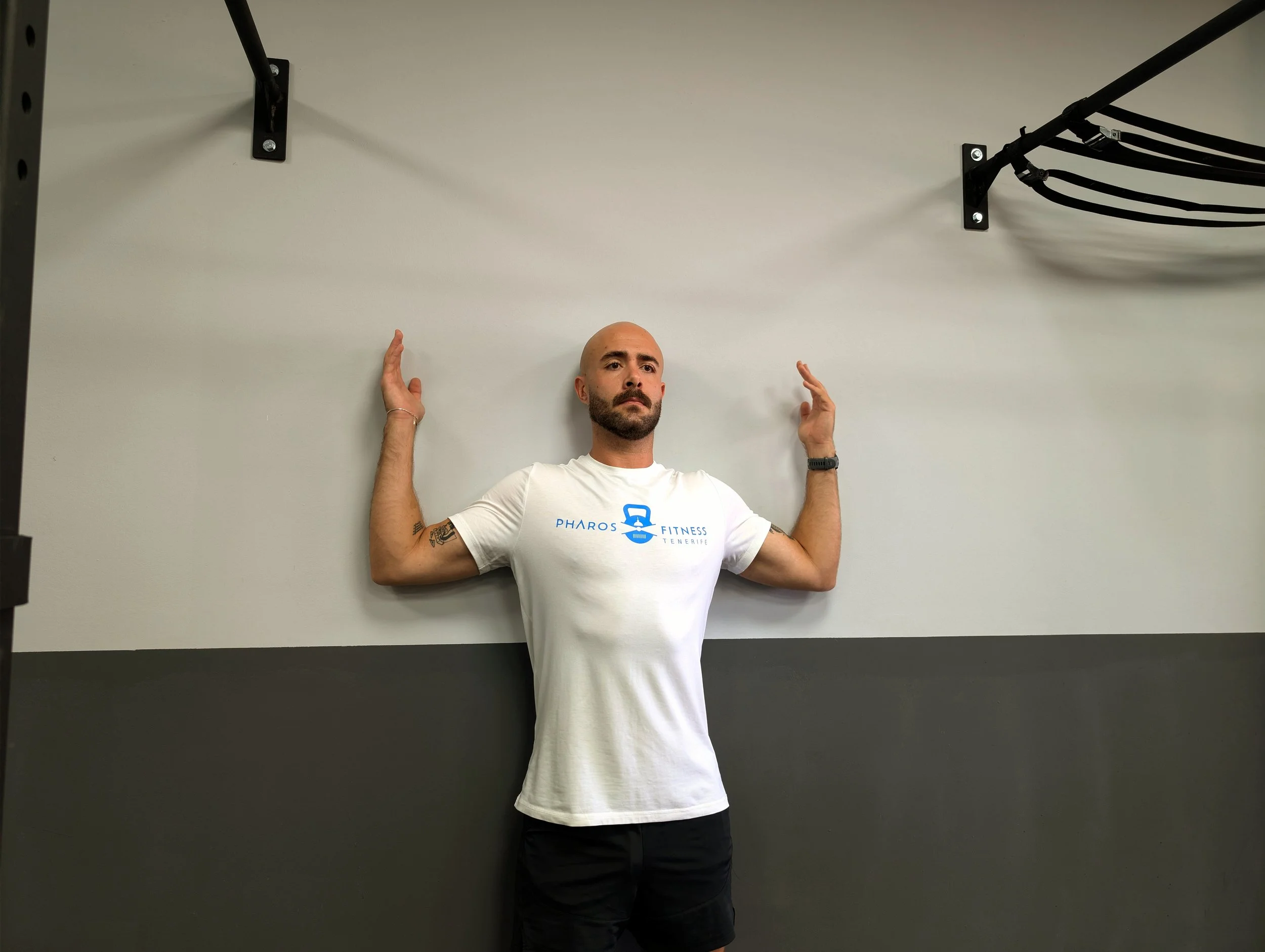
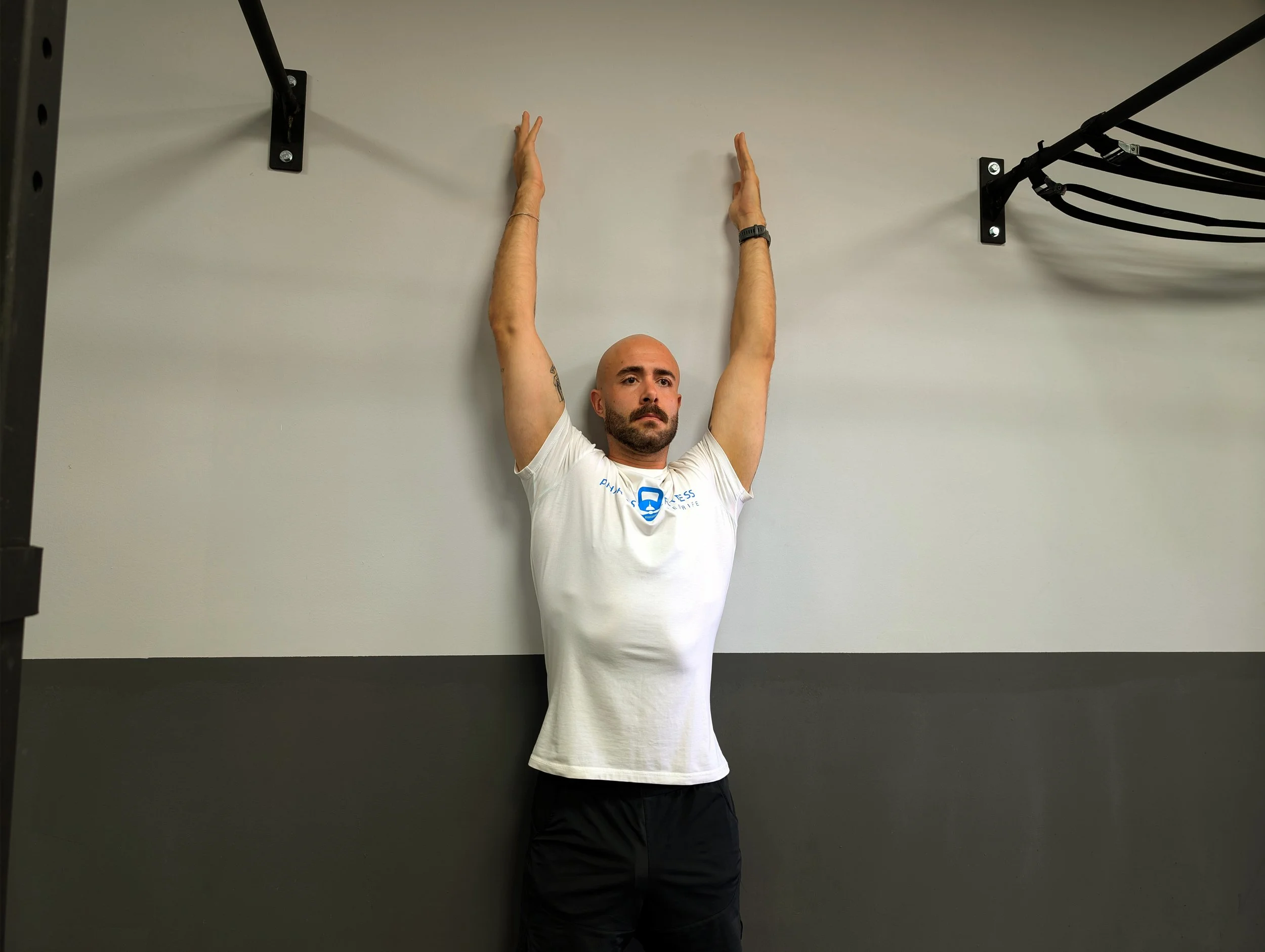
5. Scapular Wall Slides
Why: Improves control and movement quality of the shoulder blades, helping them glide correctly during arm movements.
How: Stand with your back against a wall, feet slightly away. Aim to keep heels, butt, upper back, and head touching wall (maintain neutral spine). Place forearms against wall in a "goal post" position (elbows bent 90deg, upper arms parallel to floor). Slowly slide forearms up the wall, trying to maintain contact points. Focus on shoulder blades moving smoothly, without excessive shrugging or arching low back. Lower slowly. Repeat 10-15 times.
Tool: Wall.
Key Reminders for Success:
Stop Sitting So Much! This is the main cause. Stand up, walk, and take breaks frequently.
Combat the Slouch: Actively practice good posture throughout the day. Use the bracing sequence – think "pull ribs down" and "head back over shoulders".
Stable Shoulders: When lifting or reaching, think about setting your shoulder blades back and down slightly (don't excessively pinch). Use external rotation ("break the bar," "armpits forward") .
Belly Breathing: Avoid shallow chest/neck breathing, which increases trap tension
Important Notes:
Pressure Control: Adjust your body weight to manage pressure. Start lighter if needed. Softer tools (foam roller, taped tennis balls) are good starting points.
Avoid Spine Pressure: Don't press directly onto your spinal bones with a single ball. The peanut tool is designed to cradle the spine.
Breathe! Holding your breath increases tension. Focus on deep, diaphragmatic breaths during mobilizations.
"Good Pain": Discomfort on tight spots is normal. Sharp, pinching, or nerve-like pain ("sketchy") means you should stop or adjust the position.